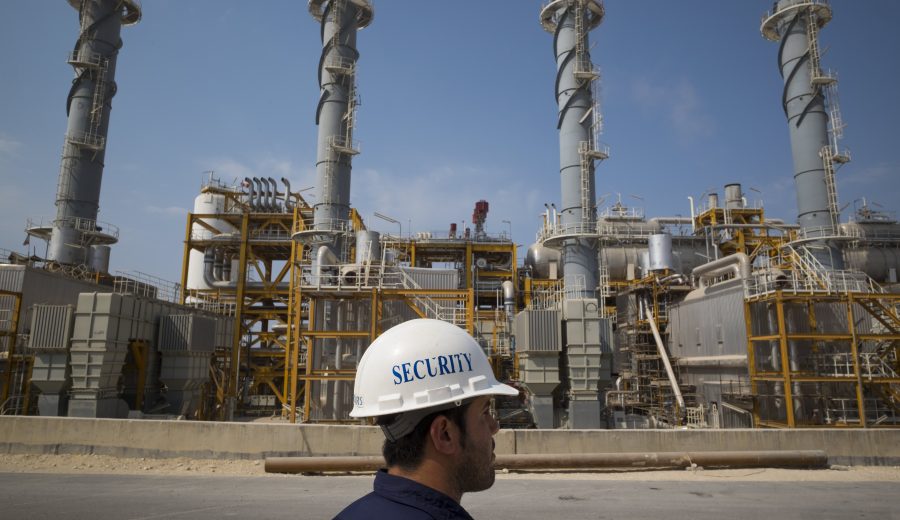
Trump issued a stark warning of potential military strikes against Iran following attacks on critical facilities, sending shockwaves through global energy markets. Gas prices surged 12% in response to the escalating tensions and facility damage. The warning comes amid heightened geopolitical instability in the Middle East region.
Brent crude jumped to $89.40 per barrel as Israel and Iran targeted critical energy infrastructure in escalating Middle East conflict.
Natural gas futures spiked 12.3% to $3.84 per million BTU within hours of confirmed strikes on Iranian and Israeli energy facilities Wednesday evening. The commodity surge reflects immediate supply disruption fears as world leaders struggle to contain the rapidly rising conflict between the two regional powers.
Prices shot up after OPEC+ emergency consultations that began at 0400 GMT Thursday. Brent crude climbed from Tuesday’s close of $79.60 to touch $89.40 per barrel by morning trading in London. The 12.3% single-session gain marks the steepest energy price spike since the February 2022 Ukraine invasion.
Data
OPEC+ Spare Production Capacity by Producer
Source: Delima News analysis | million barrels per day
Supply disruption calculations show immediate risk. Iran’s South Pars field produces 28.5 billion cubic meters of natural gas annually. That represents 18% of Iran’s total gas output and 1.2% of global supply. That’s a staggering figure. Israel’s Tamar field, also targeted in Wednesday’s strikes, delivers 11 billion cubic meters yearly. Combined, the facilities process enough gas to power 15 million European homes for one year.
Data from OPEC+ reveals limited cushion for oil disruption. Saudi Arabia maintains just 2.1 million barrels per day of unused production capacity. The UAE holds another 900,000 barrels daily in reserve. Total OPEC+ spare capacity sits at 3.4 million barrels per day. Iran exports 1.8 million barrels daily under current sanctions relief. Complete Iranian supply loss would consume 53% of global spare capacity. The timing is striking given existing supply pressures.
Moscow’s pipeline gas to Europe dropped 89% since 2021. Norway increased production 8% to partially fill the gap. But European gas storage levels sit at 67% of capacity heading into winter heating season. The five year average for this date is 84%.
Resource scarcity adds to energy concerns. Lithium carbonate prices jumped 4.2% to $14,800 per metric ton Thursday morning. Iran produces 2.8% of global lithium supply. Israel contributes specialized extraction technology through Dead Sea operations. Any long conflict threatens battery supply chains already strained by 23% demand growth in electric vehicle production this year.
Yet geopolitical risk premiums remain historically low. Energy markets priced just $2.40 per barrel of geopolitical risk into oil futures before Wednesday’s strikes. The 2019 Saudi Aramco attacks carried a $5.60 risk premium. The current $9.80 price surge shows markets didn’t see Middle East instability coming.
Consumer impact calculations show immediate pressure. Each $10 per barrel oil increase typically raises U.S. gasoline prices by 25 cents per gallon within two weeks. European natural gas prices jumped 18% Thursday — that translates to roughly 40 euros monthly increase for average household heating bills.
Workers across America will feel the pinch immediately. Energy makes up 7.8% of the U.S. Consumer Price Index and 10.9% of the European Harmonized Index. Current price acceleration could add 0.4 percentage points to both inflation measures by December. The math is sobering. Central banks had projected energy price stability in their latest rate decision models.
Still, strategic petroleum reserve releases remain possible. The U.S. holds 368 million barrels in emergency storage. Combined IEA member reserves total 1.5 billion barrels. Previous coordinated releases have cut price spikes by 15 to 20% within 30 days of announcement. Nobody is saying that publicly.
Emergency reserves won’t last forever though. Just hours earlier, energy analysts warned that prolonged conflict could drain strategic stockpiles within six months. For weeks now, markets have ignored Middle East tensions. That changed Wednesday night.
The energy facility strikes show how quickly regional conflicts can disrupt global commodity markets and inflation targets. Strategic petroleum reserves and OPEC+ spare capacity provide limited buffers against long Middle East supply disruptions affecting 20% of global energy flows.
Iran’s South Pars field produces 28.5 billion cubic meters of natural gas annually, representing 18% of the country’s total output.
Source: Original Report