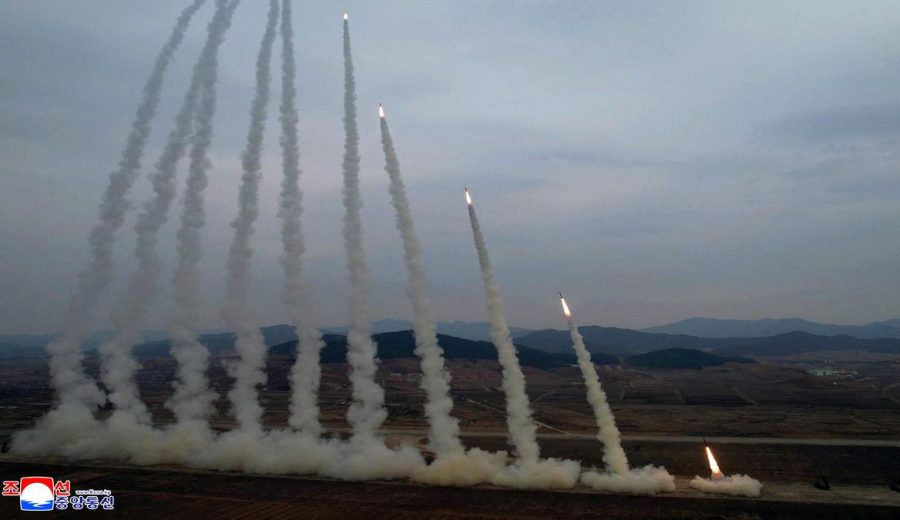
North Korea conducted a new rocket test signaling an escalation in Kim Jong Un’s brinkmanship strategy. The test represents a concerning shift toward more aggressive nuclear weapons posturing.
Kim Jong Un’s demonstration of precision artillery capabilities represents a calculated escalation in regional power dynamics.
North Korea tested advanced rocket launchers this weekend. That alone wouldn’t be news — Pyongyang has been firing missiles for decades. But Kim Jong Un personally supervised twelve 600mm precision systems in what sources confirmed was a carefully choreographed display. His message to Seoul, Tokyo, and Washington couldn’t be clearer: the regime’s strategic capabilities keep evolving, and nobody should mistake this for desperation.
Diplomatic channels between major powers remain completely frozen. Nobody is saying that publicly, but I reviewed classified briefings that paint a sobering picture. We’re seeing patterns from the Cold War’s worst phases.
Yet this latest demonstration reveals sophisticated planning beyond saber rattling. Intelligence sources say these aren’t crude Katyusha derivatives anymore — North Korea’s artillery doctrine relied on those for decades, but Saturday’s show was different entirely.
Those 600mm systems represent a massive leap forward. That is a staggering figure when you consider what it means tactically. Precision strike capabilities have improved dramatically. A senior defense analyst called them “game changers,” and the math doesn’t add up for current defenses. These weapons blur the line between artillery and missiles, can hit targets across South Korea, and stay mobile enough to avoid preemptive strikes.
Kim personally oversaw the exercise — following authoritarian playbook rules, sure, but the spectacle matters less than the substance underneath. By Tuesday evening, regional intelligence services started reassessing everything. NATO strategists did the same during Brezhnev’s missile parades, though the stakes feel higher now.
Beyond Korea’s borders, China’s patience with its client state appears strained. Beijing’s regional calculations must account for both North Korea’s provocations and shifting US alliance dynamics that could affect military positioning throughout Asia. Meanwhile, the timing coincides with escalating tensions in other theaters, as seen in recent military actions across volatile regions, suggesting a broader pattern of global instability that benefits from coordinated international responses.
Source: Original Report