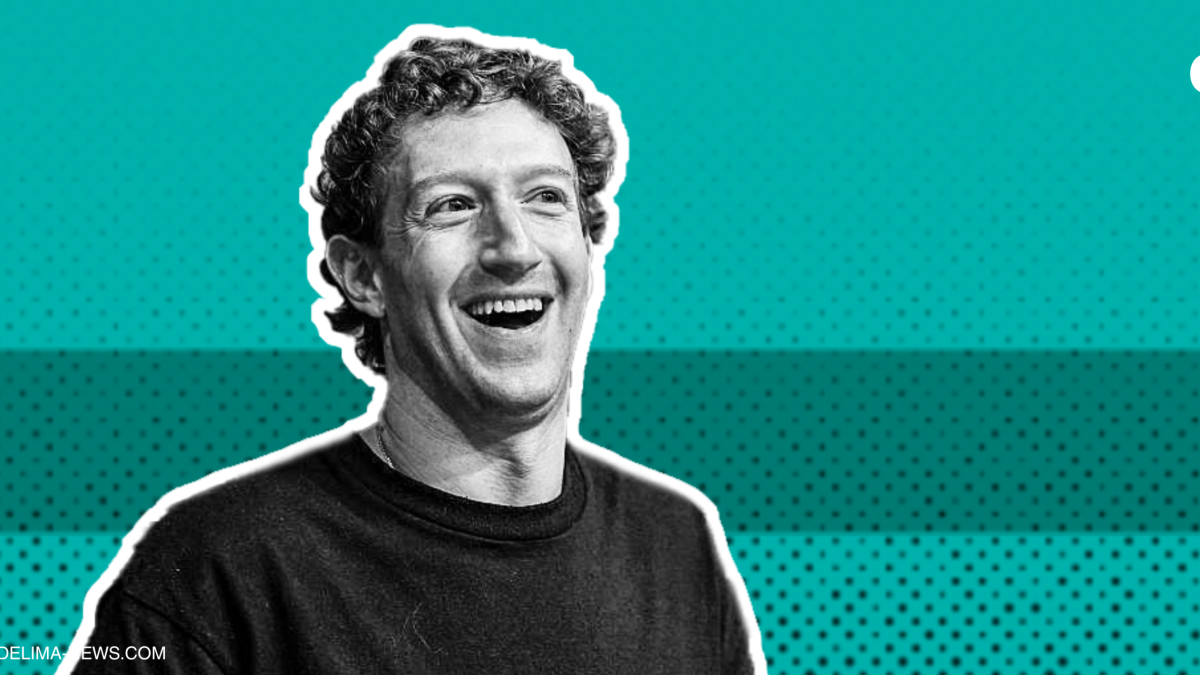
Mark Zuckerberg founded Facebook, which later turned into Meta. This article talks about his journey from a tech savy, to world’s one of the richest man.
Mark Zuckerberg is one of the most influential technology entrepreneurs of the 21st century. As the co-founder and CEO of Facebook—now part of Meta—he helped transform the way billions of people communicate, share information and build online communities. From a computer-loving teenager at home in New York to one of the world’s wealthiest technology leaders, Zuckerberg’s journey is a story of ambition, experimentation and extraordinary scale.
Mark Elliot Zuckerberg was born on May 14, 1984, in White Plains, New York. He grew up in nearby Dobbs Ferry in a family that encouraged education and intellectual curiosity. His father, Edward Zuckerberg, was a dentist, while his mother, Karen Zuckerberg, was a psychiatrist. Mark has three sisters—Randi, Donna and Arielle. His family environment exposed him to both medicine and technology from an early age. Zuckerberg became interested in computers while he was still young. Rather than treating programming simply as a school subject, he began experimenting with software and creating programs of his own. His early fascination with technology eventually became the foundation for his career.
Zuckerberg attended Ardsley High School before transferring to Phillips Exeter Academy, an elite boarding school in New Hampshire. He excelled academically and developed a particular interest in programming. Before Facebook, he had already created several software projects. One notable example was Synapse Media Player, a music recommendation program that attracted attention from companies including Microsoft and AOL. In 2002, Zuckerberg entered Harvard University, where he studied psychology and computer science. Harvard would ultimately become the place where his biggest idea began.
In February 2004, Zuckerberg launched TheFacebook.com with fellow Harvard students Eduardo Saverin, Andrew McCollum, Dustin Moskovitz and Chris Hughes. The original concept was relatively simple: create an online social network that allowed college students to connect with one another. The platform spread rapidly beyond Harvard and was soon introduced at other universities. Its growth convinced Zuckerberg and his colleagues that they had created something much bigger than a university networking experiment. Zuckerberg left Harvard without completing his degree to focus entirely on Facebook. The decision was risky, but it allowed him to dedicate himself to building the company. Forbes notes that Zuckerberg became a billionaire at just 23 years old in 2008, making him one of the youngest billionaires of his era.
Facebook’s growth accelerated dramatically throughout the late 2000s and 2010s. What began as a college social network evolved into a global technology platform. A major turning point came with Facebook’s 2012 initial public offering (IPO). The company became publicly traded, giving Zuckerberg enormous wealth while allowing Facebook to raise capital for further expansion. Facebook also began acquiring companies and technologies that would strengthen its position in social media and digital communication. Among its most important acquisitions were Instagram and WhatsApp. Zuckerberg’s strategy was not simply to maintain Facebook’s original product. He increasingly focused on building an ecosystem of communication platforms used by billions of people.
In October 2021, Zuckerberg announced that the parent company behind Facebook would be renamed Meta Platforms. The change reflected his broader ambition to build technologies around the metaverse and the future of digital interaction. Facebook remained the name of the social-networking platform, while Meta became the corporate identity overseeing Facebook, Instagram, WhatsApp and other products and technologies. In recent years, Zuckerberg has increasingly emphasized artificial intelligence, alongside Meta’s long-term investments in augmented and virtual reality. Today, Zuckerberg remains Meta’s chief executive and a central figure in the company’s strategy.
Despite being one of the world’s most recognizable technology executives, Zuckerberg has generally maintained a relatively private family life. He met Priscilla Chan, a medical student he knew from Harvard, while they were both students. The couple married in 2012, shortly after Facebook’s IPO. Chan is a physician and philanthropist, and together they established the Chan Zuckerberg Initiative (CZI), which focuses on areas including science, education and human potential. Zuckerberg and Chan have three daughters. The couple has also spoken publicly about their interest in philanthropy and using their wealth to support scientific and social causes.
Zuckerberg’s fortune comes overwhelmingly from his ownership of Meta stock. Because Meta is a publicly traded company, his net worth can change by billions of dollars depending on movements in the company’s share price. Forbes’ 2026 World’s Billionaires list estimated Zuckerberg’s wealth at approximately $222 billion, placing him fifth among the world’s billionaires based on valuations as of March 1, 2026. His real-time ranking can change quickly. For example, Forbes reported that his fortune reached approximately $251.7 billion in January 2026 after Meta’s stock surged, briefly moving him ahead of Jeff Bezos. Therefore, any figure describing Zuckerberg’s “net worth” should be understood as an estimate rather than a fixed amount.
Mark Zuckerberg’s journey is remarkable because Facebook was not initially designed to become one of the world’s largest technology companies. It began as a relatively simple idea created by university students. What separated Zuckerberg from many other young programmers was his willingness to scale the idea aggressively. Facebook expanded from a college network into a global communications ecosystem, while Zuckerberg evolved from a young programmer into the leader of one of the world’s largest technology companies. His career has also been controversial. Facebook and Meta have faced intense scrutiny over privacy, misinformation, content moderation, competition and the social impact of their platforms. These controversies have become an important part of Zuckerberg’s public legacy. Nevertheless, his impact on modern communication is difficult to deny. Zuckerberg helped make social networking a central part of everyday life and built one of the largest technology businesses in history.
Mark Zuckerberg’s life is a classic example of how a small technological experiment can develop into a global business. Born into a middle-class professional family, he discovered programming at a young age, attended Harvard, launched Facebook at 19 and became a billionaire in his early twenties. Today, at 42, Zuckerberg remains at the center of the technology industry as the CEO of Meta. His story is not simply about becoming wealthy; it is about identifying a new way for people to connect and then building that idea on an unprecedented scale.
From TheFacebook at Harvard to Meta’s global technology empire, Zuckerberg’s journey has fundamentally changed the internet—and continues to shape what its next era may look like.
Zuckerberg founded Facebook, which later acquired Instagram and Whatsapp, and controlling the majority social media apps.