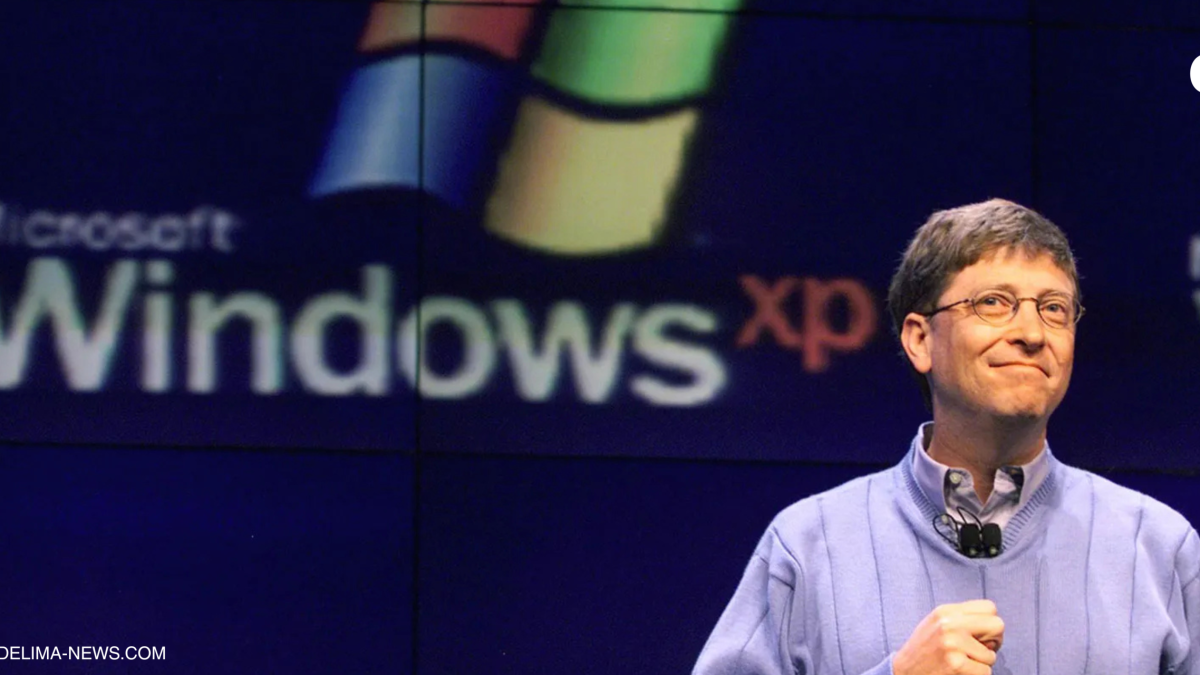
Bill Gates built the software corporates use and he’s made his fortune that way, now he focuses on philanthropy and says he wants to give back to those in need.
Few people have influenced the modern technology industry as profoundly as Bill Gates. From a computer-obsessed teenager in Seattle to the co-founder of Microsoft and one of the world’s wealthiest philanthropists, Gates built a career that transformed personal computing and later devoted much of his fortune to global health, education and poverty reduction.Forbes’ real-time data placed Gates at roughly $108 billion in August 2026, making him one of the world’s richest people. His wealth fluctuates with investments and markets.
Bill Gates was born on October 28, 1955, in Seattle, Washington. He grew up in a relatively affluent and intellectually ambitious family. His father, William H. Gates Sr., was a prominent attorney and civic leader, while his mother, Mary Maxwell Gates, was a teacher, businesswoman and influential community leader. Gates grew up with two sisters, Kristianne and Libby. His parents encouraged competition, academic achievement and intellectual curiosity. From a young age, Gates was particularly interested in reading, mathematics and problem-solving. His fascination with computers began during his teenage years at Lakeside School, a private preparatory school in Seattle. When the school obtained access to a computer terminal, Gates quickly became fascinated by programming. At just 13, he wrote a simple tic-tac-toe program and began spending enormous amounts of time experimenting with computers. That early obsession would eventually become the foundation of one of the most successful technology companies in history.
Gates attended Lakeside School, where he excelled academically, particularly in mathematics and science. More importantly, the school gave him access to computers at a time when personal computers were still largely unknown to the general public. After graduating from Lakeside, Gates enrolled at Harvard University. However, he never completed his degree. While at Harvard, Gates continued developing his programming skills and became increasingly convinced that the emerging personal-computer revolution represented an enormous business opportunity. In 1975, Gates left Harvard to pursue Microsoft full-time with his childhood friend Paul Allen. His decision was risky, but it proved transformational.
In 1975, Gates and Paul Allen founded what would become Microsoft. Their ambition was straightforward but revolutionary: create software that could make computers useful and accessible to a much wider audience. Their major breakthrough came when Microsoft developed software for IBM’s personal computer. Microsoft’s operating system, MS-DOS, helped establish the company as a major force in the rapidly expanding PC industry. Gates combined technical knowledge with an intense business focus. He understood that while hardware could change quickly, software could become the foundation upon which entire computing ecosystems were built. Microsoft subsequently developed products such as Windows and Microsoft Office, turning the company into a dominant force in personal computing. Gates became a billionaire in 1987, when he was only 31, after Microsoft’s stock surged. He went on to rank among the world’s richest people for decades.
Gates’ fortune was built primarily through his ownership of Microsoft and later diversified investments. Rather than maintaining a huge stake in Microsoft indefinitely, Gates gradually donated and transferred large amounts of Microsoft stock to philanthropic structures. Forbes estimates that his Microsoft ownership is now below 1%. His wealth has therefore evolved considerably from the early days when his fortune was almost entirely tied to Microsoft. As of August 2026, Forbes’ real-time billionaire data puts his wealth at approximately $107–108 billion, although the exact figure changes with market movements.
Gates married Melinda French in 1994. The couple met while Melinda was working at Microsoft and eventually became one of the world’s most prominent philanthropic partnerships. Together, they had three children: Jennifer, Rory and Phoebe. In May 2021, Bill and Melinda Gates announced that they were ending their marriage after 27 years. Their divorce was finalized later that year. Gates has since been publicly linked to Paula Hurd, a technology-industry executive and philanthropist. Their relationship became public in 2023, and they have subsequently appeared together at various public events.
Gates stepped down as Microsoft’s CEO in 2000, handing the position to Steve Ballmer while remaining involved with the company. He gradually reduced his day-to-day responsibilities and shifted his attention toward philanthropy. In 2008, Gates left his full-time role at Microsoft to concentrate on charitable work. He later resigned from Microsoft’s board in 2020, although he has continued to serve as a technology adviser. His second act would become almost as significant as his first.
Bill Gates’ philanthropic career expanded dramatically during the 1990s. In 2000, he and Melinda established what became the Bill & Melinda Gates Foundation, now known as the Gates Foundation. The organization focuses on major global challenges including infectious diseases, maternal and child health, poverty, education and economic opportunity. The foundation says it distributed more than $100 billion during its first 25 years, while its total charitable distributions since inception reached $110.9 billion through the end of 2025. Gates has also worked on climate change and clean-energy innovation through Breakthrough Energy, as well as healthcare, Alzheimer’s research and technological innovation through his private office, Gates Ventures. In 2025, Gates announced an extraordinary long-term plan: he intends to give away virtually all of his remaining wealth over the next two decades, while the Gates Foundation plans to close at the end of 2045.
Gates’ story is not simply about becoming rich. His success came from recognizing a technological shift before it became obvious to the wider public. Three characteristics stand out:
1. Obsession with learning: Gates developed an intense interest in computers as a teenager and spent countless hours programming.
2. Recognizing opportunity: He understood that the personal-computer revolution would create enormous demand for software.
3. Long-term thinking: After building Microsoft into a technology giant, Gates redirected much of his attention toward problems such as disease, poverty, education and climate change. His journey demonstrates how technical knowledge, entrepreneurial ambition and strategic thinking can combine to create extraordinary influence.
Bill Gates’ legacy is complicated but enormous. As a Microsoft co-founder, he played a central role in making personal computing mainstream and helped establish software as one of the most valuable industries in the world. Later, he transformed himself from technology executive into one of the world’s most prominent philanthropists.Today, Gates is no longer defined solely by Microsoft. His career spans technology, business, investing, philanthropy, global health, climate innovation and scientific research. At 70, his story is still being written. His stated goal of giving away virtually all of his remaining fortune before the Gates Foundation closes in 2045 represents a dramatic shift from the pursuit of wealth to the pursuit of long-term social impact.From a teenager writing computer programs in Seattle to the co-founder of Microsoft and a billionaire philanthropist, Bill Gates’ life remains one of the defining entrepreneurial stories of the modern era.
Bill Gates genuinly changed the face of how we work, and his contribution will be important to the world. His philanthropic ambitions are well known around the globe, along with his wife, Melinda Gates.