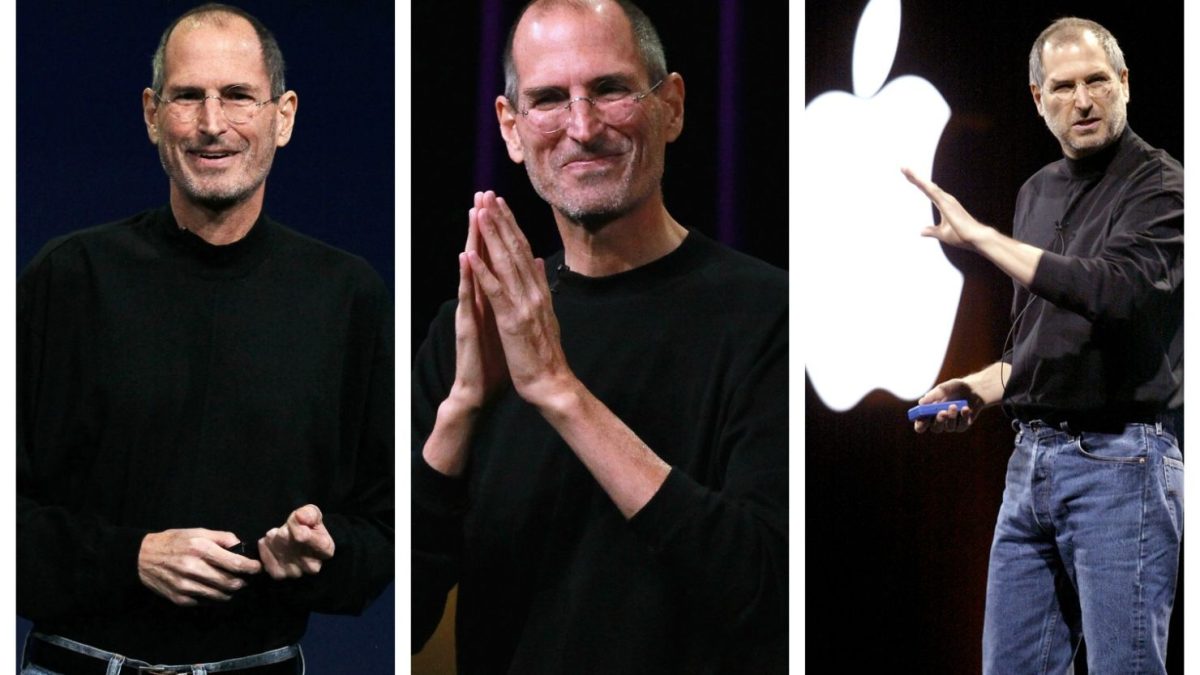
Steve Jobs’ life was full of ups and downs, this article tries to capture his life and his achievements.
Steve Jobs is a name synonymous with Apple, but we’re here to talk about the man behind the brand. His extraordinary influence in modern consumer culture is too important to ignore. As we all know, his contributions to Apple are unmatched, along with those of his co-founder, Steve Wozniak. His journey from an adopted child and college dropout to becoming one of the most influential entrepreneurs of the 20th and 21st centuries is remarkable.
Steve Paul Jobs, whom we all know as Steve Jobs, was born on 24 February 1955 in San Francisco, California, and got his name ‘Jobs’ from his foster parents; he died on 5 October, 2011 in Palo Alto, California, at age 56. He dropped out of Reed College to pursue his dream of being an entrepreneur. He married Laurene Powell Jobs and had four children with her named Lisa, Reed, Erin, and Eve. He is well known for founding NeXT and helping build Pixar, as he was fascinated by electronics since early childhood.
Steve Jobs met Steve Wozniak, his co-founder at Apple, and Wozniak was the brain behind the technology. His engineering ability, combined with Jobs’ marketing instincts, made Apple create hype around their products, and that hype was backed by their brilliant products with cutting-edge technology. This made a perfect complement of skills to run Apple.
Steve Jobs and Steve Wozniak founded Apple in 1976 in a garage. After months of development, they launched their first product, the Apple I, and soon had their breakthrough with the Apple II; it put Apple on the radar. Before Apple, personal computers were seen as hobbyist machines, and Steve Jobs turned these products into machines aimed at ordinary consumers.
Apple launched the Macintosh in 1984. While building the Macintosh, Jobs had only one objective: to make it as simple as possible with the best technology; Jobs emphasised user simplicity, user experience, and design. The Macintosh became a milestone in personal computing because it made computers more accessible and user-friendly. Launched in 1984, it popularised the graphical user interface, mouse-driven navigation, intuitive menus, and polished typography. Steve Jobs also emphasised design and simplicity, helping transform computers from technical machines into consumer products and influencing how future personal computers were designed.
Jobs turned Apple into one of the world’s leading tech companies, and the company reached new heights during his tenure. As the company grew and as he diluted his equity, his influence was fading, and eventually he was kicked out of the company over the difference in his ideas as he chased his vision, but the board was chasing dividends for investors. He was heartbroken because of the manner in which he was kicked out, despite giving everything for the company. This phase of his life was the darkest one, as he later described in interviews.
Steve Jobs was not to be stopped by the Apple setback, so he started NeXT, a software company that also made computers. Everything that Jobs wanted to do at Apple, he did at NeXT, and the company also gave Apple the Mac OS (formerly Mac OX), and NeXT became Apple’s future.
Jobs acquired the computer graphics division of NeXT and developed it into Pixar in 1986; his leadership, vision, and investment turned Pixar into a major animation studio. The studio made ‘Toy Story’, which was loved worldwide, and Pixar eventually merged with Disney.
Apple acquired NeXT in 1996 when he was leading the company. This event marked Steve Jobs’ return to Apple as CEO in 1997. When he assumed the position of CEO, Apple was in financial ruins and was in a difficult position. Steve got straight to work, as he couldn’t bear for his company to stay like this for long. The first thing he did was decide to simplify Apple’s product lineup. The introduction of the iMac was pivotal, as it changed Apple’s fortune.
After setting the tone after his arrival, he created a dedicated section for Jobs’ most important products:
Macintosh — a series of computers that helped popularise graphical personal computing.
iPod — a pocket device that transformed digital music and portable media.
iTunes— this service changed the way consumers purchased and consumed music.
iPhone — an innovative phone that reshaped the smartphone industry.
iPad — helped create a major new category of mobile computing.
Steve Jobs’ legacy proves that failure can become the foundation for a remarkable comeback. His greatest achievement was not simply creating revolutionary products, but uniting technology, design and simplicity. Through Apple, Jobs transformed how people interacted with technology and raised expectations for innovation. He changed not only what technology could do, but also how it should look, feel and fit naturally into everyday life.
Steve Jobs is an inspiration to everyone, and not just entrepreneurs. He revolutionised personal computing, and personal phone industry.