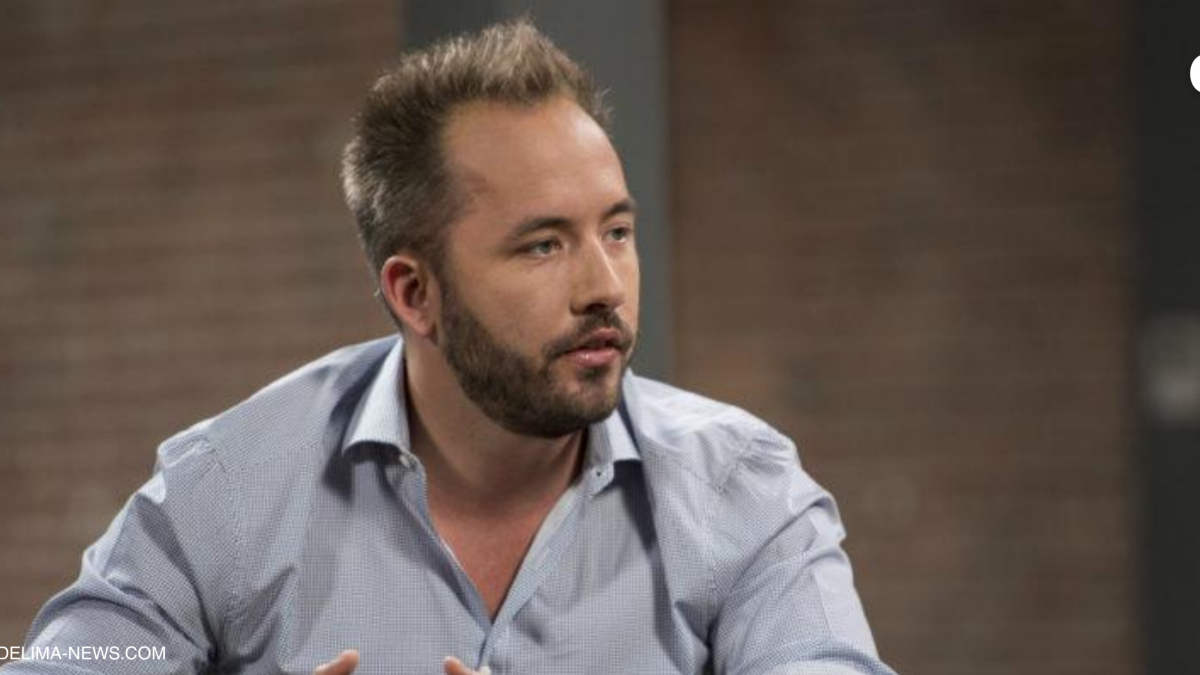
Drew Houston is an American technology entrepreneur best known as the co-founder and CEO of Dropbox. What began as a personal frustration over forgetting a USB drive eventually became one of the world’s most recognizable cloud-storage companies.
Houston’s journey is particularly interesting because his entrepreneurial instincts appeared long before Dropbox. As a teenager, he was already programming, working with startups and thinking about business. Today, he is a billionaire entrepreneur and one of the most prominent alumni of the Massachusetts Institute of Technology (MIT).
Early Life and Family
Drew Houston was born on March 4, 1983, in Acton, Massachusetts, and grew up in a family where education, technology and curiosity were encouraged. His father, Ken Houston, was an engineer, while his mother, Cecily Houston, worked as a high-school librarian. According to an interview with his parents published by Forbes, Houston showed an unusual interest in computers from an extremely young age. He was playing computer games on his family’s IBM PCjr when he was around two and a half, and by the age of eight he was experimenting with bulletin board systems.
His interest wasn’t limited to simply using computers. He began learning how they worked, experimenting with programming and eventually creating his own games. His parents also recalled that Houston had entrepreneurial ambitions surprisingly early. At 13, he reportedly told them that he wanted to become the next Bill Gates. Around the same age, he was beta-testing a computer game and identified security flaws in it.
By 15, Houston was already working for an industrial robotics startup connected to an MIT professor. He helped convert the company’s code to Linux, reportedly saving the company thousands of dollars. These experiences gave him something that would later become crucial to his career: he wasn’t merely learning computer science academically—he was learning how technology could solve real-world problems.
Schooling and Education
Houston attended Acton-Boxborough Regional High School in Massachusetts before moving on to MIT. At MIT, he studied Electrical Engineering and Computer Science, developing the technical foundation that would later allow him to build Dropbox.
But his education wasn’t confined to lectures and exams. Houston became involved with MIT’s entrepreneurial community and learned from other students interested in building companies. He also experimented with entrepreneurship while still a student. Houston took a leave of absence during his undergraduate years to work on Accolade, an online SAT-preparation startup, before returning to MIT.
MIT ultimately became more than a university for Houston—it became the environment in which he developed his technical skills, entrepreneurial network and future business partnership.
How Drew Houston Came Up With Dropbox
The idea behind Dropbox came from an extremely ordinary problem. Houston was traveling from Boston to New York and wanted to work during the journey. But he had forgotten his USB flash drive at home. Instead of simply accepting the inconvenience, he started writing code to create a solution. That small moment eventually became the foundation for Dropbox.
After graduating from MIT, Houston began developing the concept further. In 2007, he teamed up with fellow MIT student Arash Ferdowsi, and the two began building what would become Dropbox. The concept was simple but powerful: instead of carrying physical storage devices or repeatedly emailing files to yourself, users could store their files online and access them from different devices. At the time, cloud storage was far less intuitive than it is today. Houston and Ferdowsi focused heavily on making the experience simple.
The Birth and Rise of Dropbox
Houston and Ferdowsi initially worked from a small sublet in Cambridge before moving the company to San Francisco. Dropbox entered Y Combinator in 2007, giving the young founders access to an important startup network and resources. The company subsequently attracted investment from major venture capital firm Sequoia Capital.
The company grew rapidly. What began as a solution to Houston’s personal problem evolved into a global cloud-storage platform used by hundreds of millions of people. Houston’s philosophy was straightforward: identify a problem that affects many people, build something that solves it exceptionally well, and surround yourself with talented people.
By 2013, MIT described Dropbox as a multibillion-dollar business with more than 100 million users. In 2018, Dropbox went public on the Nasdaq. Its IPO valued the company at more than $12 billion, marking another major milestone in Houston’s journey from programmer to billionaire technology entrepreneur.
Drew Houston’s Career Beyond Dropbox
Although Dropbox remains the centerpiece of Houston’s career, his influence extends beyond the company. In 2020, he joined the board of Meta Platforms, adding another major technology company to his professional portfolio.
He has also remained closely connected to MIT. In 2013, Houston delivered MIT’s commencement address, returning to the university where the foundations of Dropbox had been laid. Houston has also become a significant philanthropist. In 2021, MIT reported that he had made a $10 million gift supporting a shared professorship between the MIT Schwarzman College of Computing and MIT Sloan School of Management, alongside a startup catalyst fund.
Drew Houston’s Age and Personal Life
Born in 1983, Drew Houston is 43 years old as of August 2026. Compared with many celebrity entrepreneurs, Houston has maintained a relatively private personal life. Forbes currently lists him as single and based in San Francisco.
There is considerably more publicly documented information about his professional life than his relationships or private family life. His parents, Ken and Cecily Houston, have spoken publicly about his childhood and early interest in technology, providing some of the clearest insight into his upbringing.
Drew Houston’s Net Worth
According to Forbes, Drew Houston’s real-time net worth was approximately $2.6 billion as of August 30, 2026. His wealth primarily comes from his ownership stake in Dropbox. Forbes reports that Houston owns more than 20% of Dropbox, making him the company’s largest individual shareholder. His fortune has fluctuated alongside the value of Dropbox and broader technology markets, so his net worth should be viewed as an estimate rather than a fixed amount.
What Makes Drew Houston’s Story Different?
Houston’s story isn’t simply about becoming wealthy through a technology startup. One of the most interesting aspects is how ordinary the original problem was. He didn’t begin with a grand plan to revolutionize cloud computing. He forgot a USB drive.
That frustration led him to write some code. The code became a product. The product became a company. And that company eventually became a multibillion-dollar public technology business.
Houston has repeatedly emphasized the importance of starting rather than waiting for perfect circumstances. His philosophy is particularly relevant to aspiring entrepreneurs: the best way to learn how to build a company is often to actually start building one.
His career also demonstrates the combination of technical ability, problem-solving, persistence and execution. MIT helped him develop the engineering foundation, but his willingness to turn everyday frustrations into potential solutions ultimately became his greatest entrepreneurial advantage.
Final Thoughts
Drew Houston’s journey from a curious child experimenting with computers in Massachusetts to the billionaire CEO of Dropbox is a classic example of technology entrepreneurship. His story can be summarized in one powerful lesson: great companies don’t always begin with extraordinary ideas—they can begin with ordinary problems that someone decides to solve better.
From his early programming experiments and MIT education to Accolade, Dropbox, the company’s IPO and his continued involvement in technology and education, Houston has built a career around turning technical ideas into products used by millions. And perhaps the most fitting part of his story is that the man who once forgot his USB drive ultimately built a company whose entire purpose was to make forgetting your files almost irrelevant.