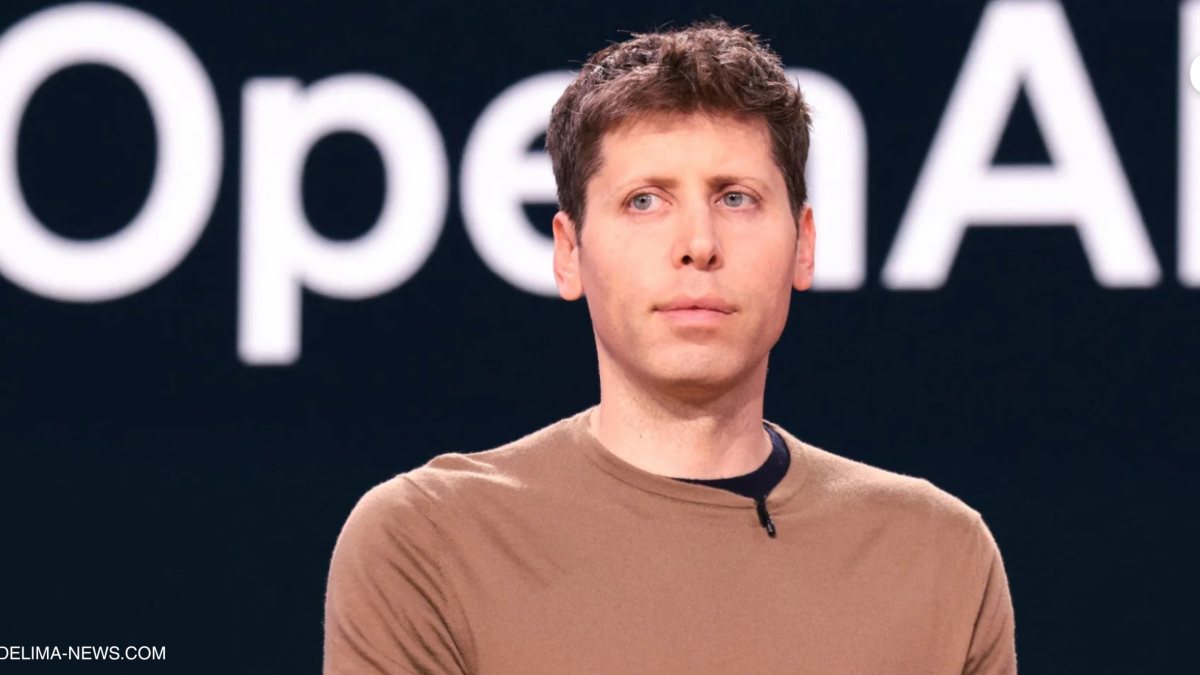
Sam Altman has become one of the most recognizable figures in the global technology industry. As the CEO of OpenAI, the company behind ChatGPT, he has played a central role in bringing artificial intelligence from research laboratories into everyday life.
But Altman’s journey did not begin with OpenAI. It started with an unusually tech-focused childhood, a Stanford dropout decision, a failed-to-break-through startup, and eventually one of Silicon Valley’s most influential leadership positions.
Sam Altman: Biography at a Glance
Forbes estimated Altman’s fortune at more than $4 billion in May 2026, following revelations about his investments and ownership interests during legal proceedings. His wealth primarily comes from investments rather than a large equity stake in OpenAI.
Early Life and Family
Samuel Harris Altman was born on April 22, 1985, in Chicago, Illinois, and grew up in St. Louis, Missouri. He developed an interest in computers and technology from a young age. His fascination with programming eventually became the foundation for his entrepreneurial career.
Altman comes from a family that includes his siblings Jack Altman and Ann Altman. Jack later became an entrepreneur and investor himself.
Altman’s personal life has also attracted considerable attention because he has maintained a relatively private profile despite becoming one of the world’s most prominent technology executives. He is married to Oliver Mulherin, an Australian software engineer, and they have a child.
Rather than coming from a traditional business empire, Altman’s rise was driven largely by technology, entrepreneurship, venture capital and his ability to identify emerging opportunities.
Sam Altman’s Education
Altman attended John Burroughs School in St. Louis before enrolling at Stanford University, where he studied computer science.
However, he never completed his degree.
In 2005, while still at Stanford, Altman left the university to pursue his startup ambitions. It was a risky decision, but one that would eventually launch his Silicon Valley career. Forbes notes that he dropped out of Stanford to found Loopt.
His story is therefore another famous example of a technology entrepreneur leaving university before graduation—although his later success shouldn’t be interpreted as evidence that dropping out is inherently the best path. Altman had already demonstrated an unusually strong interest in technology and startups before leaving Stanford.
The First Big Bet: Loopt
In 2005, Altman co-founded Loopt, a location-based social networking company. The idea was ahead of its time: Loopt allowed people to share their locations and see where their friends were. This was before location sharing became a standard feature of virtually every major smartphone platform.
Loopt was backed by Y Combinator and became one of the early startups associated with the accelerator.Although Loopt never became a dominant consumer platform, it gave Altman something arguably more valuable: experience, connections and credibility in Silicon Valley.
The company was eventually acquired by Green Dot Corporation in 2012 for approximately $43 million. Altman subsequently used part of the proceeds to build his investment career.
Sam Altman and Y Combinator
Altman’s career took another major turn when he joined Y Combinator, one of Silicon Valley’s most influential startup accelerators.
He became a partner in 2011 and was appointed president in 2014.
At Y Combinator, Altman moved from being an entrepreneur building his own company to becoming someone who helped hundreds of other entrepreneurs build theirs.
His tenure coincided with the growth of companies such as Airbnb, Dropbox and Stripe, among many other startups that passed through the broader YC ecosystem.
Altman developed a reputation for thinking extremely big about technology and startups. Instead of focusing only on individual companies, he increasingly thought about how entire industries could change.
He left Y Combinator in 2019 to concentrate on OpenAI.
The Creation of OpenAI
In 2015, Altman became one of the co-founders of OpenAI alongside figures including Elon Musk, Greg Brockman, Ilya Sutskever and others.
The original ambition was enormous: develop artificial intelligence that could ultimately benefit humanity rather than allowing increasingly powerful AI systems to be controlled by a small group of companies or governments.
OpenAI initially operated as a nonprofit research organization.
Altman became its CEO in 2019, and the organization subsequently developed a more commercially oriented structure to raise the enormous amounts of capital required for advanced AI research.
ChatGPT Changes Everything
The moment that transformed Altman from a Silicon Valley executive into a global celebrity came in November 2022, when OpenAI released ChatGPT.
The chatbot’s ability to generate human-like text, answer questions, write code and assist with creative and professional tasks caused extraordinary public interest.
ChatGPT quickly became one of the fastest-growing consumer technology products ever launched.
The success also changed the broader technology industry. Google, Microsoft, Meta, Anthropic and countless startups accelerated their AI development efforts as generative AI became the center of the technology race.
Altman became one of the principal public faces of this transformation.
The Dramatic 2023 OpenAI Crisis
Altman’s career faced its biggest crisis in November 2023.
OpenAI’s board abruptly removed him as CEO, saying that he had not been consistently candid in his communications with the board.
The decision triggered an extraordinary backlash.
OpenAI employees overwhelmingly threatened to leave, while Microsoft—OpenAI’s largest strategic partner—became deeply involved in the situation. After several days of uncertainty, Altman returned as CEO and OpenAI’s board was substantially restructured.
The episode became one of the most dramatic corporate leadership crises in modern technology.
Rather than ending his career, however, it ultimately reinforced Altman’s position at the center of OpenAI.
How Sam Altman Became So Wealthy
One interesting aspect of Altman’s fortune is that his wealth is not primarily based on owning a huge percentage of OpenAI.
Instead, much of his fortune comes from venture investments and stakes in numerous technology companies.
His portfolio has included investments in companies such as Stripe, Reddit, Airbnb and Helion Energy, among hundreds of other businesses. Forbes reported in 2026 that his wealth had risen above $4 billion after previously disclosed and newly revealed investments were taken into account.
His investment strategy has therefore been a crucial part of his financial success.
Altman effectively positioned himself on both sides of Silicon Valley’s startup ecosystem: first as a founder, then as an accelerator leader and investor, and finally as the CEO of one of the world’s most important AI companies.
Sam Altman’s Net Worth in 2026
Estimated net worth: More than $4 billion.
This figure should be treated as an estimate rather than a fixed number because the value of private investments can change substantially and some holdings are difficult to price.
Forbes’ May 2026 estimate put Altman’s fortune at more than $4 billion, with his investments—including interests in companies such as Helion Energy—playing a major role.
This makes an important distinction: being the CEO of a multibillion-dollar company does not necessarily mean personally owning billions of dollars of that company.
Altman’s wealth is largely the result of his broader investment portfolio and years spent in venture capital.
Life Beyond OpenAI
Altman’s interests extend beyond artificial intelligence.
He has invested in areas including nuclear fusion, biotechnology, energy and technology startups. His investment in Helion Energy reflects his interest in the possibility of abundant clean energy.
He has also expressed strong interest in the future of AI, energy and technological abundance.
His worldview is built around a relatively simple idea: technologies that dramatically increase intelligence and energy production could fundamentally change the structure of the global economy.
That ambition is also what makes Altman such a controversial figure. Supporters view him as a visionary entrepreneur attempting to build technology capable of transforming humanity. Critics question the concentration of power surrounding AI companies and whether the technology is developing too quickly.
Sam Altman’s Leadership Legacy
Sam Altman’s career is unusual because it contains several different chapters:
Teenage programmer → Stanford student → startup founder → venture capitalist → Y Combinator president → OpenAI co-founder → AI industry leader.
Loopt gave him his first entrepreneurial experience.
Y Combinator taught him how to identify and support promising founders.
OpenAI gave him the opportunity to pursue something far larger: building artificial intelligence capable of transforming how people work and communicate.
Whether history ultimately remembers Altman as one of technology’s great visionaries, a controversial corporate leader, or both, his influence is already difficult to ignore.
At 41, he is still relatively young for someone who sits at the center of one of the biggest technological transformations in modern history.
And the most remarkable part of his story may be that his career is still being written.