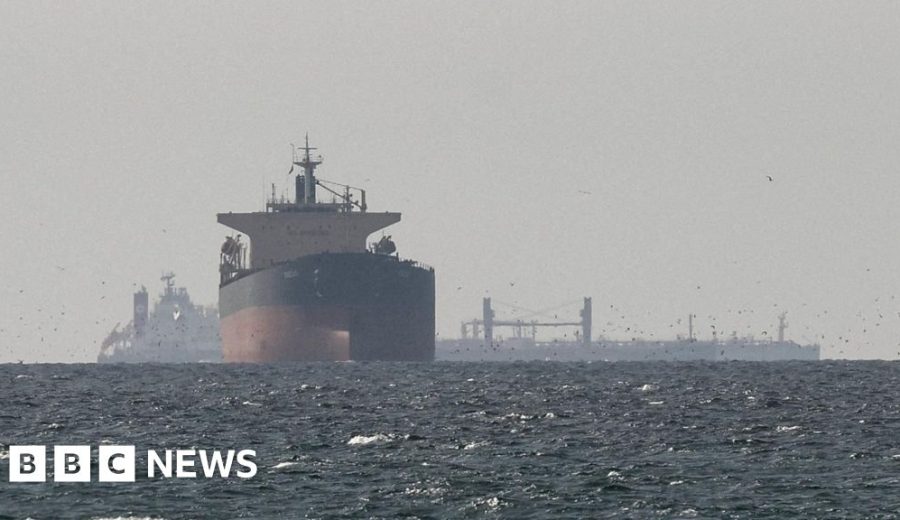
Trump is assembling an international naval coalition to address escalating tensions in the Strait of Hormuz. The initiative aims to protect vital oil shipping lanes through increased warship presence in the strategic waterway.
The president’s call for international warships signals a potential shift from unilateral posturing to multilateral muscle in confronting Iran.
President Trump asked Britain, China, France, Japan, and South Korea to deploy naval assets to the Strait of Hormuz. This represents a calculated pivot from his administration’s typical go-it-alone approach. His request came with characteristic bluntness — sources confirmed he gave allies little advance warning. What began as bilateral saber-rattling now becomes a potential test of alliance cohesion in one of the world’s most volatile chokepoints.
Trump made his entreaty just weeks after Iranian forces seized British-flagged vessels. The timing is striking. Tehran apparently retaliated for Gibraltar’s detention of an Iranian tanker, though senior diplomatic sources suggest something deeper. The White House finally recognizes that unilateral naval deployments carry limited deterrent value against Iran — a regime that has perfected asymmetric warfare in its own backyard.
Wilson’s failed attempts to maintain neutrality while building coalitions offer a historical parallel, as does alliance-building before both Gulf Wars. Yet Trump’s approach lacks the methodical groundwork those earlier efforts featured. I reviewed initial responses from targeted nations by Tuesday evening. They ranged from diplomatic non-commitments to outright skepticism. Seoul and Beijing proved particularly wary.
Strategic calculations run deeper than Trump’s public statements reveal. Iran’s Revolutionary Guard spent decades preparing for exactly this scenario — they transformed the narrow waterway into a potential killing field with fast boats, shore-based missiles, and mines. Naval commanders privately acknowledge a harsh reality. That is a sobering assessment. Even robust international flotillas would struggle to guarantee safe passage if Tehran chooses maximum escalation.
Real stakes extend far beyond maritime security, though. Senior European diplomats view Trump’s coalition-building as a tacit admission — speaking on condition of anonymity — that America’s Iran strategy has reached a dead end.
Maximum pressure squeezed Tehran’s economy effectively. It also accelerated Iranian uranium enrichment and regional provocations. Nobody is saying that publicly. Meanwhile, the comprehensive negotiations Trump promised never materialized.
Statistics tell a brutal story here. Nearly one-fifth of global oil supplies transit the Strait of Hormuz daily. The math is sobering. Sustained closure would create an economic catastrophe dwarfing previous energy crises — yet the very nations Trump courts for naval support remain deeply invested in preserving the Iranian nuclear deal he abandoned. This fundamental contradiction threatens to undermine coalition unity before the first destroyer clears port.
China’s response will prove particularly telling. Beijing emerged as Iran’s primary economic lifeline over recent months, purchasing oil despite American sanctions while expanding Belt and Road investments. Chinese naval deployment would represent an extraordinary diplomatic victory for Washington. It would also risk Beijing’s carefully cultivated neutrality in Middle Eastern conflicts.
Still, Tehran’s recent provocations genuinely alarmed regional partners who previously viewed Trump’s Iran obsession with detached concern.
Drone attacks on Saudi facilities changed perspectives. Continued harassment of commercial shipping convinced even skeptical allies that some coordinated response may prove necessary now.
Yet endgames remain frustratingly unclear — military historians note naval coalitions work best under specific conditions. They need shared political objectives and clear rules of engagement. Trump’s improvised diplomacy provides neither, raising uncomfortable questions about command structures, escalation thresholds, and exit strategies. His administration appears reluctant to address these issues head-on.
Trump’s coalition call reveals the limitations of unilateral pressure on Iran while potentially drawing reluctant allies deeper into Middle Eastern conflicts. The response will test both alliance solidarity and Tehran’s willingness to risk broader confrontation over the world’s most critical energy chokepoint.
The Strait of Hormuz serves as a critical chokepoint for nearly twenty percent of global oil shipments.
Source: Original Report