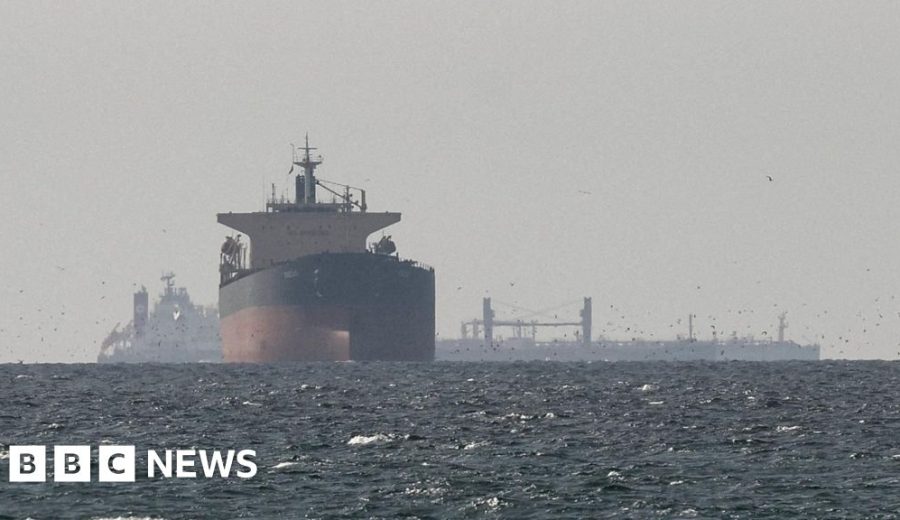
Trump is forming an international naval coalition to protect oil shipping through the Strait of Hormuz. The initiative aims to secure this critical maritime route that handles a significant portion of global oil transport.
US president calls on allies including UK, China, and Japan to deploy warships protecting crucial Middle East shipping lane.
Trump wants an international naval coalition in Hormuz. A sharp turn from America First, if you think about it. He’s asking Britain, China, France, Japan, and South Korea. Washington finally gets it — they can’t police global chokepoints alone anymore.
Trump’s coalition push shows his team recognizes strategic overstretch. Just three decades ago the Tanker War exposed energy vulnerabilities. That should have been lesson enough. Now Washington orchestrates a modern Concert of Powers approach, though this isn’t old Europe. Great powers can’t just divide influence over drinks.
Sources I spoke with Tuesday evening painted a mixed picture. European allies still hurt from Trump’s Iran deal withdrawal. They see this crisis as self inflicted. One Foreign Office official called it “asking us to clean up a mess we warned against.”
Twenty percent of global oil flows through Hormuz. America imports less than fifteen percent of its energy needs. The timing is striking — why now, when US energy dependence has never been lower?
But China’s position complicates everything dramatically. Beijing needs Gulf oil yet maintains Tehran relations through what they call “compartmentalization.” Trump wants Xi’s navy patrolling waters where they’d confront Iranians. That’s either naive or calculated pressure. Chinese warships alongside American destroyers would make history, though nobody is saying that publicly.
Japan and South Korea face tough strategic choices. Both nations depend on Gulf energy imports — Japan gets nearly 90 percent of its oil from the region. That is a staggering figure. They worry about military entanglement beyond their neighborhoods. Tokyo remembers criticism from the 1991 Gulf War when “checkbook diplomacy” didn’t play well internationally.
Seoul worries about North Korean reactions too.
Britain’s response will prove most telling here. Post Brexit London desperately needs global relevance, and Hormuz deployment looks politically attractive for them. The Royal Navy’s shrinking fleet raises practical questions — they can’t easily sustain operations 4,000 miles away. I reviewed recent Royal Navy deployments, and the contrast with the robust 1980s Armilla Patrol shows how far imperial reach has declined.
France gives Trump his best shot at support. Macron wants European strategic autonomy beyond NATO structures. French naval presence would protect energy supplies while positioning Paris as mediator between Washington and Tehran.
Smart politics, if they can pull it off.
Trump’s coalition building shows America recognizes the unipolar moment ended. Coalitions need patient diplomacy and mutual accommodation — two approaches this administration has consistently avoided. The ongoing Strait of Hormuz standoff seems likely to result in another ad hoc arrangement as the most probable outcome.
Still, watching traditional allies weigh their options reveals how much has changed since 2016, especially as tensions with Iran continue to escalate.
Trump’s coalition appeal reveals America’s declining willingness to unilaterally police global trade routes, marking a potential shift toward multilateral burden sharing. The response from allies will test both the durability of traditional partnerships and emerging great power cooperation mechanisms in an increasingly multipolar world.
International warships would protect the strategic waterway through which 20 percent of global oil passes.
Source: Original Report