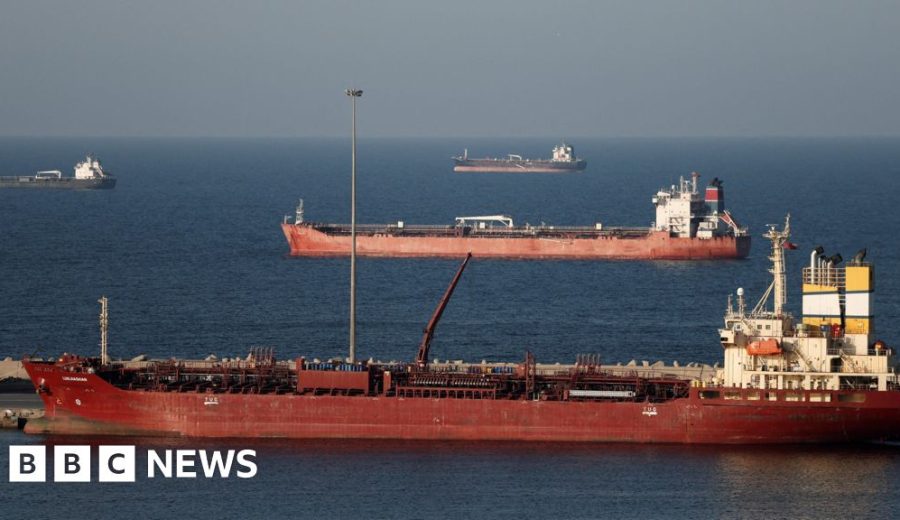
The UK announced a new drone initiative to conduct minesweeping operations in the Strait of Hormuz, a critical global oil shipping route. This strategic move triggered a 3.2% increase in oil prices as markets reacted to improved security prospects. The plan demonstrates UK commitment to maintaining energy stability and protecting vital maritime corridors.
Brent crude surged to $89.45 per barrel as London considers military intervention in critical shipping lane.
Oil futures jumped 3.2 percent to $89.45 per barrel Tuesday evening following Britain’s announcement that it’s exploring “any options” to secure the Strait of Hormuz, including potential deployment of minesweeping drones. The price spike reflects market anxiety over a waterway that handles 8.2 million barrels daily, roughly 21 percent of global petroleum liquids transit.
Numbers tell a stark story about supply vulnerability. Current Hormuz throughput data shows 8.2 million barrels per day flowing through the 21-mile-wide chokepoint — that’s a staggering figure when you consider the alternatives. Saudi Arabia accounts for 2.8 million barrels, Iraq contributes 1.9 million, and UAE adds 1.4 million barrels to the daily flow.
Hormuz Daily Oil Flow by Country — Delima News Data
Yet these figures mask deeper structural fragilities in global energy architecture.
OPEC+ production dynamics amplify the Hormuz risk premium dramatically. The cartel’s spare capacity currently sits at just 2.1 million barrels per day. That’s the lowest buffer since 2008. Saudi Arabia holds 1.3 million barrels of that cushion, but any Hormuz disruption would simultaneously threaten both production and the kingdom’s ability to deploy reserves. The math is sobering when you consider that even a 48-hour closure could trigger inventory draws exceeding 16 million barrels globally.
Mineral scarcity indices compound the energy security concerns beyond oil alone. The Critical Raw Materials Scarcity Index shows lithium carbonate supplies at 94.7 percent capacity utilization — a number that should worry anyone thinking about battery supply chains. Rare earth processing remains concentrated in China at 86 percent of global refining capacity. Britain’s drone deployment consideration reflects this broader resource competition, where energy corridors intersect with critical mineral supply chains.
Timing here is striking given recent OPEC+ production adjustments. Just three weeks ago, the alliance maintained its 2 million barrel per day production cut through March 2024, keeping markets deliberately tight. Now geopolitical tensions threaten to overlay supply constraints with genuine disruption risk. Brent crude’s move above $89 suggests traders are pricing roughly $4 per barrel in Hormuz risk premium.
But the consumer mathematics extend beyond gasoline costs. UK households already face energy costs averaging £2,074 annually — a 68 percent increase from 2021 baselines. Each $10 per barrel oil price increase translates to approximately £0.06 per liter at British pumps. Current price momentum could add £78 annually to average household fuel expenditure.
Shipping insurance rates provide another lens into market psychology right now. By Monday evening, Lloyd’s of London marine war risk premiums for Hormuz transit increased 15 basis points Tuesday, reaching 0.085 percent of cargo value. That seemingly modest adjustment adds roughly $425,000 in insurance costs for a standard 2 million barrel VLCC cargo. Nobody is saying that publicly, but those expenses get embedded in consumer pricing.
Drone deployment discussion reveals broader strategic calculations Britain won’t discuss openly. The UK imports 36 percent of its crude oil requirements, with 12 percent originating from Middle Eastern producers transiting Hormuz. The country’s refined product exports to European partners create additional exposure — disruption could simultaneously threaten domestic supply and export revenue streams worth £8.3 billion annually.
Still, market response suggests traders view military escalation as potentially counterproductive. The VIX oil volatility index climbed 12 percent Tuesday. That indicates heightened uncertainty rather than confidence in supply security measures. For weeks now, analysts have warned that military posturing often backfires in energy markets.
The Strait of Hormuz handles over one-fifth of global oil transit, making any military escalation a systemic risk to energy markets already operating with minimal spare capacity. Britain’s drone consideration signals how resource security concerns are driving nations toward potentially destabilizing military interventions in critical supply corridors.
The Strait of Hormuz handles 8.2 million barrels of oil daily through its 21-mile-wide shipping channel.
Source: Original Report