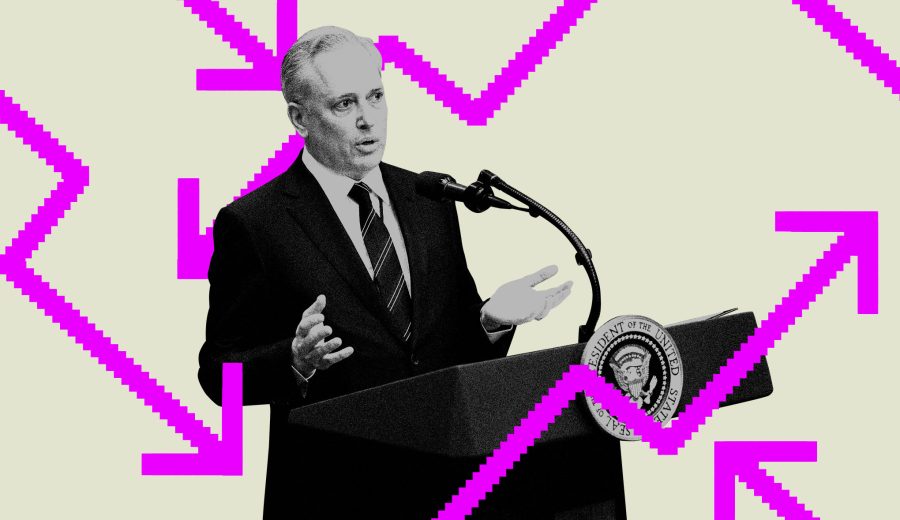
AI Czar Sacks has publicly urged President Trump to pursue a diplomatic “off-ramp” with Iran rather than escalate tensions. The statement comes amid growing concerns about potential military conflict in the region. Sacks emphasizes the need for strategic de-escalation measures.
White House technology chief warns of catastrophic consequences from prolonged Middle East conflict.
David Sacks didn’t expect to spend his first weeks as AI czar talking about war. But here’s the White House’s newest technology chief, using his All In podcast platform to deliver an urgent message: America must “get out” of Iran before the machinery of conflict grinds beyond repair. The timing couldn’t be more awkward.
Power brokers in Silicon Valley rarely venture into Middle East policy. Sacks broke that unwritten rule Monday evening, warning that Iran could “demolish oil and gas infrastructure across the Middle East” if tensions escalate further. His concern reflects something deeper than typical geopolitical anxiety — it’s about systemic vulnerability in our interconnected world. Nobody is saying that publicly, but tech leaders see cascade effects others miss.
Technology amplifies everything, including the capacity for destruction. Sacks’s dual role as both AI and crypto czar gives him a unique vantage point where digital assets, artificial intelligence, and geopolitical stability collide. He’s watching systems most policymakers don’t fully understand. The regulatory frameworks governing these intersections remain practically nonexistent.
But what models informed his urgent plea for an “off-ramp”? We’re asked to trust conclusions without seeing the reasoning process — the same black box problem that plagues AI decision-making. This opacity becomes troubling when algorithmic assessments start shaping foreign policy recommendations. Just hours earlier, markets showed typical Middle East volatility, yet Sacks saw something more serious brewing.
Iranian capabilities combined with regional instability could trigger cascading failures across systems our AI-dependent economy can’t afford to lose. For weeks now, intelligence reports have highlighted Tehran’s growing capabilities amid escalating tensions. That’s a staggering figure when you consider how much critical infrastructure runs on vulnerable networks. The math is sobering.
Yet we must question whether we’ve prepared our democratic institutions for this kind of tech-policy convergence. Hannah Arendt warned about the banality of evil emerging from thoughtless bureaucratic logic. Are we witnessing the birth of algorithmic foreign policy, where human judgment yields to computational analysis? The precedent troubles many traditional diplomats.
Energy markets reveal the stakes clearly. Iran doesn’t need nuclear weapons to cause massive economic disruption — it just needs to target the right infrastructure nodes. Sacks understands complex systems better than most Pentagon strategists. He’s seen how small disruptions cascade through interconnected networks. The scenario that haunts this moment: prolonged regional conflict disrupting both oil flows and the digital infrastructure governing global commerce.
Still, his intervention raises uncomfortable questions about accountability. When technology czars begin driving foreign policy discourse, democratic oversight becomes murky. We’ve created positions of influence spanning domains we haven’t learned to regulate coherently. Traditional diplomatic channels don’t always map the risks that AI experts perceive through their data streams.
Markets responded predictably to Sacks’s comments, but the real impact lies deeper. His warning signals how Silicon Valley expertise increasingly influences Washington’s strategic thinking. Whether that’s wise governance or dangerous precedent depends on your faith in algorithmic assessment versus human judgment. The answer isn’t clear yet.
Sacks’s intervention signals how AI and crypto expertise is increasingly influencing foreign policy decisions. The warning also highlights the growing intersection between technological infrastructure and geopolitical stability in an interconnected global economy.
AI and crypto czar David Sacks has emerged as an unexpected voice on Iran policy within the Trump administration.
Source: Original Report