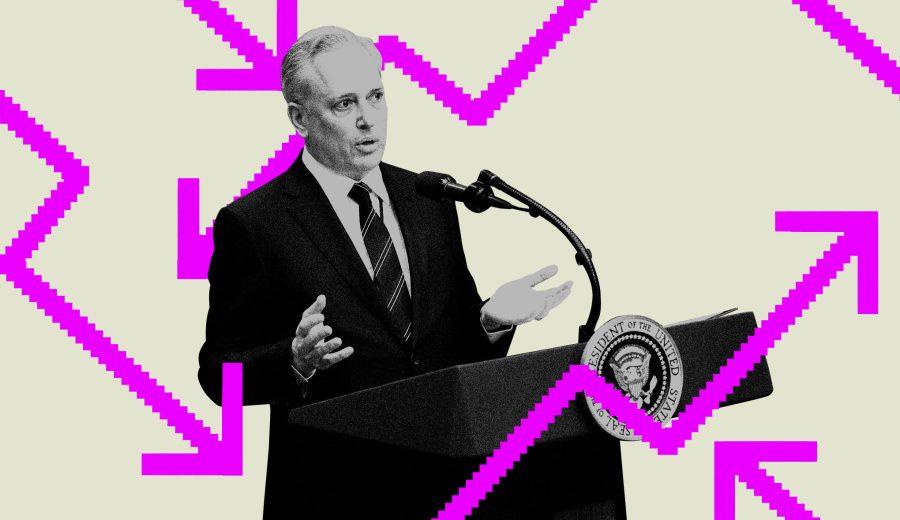
Trump’s AI Czar has issued a stark warning that military action against Iran could result in catastrophic consequences for regional stability and global security. The advisor cautioned against escalating tensions, citing potential humanitarian and geopolitical fallout from such a conflict.
White House AI and crypto czar David Sacks urges de-escalation, citing potential destruction of Middle East energy infrastructure.
Technology leaders rarely venture into war strategy. David Sacks just shattered that convention. The White House’s AI and crypto czar delivered a blunt warning about Iran — one that places Silicon Valley analytics squarely inside America’s war room.
Tuesday evening changed everything for tech’s relationship with foreign policy. Sacks appeared on the All In podcast and abandoned the typical venture capital playbook of market disruption talk. He spoke instead about civilizational collapse.
“We should try to find the off-ramp,” Sacks declared, his voice carrying the weight of someone who’s run the numbers on societal breakdown. His warning about Iran’s ability to “demolish oil and gas infrastructure across the Middle East” wasn’t diplomatic speculation. It sounded like algorithmic certainty.
But here’s what nobody is saying publicly. When AI experts become war advisors, we’re flying blind on their methodology. What models did Sacks use for his catastrophic projections? Which datasets about Iranian capabilities did he access? The same black box problem that plagues machine learning now shadows our military counsel.
Just weeks into his appointment, Sacks finds himself threading an impossible needle. He’s supposed to oversee artificial intelligence and cryptocurrency policy. Now he’s weighing in on Middle Eastern warfare. The timing is striking — and reveals a regulatory gap that Congress never anticipated when they created his position.
Consider the democratic implications here. If venture capitalists become our war counselors, where does accountability live? Tech leaders answer to shareholders and limited partners. Military strategists answer to the American people through elected officials. Sacks occupies both worlds simultaneously. The math doesn’t add up.
Yet Silicon Valley’s computational thinking might catch threats that traditional intelligence misses. If Iran truly can cripple regional energy infrastructure — and if AI modeling reveals cascade effects that diplomats overlook — then Sacks’s warning becomes essential rather than intrusive. We’re witnessing the birth of a hybrid advisory class that our institutions weren’t built to handle.
Still, this moment exposes power’s new geography in Washington. When the AI czar speaks on Iran policy, he embodies something unprecedented. Algorithmic prediction has merged with geopolitical prescription. We’re not just preventing war — we’re deciding whether machines should guide human conflict resolution.
Power now flows through fiber optic cables as much as diplomatic channels. Sacks represents this shift perfectly. He speaks the language of exponential functions and systems collapse. Traditional foreign policy experts speak the language of regional balance and historical precedent. Trump will choose between these competing vocabularies when Iran decisions land on his desk.
Sacks’s warning represents the growing influence of tech leaders in foreign policy decisions, raising questions about democratic accountability and expertise boundaries. The intersection of AI analysis and geopolitical strategy could reshape how America approaches international conflicts, potentially prioritizing algorithmic predictions over traditional diplomatic wisdom.
David Sacks brings Silicon Valley analytical thinking to White House foreign policy discussions.
Source: Original Report