The Federal Reserve raised rates to 3.75% to 4.00% in September, its first increase since July 2023, and officials are divided over another rise at the 27 and 28 October meeting after a hotter-than-expected inflation report.
The Federal Reserve raised its target range for the federal funds rate by a quarter of a percentage point to 3.75% to 4.00% on 16 September 2026, according to the FOMC statement as summarised in search results. The vote was 12-0, and it was the first rate increase since July 2023. Fed Chair Kevin Warsh led the press conference, and a Yahoo Finance live report quotes him as vowing a “timelier return” to 2% inflation.
The minutes of that meeting, released on 7 October, show a committee that expects more rises but is divided about when. A CNBC headline says that Fed officials see another hike coming but gave no sign as to when, and a summary of the projections says that 16 of the 18 officials pencilled in at least one more rise this year. A report on the minutes says that some officials pushed for more increases to suppress stubborn inflation while others preferred a pause.
The minutes also look backward. According to a summary, the debate took place before weaker August inflation figures and September employment figures were available, which led markets to price in a pause in October at the time of the minutes. That changed on 14 October, when a consumer price report showed inflation of 3.7% for the year and 0.6% for the month, and a search summary says that fixed income traders now see the 28 October meeting as the most likely point for the next move.
If the Fed raises rates on 28 October, the range would rise to 4.00% to 4.25%, according to the summary. That is the most likely outcome in that report, but the sources disagree. One summary says that fixed income markets are firmly pricing in back-to-back increases in October and December, while the summary of the minutes says that markets priced a pause in October before the new data, so market expectations have been moving and should be checked against the CME FedWatch tool or the news on the day.
Fed officials have said that inflation has been above the target for more than five years, according to a report on the minutes. A speech by Governor Christopher Waller on 8 October is also listed in the search results, though its content was not reviewed, so it is not described here.
The inflation picture is in a separate report. Headline inflation of 3.7% is driven by gasoline, which rose 9.1% in September, while core inflation is 2.6%, according to the CNBC summary of the Bureau of Labor Statistics report. A central bank can do little about oil prices that are driven by events in the Middle East, but it can try to prevent higher energy prices from feeding into wages and other prices, which is the argument for raising rates.
The effects of higher rates are visible in the markets. The yield on the 10-year Treasury note was 5.19% on 14 October, according to Yahoo Finance, and US shares fell that day, with the S&P 500 down 1.1% in its worst session since July. Banks have also felt it: JPMorgan took $658 million of securities losses in the quarter in what was described as a bond rout, as Delima News reports in its coverage of bank earnings.
The central bank faces a choice between two risks. Raising rates again would reduce inflation pressure but could slow growth and weigh on shares, while holding could let inflation expectations rise, and a search result says that consumers now expect inflation of 3.9% over the next year. The sources reviewed do not describe the labour market data in detail, so the strength of the economy cannot be assessed here.
The decision will be announced on Wednesday, 28 October, at the end of the two-day meeting, and Delima News will report it when it is released.
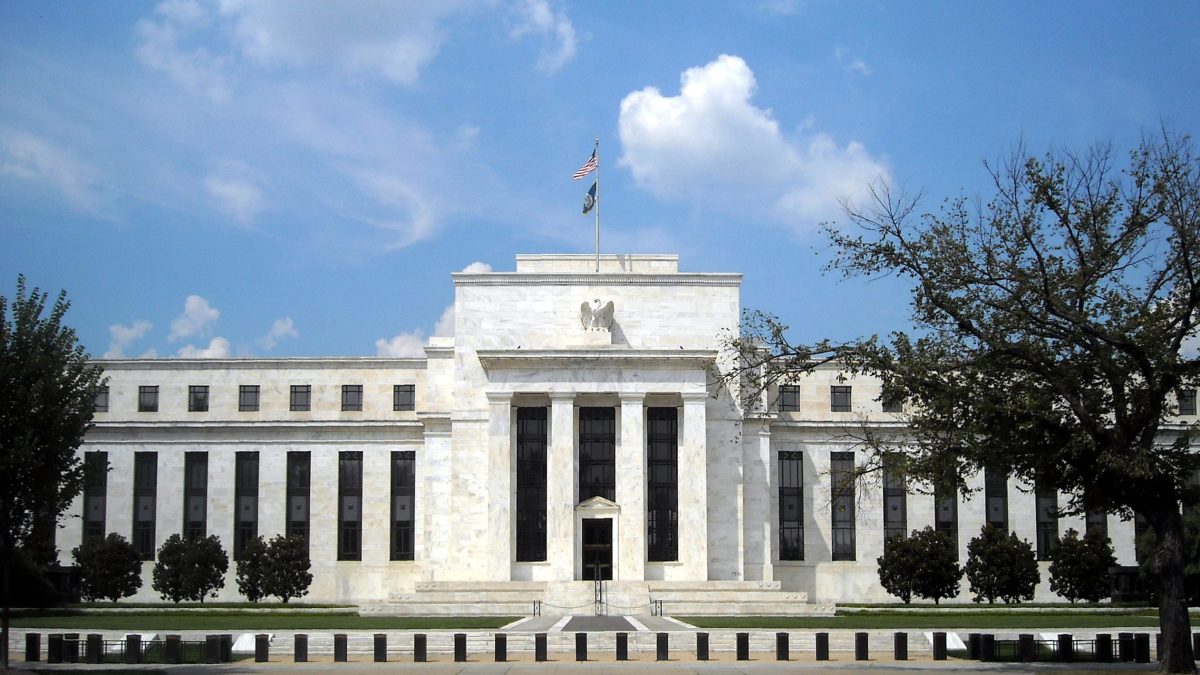
Image: The Federal Reserve’s Eccles Building in Washington (file photo). Photo: AgnosticPreachersKid / Wikimedia Commons (CC BY-SA 3.0)