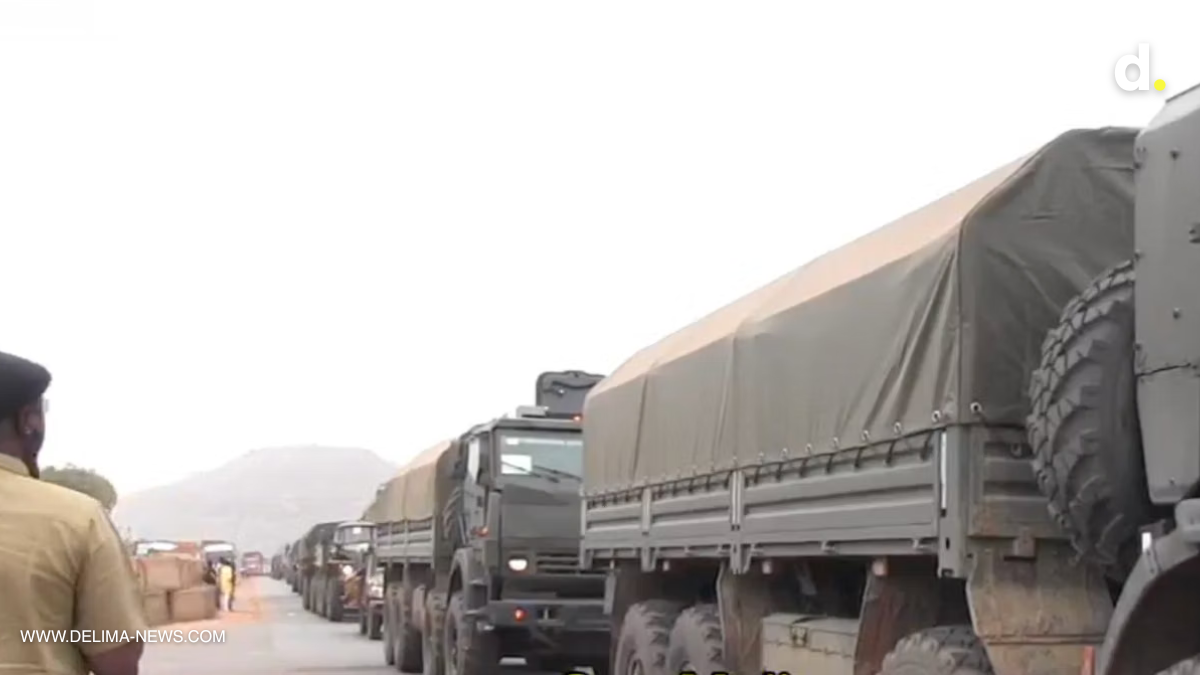
Human Rights Watch said in a report published on July 31, 2026, that a June 15 air strike by Russia’s Africa Corps on the village of Kyrnia in Mali’s Mopti region killed eight civilians, including three children, and wounded two more, according to Al Jazeera and The Associated Press. HRW said an aircraft identified as a Sukhoi Su-24 dropped at least two munitions: the first hit outside the village chief’s home, killing his wife, two of the children and others, and the second hit a small cattle market, killing four men. HRW interviewed 19 people and analysed satellite imagery and video, and called on Mali’s government to investigate, warning of possible war crimes. Africa Corps said its June 23 strike targeted terrorists.
The case that the strike was unlawful is made by HRW’s findings on who was killed and who was not. The report found no militant casualties among the eight dead, and it said the strikes “did not appear to target a clear military objective.” Its evidence included 19 remote interviews with witnesses, military sources and journalists, satellite imagery and geolocated video, including video posted by Africa Corps. The United Nations documented at least 2,260 civilian deaths across Mali, Burkina Faso and Niger between January and March 2026, according to Al Jazeera, so the Kyrnia strike is part of a pattern of civilian harm in the region. Under the laws of war, attacks must distinguish between civilians and fighters, and HRW called for accountability.
The case against the report’s conclusion starts with the presence of fighters in the village. HRW itself said about 100 fighters from JNIM, the al-Qaeda-linked group, were in Kyrnia when the strikes happened, although most were gathered elsewhere, and that JNIM had controlled the village for six years. The village chief’s three sons are JNIM fighters, and the chief does business with the group, according to HRW’s account as reported by Al Jazeera. Africa Corps said its June 23 strike hit “terrorists” and “eliminated several field commanders,” and the Associated Press stated that it could not independently verify HRW’s claims, so the military justification remains contested. HRW conducted its interviews remotely, which limits what it can confirm independently.
The report matters for Mali and the Sahel because Russia.s Africa Corps is involved in the fighting, and civilians living in areas controlled by armed groups are caught between them. A call for an investigation tests whether the authorities will examine strikes carried out by their partners. HRW asked Mali.s government to investigate and to hold those responsible to account. For the region, the 2,260 civilian deaths that the UN counted in one quarter across three countries show the scale of the problem, and the dispute over Kyrnia shows how hard it is to establish what happened when access is restricted and each side gives a different account.
HRW says eight civilians died in an attack with no clear military target, while Africa Corps says it hit terrorists. Without an independent investigation, the facts of Kyrnia will stay disputed.