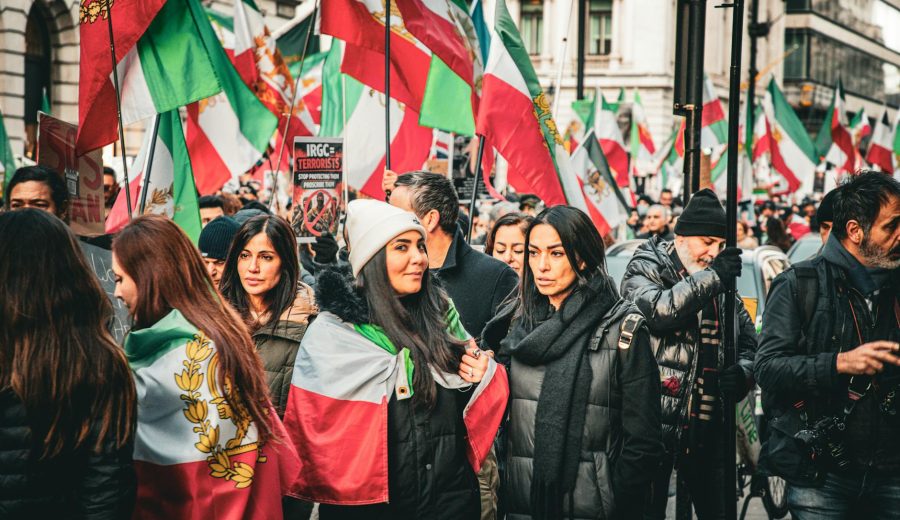
Thousands gathered in London to demonstrate against escalating Iran tensions, marking a significant moment in public discourse. The protest signals a widening political rift between government officials and citizens over international policy. The demonstration reflects growing concerns about potential military involvement in Middle Eastern conflicts.
International opposition emerges as Middle East conflict threatens to engulf the region.
Cardamom tea mingles with chants of solidarity at a crowded café near Russell Square, where organizers put finishing touches on what would become one of London’s largest anti-war demonstrations this year. Thousands gathered yesterday to denounce what they termed US-Israeli aggression against Iran, revealing deepening fractures in Western public opinion over Middle East policy.
Timing here is striking. Just as Tehran’s reformist elements find themselves caught between economic necessity and revolutionary ideology, international pressure mounts from unexpected quarters. What began as scattered criticism of military escalation has crystallized into organized opposition across European capitals.
Yet the protesters’ message reflects a more complex reality than simple anti-war sentiment. Many demonstrators expressed frustration with what they see as London’s complicity in regional destabilization. One organizer told me, “We’re not just opposing bombs, we’re opposing the whole architecture of interference.” This echoes conversations I’ve had in Damascus cafés and Beirut boardrooms, where the phrase “architecture of interference” has become shorthand for Western policy contradictions.
Economic calculations driving current tensions can’t be ignored. Iran’s energy sector, already strained by sanctions, faces additional pressure as regional allies Lebanon and Gaza require massive reconstruction funding. Tehran’s budget can barely support domestic subsidies, let alone finance proxy operations across three fronts. The math is sobering.
But London’s protest reveals something deeper about shifting public consciousness. European audiences increasingly question whether military pressure serves their interests. Rising energy costs, refugee flows, and trade disruptions create tangible consequences for ordinary citizens. By Tuesday evening, similar demonstrations had emerged in Paris and Berlin, suggesting coordinated concern rather than spontaneous outrage.
State response will prove telling. Iranian leadership must balance revolutionary rhetoric with economic pragmatism. Recent signals from Tehran suggest possible openness to de-escalation, particularly regarding nuclear negotiations. Still, domestic pressure from hardliners limits maneuvering room for President Raisi’s administration.
Regional power dynamics complicate any simple resolution. Saudi Arabia’s cautious neutrality, Turkey’s strategic hedging, and Egypt’s quiet diplomacy all influence Tehran’s calculations. The phrase “playing all sides” captures how regional powers navigate between American pressure and Iranian proximity. Nobody is saying that publicly.
London’s protest also highlights growing disconnection between government policy and public sentiment. Prime Minister Sunak’s support for Israeli operations faces increasing domestic skepticism. Yet parliamentary arithmetic suggests policy won’t shift dramatically, regardless of street demonstrations.
Demonstration’s diverse composition tells its own story. Palestinian solidarity groups joined Iranian diaspora organizations, Kurdish activists, and British peace campaigners. This coalition suggests opposition extends beyond traditional anti-war constituencies into mainstream concern about regional stability.
Intelligence analysts note how public opposition in Western capitals could influence Tehran’s strategic thinking. Iranian leaders often miscalculate international sentiment, viewing protests as evidence of Western weakness rather than democratic expression. Reality lies somewhere between: genuine concern about escalation combined with limited political impact on actual policy decisions. The math doesn’t add up.
International protests reflect growing public unease with Middle East military escalation, potentially influencing diplomatic calculations in Tehran and Washington. The demonstrations reveal widening gaps between government policies and public opinion across Western capitals, complicating future military or economic pressure campaigns.
Demonstrators fill London streets opposing escalating tensions between the US, Israel, and Iran.
Source: Original Report