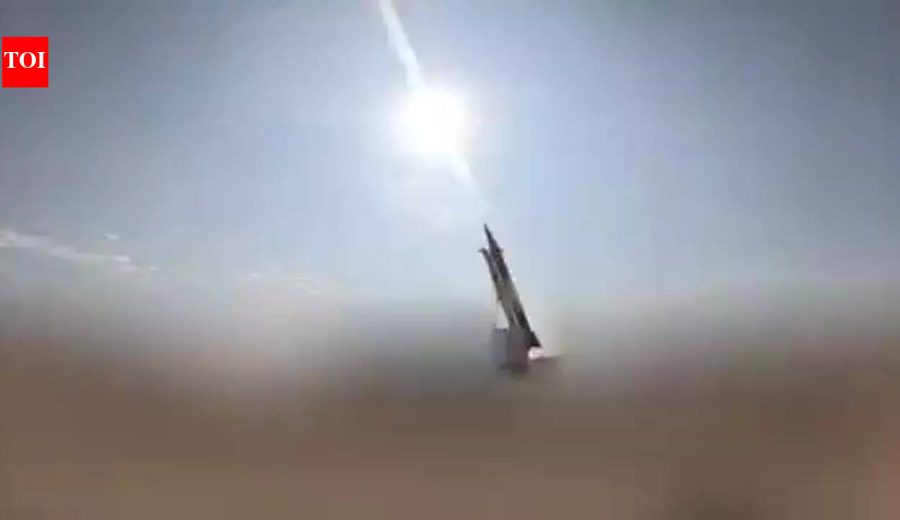
Iran launched Sejjil-2 missiles at Israeli targets, marking a significant escalation in regional military tensions. The “dancing missile” is known for its advanced evasion capabilities. This strike represents a major development in the ongoing Iran-Israel conflict.
The IRGC’s deployment of advanced solid-fuel missiles marks Tehran’s most sophisticated retaliation yet in the escalating regional conflict.
In the pre-dawn hours of Tuesday, as Tehran’s chai houses were preparing for the morning rush, Iran’s Revolutionary Guards unleashed their most advanced missile arsenal against Israeli military installations. The barrage included the feared Sejjil-2, a weapon that dances through the atmosphere at hypersonic speeds, covering 2,000 kilometers in minutes.
Tuesday’s missile launch from an undisclosed site in central Iran wasn’t just military theater. It was Tehran’s calculated response to what clerics call “the Zionist aggression,” but it also revealed something more profound about Iran’s domestic balancing act. Just hours before the launch, ordinary Iranians were discussing rising bread prices and university protests on social media, their concerns worlds away from the regime’s regional ambitions. The timing is striking.
Operation True Promise 4, as the IRGC dubbed it, comes as Iran grapples with internal pressures that would challenge any government. Young Iranians increasingly embrace Western cultural influences. Women push boundaries despite hijab enforcement. Economic frustrations simmer in every bazaar from Isfahan to Shiraz while the regime channels resources into developing missiles that cost millions per unit.
Advanced solid fuel technology means the Sejjil-2 can fire with minimal preparation time, unlike liquid-fuel missiles that require hours of fueling. Regional observers understand that such weapons provide Tehran with what strategists call “escalation dominance” — the ability to strike first and fast. This development changes everything.
But the broader regional calculus has shifted dramatically since February 28 when this latest cycle of retaliation began. Saudi Arabia watches nervously from Riyadh, calculating whether Iranian missile advances threaten the delicate détente both nations have been building. The Emiratis continue their pragmatic approach, maintaining business ties with Tehran even as they host American military assets, though cracks are beginning to show in their approach to Iran war narratives.
Defense planners in Tel Aviv face sobering mathematics when analyzing the Sejjil-2 threat. While Iron Dome excels against shorter-range threats, the Sejjil-2’s trajectory and speed present different challenges. Recent airstrikes have reshaped the power balance, and that’s a staggering technical leap. The missile’s nickname, the “dancing missile,” comes from its ability to maneuver during flight, making interception calculations exponentially more complex.
Yet Iran’s missile diplomacy reveals an internal contradiction that defines modern Tehran. The same regime that develops hypersonic weapons struggles to provide reliable electricity to its citizens. The clerical establishment that projects power across the Middle East faces mounting pressure from a population increasingly disconnected from revolutionary ideology. Political rifts are widening, and nobody talks about this disconnect publicly in Tehran.
Conversations in Tehran’s underground metro stations and university corridors revealed the domestic reality by Tuesday evening. Students debated not the missiles’ strategic implications but whether the government’s foreign adventures would bring more sanctions and economic hardship. For weeks now, this tension has been building between the regime’s military ambitions and popular priorities.
Still, the regional power balance hinges on whether Iran’s technological advances can compensate for its growing domestic vulnerabilities. The Sejjil-2 flies at hypersonic speeds, but it can’t outrun the social and economic pressures building within Iran’s borders. The regime’s ability to maintain this dual reality — projecting strength abroad while managing discontent at home — will determine whether such displays of military prowess strengthen or ultimately weaken Tehran’s position.
Iran’s use of advanced Sejjil missiles represents a significant escalation in regional military capabilities that could reshape Middle East defense calculations. The deployment reveals Tehran’s growing technological sophistication even as domestic economic pressures mount, highlighting the regime’s strategic prioritization of external projection over internal stability.
Iran’s Revolutionary Guards launched advanced Sejjil-2 missiles capable of striking targets 2,000 kilometers away in their latest retaliation against Israeli military sites.
Source: Original Report