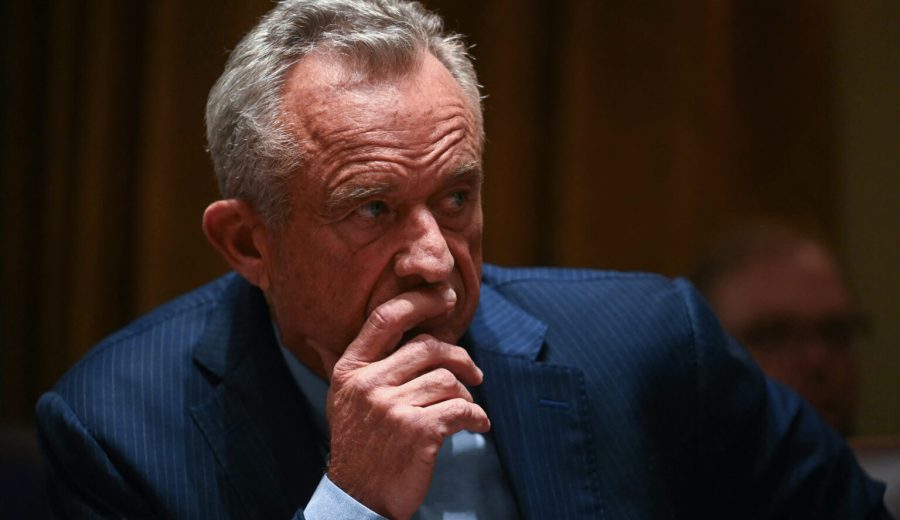
A US court ruling has reinforced protections for vaccine-related health partnerships between the United States and African nations. The decision shields ongoing immunization programs and collaborative healthcare initiatives from regulatory challenges. This maintains continuity in CDC-supported vaccination campaigns across the continent.
Federal court decision protects continental immunization programs from American policy disruption.
Kigali Convention Centre buzzed with energy last week as Rwanda’s young health ministers gathered to chart the continent’s vaccine manufacturing roadmap. News of America’s internal health policy chaos felt both distant and immediate. A federal judge’s decision to block RFK Jr’s sweeping changes to CDC vaccine guidance represents more than American domestic politics. It’s a lifeline for Africa’s ambitious health sovereignty agenda.
Africa’s opportunity has never been clearer. With 70 percent of our population under 30 and pharmaceutical manufacturing hubs emerging from Lagos to Addis Ababa, the continent is positioning itself to break decades of vaccine dependency. Just last month, Rwanda’s BioNTech facility began producing its first mRNA doses, while South Africa’s Biovac expanded capacity for routine immunizations that protect millions of African children.
Vaccine Production Growth — Delima News Data
Yet America’s erratic health leadership under Kennedy threatened to undermine these gains. His dismantling of CDC advisory structures and vaccine recommendations sent shockwaves through global health networks that African nations still rely on for technical guidance and funding. The timing couldn’t have been worse — just as the African Union’s New Public Health Order was gaining momentum, Washington appeared ready to abandon science-based health policy entirely.
But Tuesday evening’s federal court intervention changes the calculus dramatically. By blocking Kennedy’s most destructive moves, the ruling preserves institutional knowledge and partnerships that African health systems have spent years cultivating. The judge’s decision means that CDC’s vaccine recommendations — which inform procurement decisions from Dakar to Dar es Salaam — remain grounded in rigorous scientific review rather than political ideology. The timing is striking.
Still, this American chaos reveals why Africa’s push for health independence is so critical. Young entrepreneurs across the continent are already building the infrastructure we need. In Morocco, 28-year-old biochemist Aicha Benali is developing temperature-stable vaccine formulations perfect for rural African deployment. Ghana’s drone delivery networks, pioneered by local tech innovators, are revolutionizing how vaccines reach remote communities without dependence on foreign logistics chains.
Current numbers paint a sobering but encouraging picture. Africa produces less than 1 percent of the vaccines we consume, yet our pharmaceutical sector is growing at 10 percent annually. The math is sobering. By 2030, continental production could meet 60 percent of our immunization needs if current investment trends continue.
Global context is shifting in our favor. While America wrestles with anti-science populism, African institutions are doubling down on evidence-based health policy. The Africa CDC’s vaccine manufacturing initiative has attracted $3.2 billion in commitments, with youth-led biotech startups capturing increasing investor attention. That is a staggering figure.
Federal court intervention buys us time, but it also underscores an uncomfortable truth — Africa’s health security can’t depend on American political stability. Every month Kennedy remained in power was a month lost for global health cooperation. But it was also a month gained for African self-reliance advocates. Nobody is saying that publicly.
Just hours after the ruling, health ministers from six African nations announced expanded partnerships with local manufacturers. The announcement signals that the continent’s vaccine independence movement won’t slow down regardless of what happens in Washington. The future of African health lies in African hands. This generation of leaders knows it.
The court ruling protects ongoing health partnerships while Africa builds its own vaccine manufacturing capacity. This generation of African leaders and entrepreneurs are using the disruption to accelerate continental health independence initiatives.
Rwanda’s BioNTech facility represents Africa’s growing vaccine manufacturing independence.
Source: Original Report