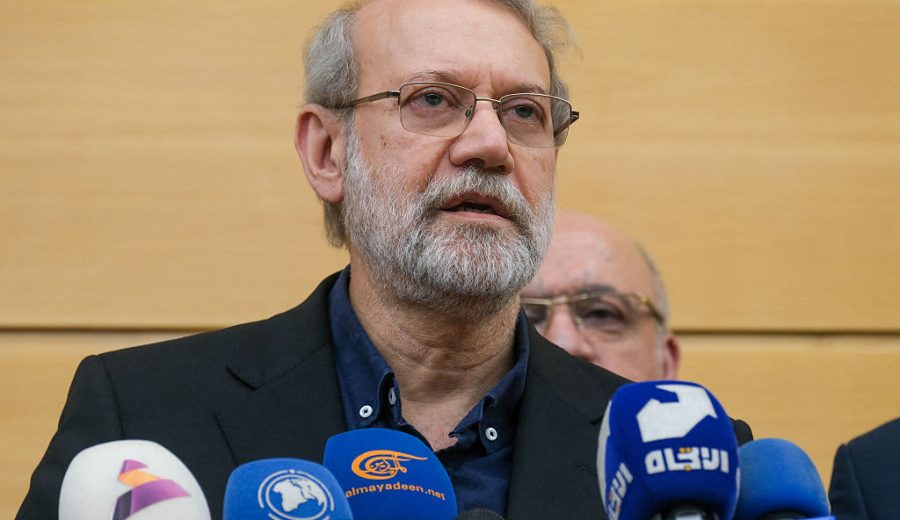
Iran’s security chief has died, triggering significant geopolitical realignment across the Middle East. The death intensifies existing tensions between Iran and Israel while reshaping regional power dynamics. Larijani’s passing marks a critical moment in Iranian leadership and international relations.
The reported killing of Ali Larijani threatens to reshape Middle East alliances as Tehran faces its greatest leadership crisis in decades.
The afternoon call to prayer echoed across Tehran’s bustling bazaars when news broke that would silence even the most animated carpet merchants. Ali Larijani, Iran’s influential security chief and confidant to the late Supreme Leader, was dead according to Israeli claims. Coffee houses from Damascus to Baghdad buzzed with the same whispered question: who will fill the vacuum left by the man they called “the shadow behind the throne”?
Timing couldn’t be worse for Iran’s theocratic establishment. Just months after Ayatollah Khamenei’s passing, the regime was already walking a tightrope between reformist pressures and hardline resistance. Larijani represented the delicate balance between these forces. His death removes a key architect of Iran’s regional strategy at precisely the moment when young Iranians demand greater social freedoms while the state tightens its grip on dissent.
Tehran’s upscale Elahieh district tells the story of modern Iran. Women push the boundaries of mandatory hijab while reformist politicians promise change that never quite arrives. Satellite dishes peek discretely from rooftops. Residents have grown accustomed to the contradiction of modern life under theocracy.
But beneath this surface liberalization, the security apparatus that Larijani helped build continues to monitor, restrict, and control. The timing is striking.
Economic implications look equally stark for the regime. Iran’s already fragile economy, battered by sanctions and mismanagement, now faces additional uncertainty. Larijani was instrumental in managing relationships with proxy groups across the region. These networks aren’t just ideological extensions of Iranian power — they’re economic lifelines that help Tehran project influence despite international isolation.
Numbers tell a sobering story for Iran’s leadership. Without Larijani’s institutional knowledge and relationships, maintaining control over Hezbollah in Lebanon, militias in Iraq, and Houthi forces in Yemen becomes exponentially more complex. That’s a staggering challenge. These aren’t just military alliances but carefully cultivated partnerships that took decades to build.
Regional powers are already recalculating their positions. Saudi Arabia, which had been cautiously engaging with Iran through back channel diplomacy, now sees an opportunity to reassert its influence. By Monday evening, the kingdom’s crown prince was reportedly consulting with advisers about new strategies. His approach has long viewed the Iran conflict through the lens of economic competition rather than purely sectarian rivalry.
Israel’s reported strike represents more than tactical success. It signals a fundamental shift in how the conflict will be conducted. By targeting senior leadership rather than just military assets, Israel attempts to decapitate Iran’s decision making apparatus. The message is clear: no one is beyond reach.
Yet Iran’s response will determine whether this escalation spirals into broader conflict. The regime faces a classic dilemma. A strong military response could rally domestic support but risks devastating retaliation. A measured response might preserve stability but could be seen as weakness by both internal and external audiences. Nobody is saying that publicly.
Succession questions loom largest for Tehran’s power brokers. Larijani’s replacement will inherit not just his formal responsibilities but his informal networks across the region. For weeks now, Iranian officials have been quietly assessing potential candidates. Personal relationships often matter more than institutional structures in Middle Eastern politics. Those relationships died with Larijani.
Still the regime must move quickly to fill the void. Just hours earlier, before news of Larijani’s death broke, Iranian proxy forces were coordinating operations across three different countries. That coordination now hangs in the balance. The math doesn’t add up for maintaining current operations without his oversight.
Larijani’s death removes a key stabilizing figure from Iran’s power structure at a critical moment of transition, potentially accelerating regional conflicts. His loss could either push Iran toward more aggressive responses or force the regime into strategic retreat, reshaping Middle East dynamics for years to come.
Tehran’s government district where security decisions that shaped regional conflicts were made for decades.
Source: Original Report