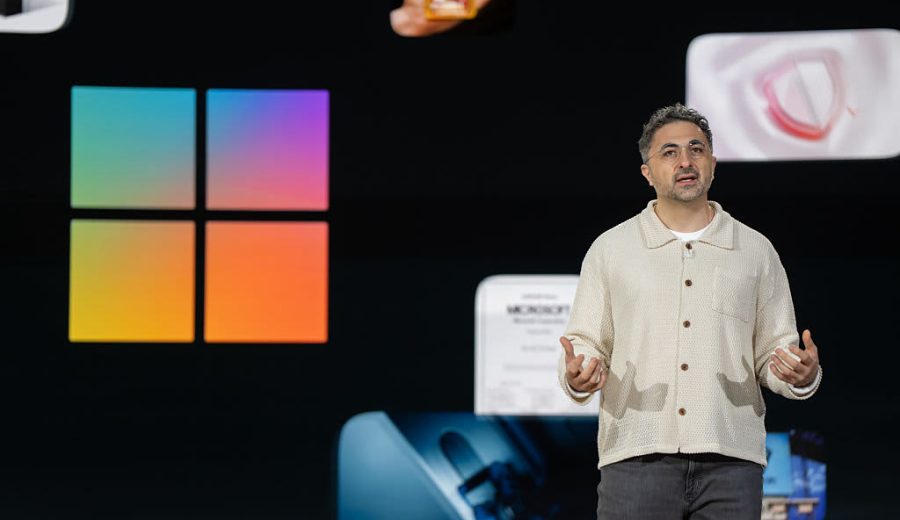
Microsoft has undergone significant organizational changes in its AI division, signaling a strategic pivot toward developing more advanced AI systems. The reshuffle includes leadership changes and renewed focus on Copilot integration across products. Industry experts suggest these moves indicate Microsoft’s commitment to reaching superintelligence capabilities.
The tech giant’s leadership restructuring exposes our willingness to chase artificial minds we cannot comprehend.
Microsoft’s latest reshuffling of its Copilot AI leadership represents more than corporate strategy. It’s our headlong rush toward superintelligence without pause for moral reflection. We’re chasing digital transcendence while risking our humanity to algorithms we won’t question.
Ancient Greeks warned of hubris — that fatal flaw of overreaching ambition. Today we witness its digital incarnation as Microsoft consolidates its AI efforts under Mustafa Suleyman’s superintelligence group. The company claims efficiency drives this restructuring. Nobody is saying that publicly, but the timing reveals something more troubling about our technological trajectory.
This organizational shift frees Suleyman to focus entirely on building more powerful AI models. The consolidation of Copilot’s engineering teams creates a streamlined pipeline from research to deployment. But at what ethical cost do we pursue these digital gods?
Microsoft wants faster iteration between model development and product integration. That’s the breakthrough here. By Tuesday evening, industry analysts were calling it a smart strategic move. The math seems compelling when you consider the billions invested in AI research. It’s a staggering figure.
Yet we must examine what lies beneath this corporate maneuvering. These aren’t mere productivity tools being developed behind closed doors. We’re crafting artificial minds whose decision making processes remain fundamentally opaque to their creators. The black box problem persists — unaddressed and largely ignored in boardroom calculations.
Each new model brings capabilities we struggle to predict or control. We’re building systems that may soon surpass human intelligence in ways we can’t foresee. The philosophical question haunts us: should beings create their successors without understanding their nature? The timing is striking.
Regulatory gaps widen with each passing month. Microsoft restructures for speed while our legal frameworks move at glacial pace. Policymakers debate yesterday’s problems while tomorrow’s challenges multiply in server farms across the globe. The disconnect between technological capability and governance grows more stark.
But the deeper concern transcends regulation. We’re witnessing the commoditization of consciousness itself. These AI models process information in ways that mirror human thought. Yet we treat them as mere products to be optimized and deployed. The hubris is breathtaking.
What if this restructuring succeeds beyond Microsoft’s expectations? Suleyman’s team might achieve genuine superintelligence within the current regulatory vacuum. We’d face artificial minds of unprecedented capability governed by corporate interests rather than human values. That’s a sobering possibility.
Recent warnings from AI researchers about development pace make this timing particularly troubling. Just months after calls for industry wide caution, we see acceleration instead of reflection. The pattern suggests an industry that can’t slow its own momentum.
Revolutionary technologies reshape society in unexpected ways throughout history. The printing press transformed knowledge distribution. The internet redefined human connection. Artificial superintelligence may redefine intelligence itself. Yet we proceed as if building better search engines. The math doesn’t add up.
Still, this restructuring reveals our collective choice to prioritize capability over comprehension. We’re racing toward a future we can’t clearly envision. Corporate strategies guide us rather than ethical frameworks. The question isn’t whether we can build superintelligent systems — it’s whether we should.
Microsoft’s AI reorganization speeds up the race toward superintelligence without proper ethical safeguards or regulatory oversight. This corporate restructuring could determine whether artificial intelligence serves human flourishing or corporate profits. The timing reveals an industry choosing speed over safety in humanity’s most important technological development.
Microsoft’s leadership restructuring signals an accelerated push toward superintelligent AI systems.
Source: Original Report