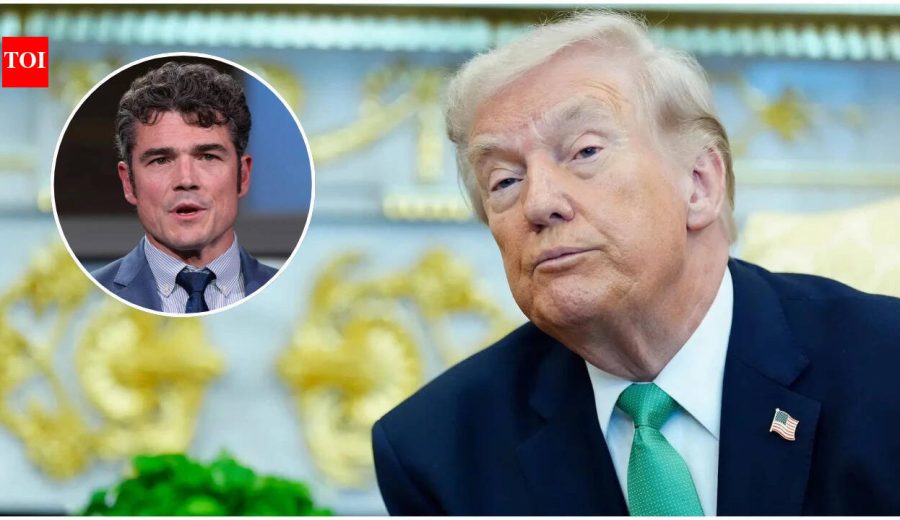
Trump announced the departure of his counterterror chief following disagreements over Iran policy and military strategy. The exit highlights deep divisions within the administration over how to handle Iran-related security threats. This decision signals a significant shift in the administration’s counterterrorism approach and Iran strategy.
The resignation exposes deep fractures in Washington’s national security establishment over Middle East military engagement.
At the bustling Maydan Café in downtown Washington, where policy wonks traditionally gather over Turkish coffee to debate America’s Middle East entanglements, conversations this week have turned unusually heated. The abrupt departure of National Counterterrorism Center director Joe Kent has torn open old wounds about American involvement in our region.
Timing couldn’t be more explosive. Just as Washington’s political class settles into familiar partisan trenches, Kent’s resignation letter landed like a thunderclap across both parties. His blunt assessment that Iran poses “no imminent threat” directly challenges the administration’s justification for military strikes.
Trump’s immediate reaction tells us everything we need to know. “Good thing he’s out,” the president declared Tuesday morning, dismissing Kent as “very weak on security.” Kent’s supporters paint a different picture. They see a career intelligence professional who dared speak truth to power.
Real tension lies deeper than party politics. Kent explicitly blamed Israeli pressure for pushing America toward confrontation with Tehran. The timing is striking — nobody is saying that publicly in official circles.
Republicans rushed to defend the administration’s Iran strategy within hours of Kent’s announcement. They frame the strikes as necessary deterrence against Tehran’s regional ambitions. Yet their arguments feel rehearsed, lacking the conviction that typically accompanies genuine security concerns.
Democrats found themselves in an awkward position overnight. Supporting Kent means criticizing military action — always risky political territory. His credentials make dismissal difficult. The man spent decades tracking genuine terrorist threats.
By Tuesday evening, the battle lines had hardened across Capitol Hill. Congressional Republicans scheduled hearings to justify the Iran operations. Democratic leadership quietly began reaching out to former intelligence officials who share Kent’s skepticism.
Broader implications stretch far beyond Washington’s political theater for America’s Middle East allies. Israeli officials maintain public silence but privately express concern about Kent’s accusations. Gulf partners worry about mixed signals from their primary security guarantor.
Tehran’s response has been predictably measured over the past 48 hours. Iranian officials see Kent’s resignation as validation of their long-held belief. American aggression stems from external pressure rather than genuine security concerns.
But the most sobering reality is what Kent’s departure reveals about America’s decision-making process right now. When career professionals feel compelled to resign over policy disagreements, it suggests something troubling. Political considerations outweigh security analysis. The math doesn’t add up.
Economic stakes are enormous in this volatile region. Regional instability affects global energy markets, trade routes, and investment flows. American businesses with Middle East operations face increased uncertainty. Insurance costs for regional projects are already climbing.
Kent’s final act as director was particularly telling just hours before his resignation became public. He briefed congressional leadership on actual terrorist threats facing America. Sources suggest his assessment focused on domestic extremism and cyber attacks. Iran barely featured in his threat matrix.
Still, this disconnect between stated policy and professional assessment creates dangerous blind spots across government agencies. Resources devoted to confronting Iran can’t simultaneously address other security challenges. Intelligence professionals know this. Politicians apparently don’t care.
Kent’s resignation exposes fundamental disagreements within America’s national security establishment about real versus manufactured threats. The controversy threatens to undermine both domestic intelligence coordination and regional alliance relationships. Most critically, it reveals how foreign policy decisions increasingly reflect political pressure rather than security analysis.
Former NCTC director Joe Kent’s resignation has sparked intense debate over Iran policy.
Source: Original Report