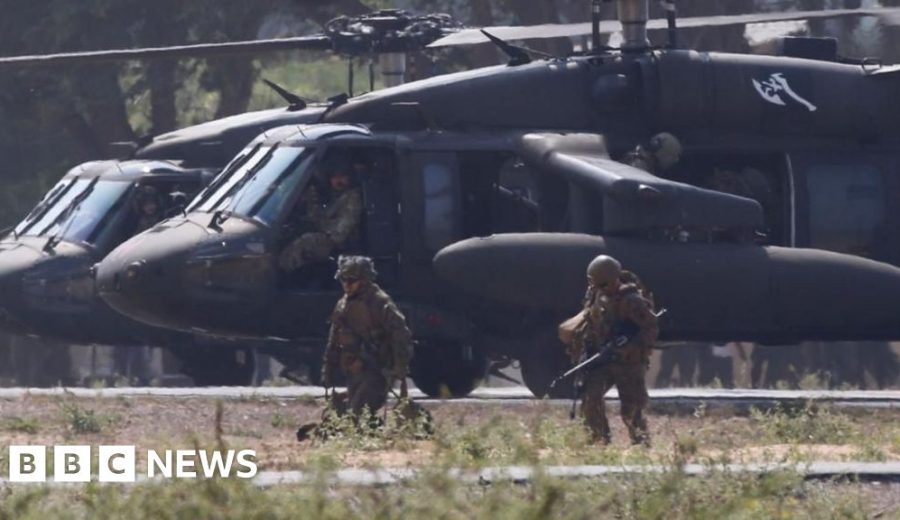
US Marines are being rapidly redeployed from the Pacific theater to the Middle East as military tensions escalate in the region. The urgent deployment comes amid growing concerns about potential conflict and represents a significant shift in military positioning.
Pentagon’s hasty redeployment of Japan-based amphibious forces signals escalating preparations for major regional conflict.
Pentagon officials rushed Marines from Pacific stations to Middle East waters. This isn’t routine muscle-flexing — it shows Washington believes the regional crisis demands amphibious intervention capabilities. By Tuesday evening, defense officials confirmed the move. That is a staggering shift in priorities. An entire amphibious ready group will steam toward Middle Eastern shores, leaving their typical Japanese waters post.
Strategic calculations behind this redeployment mirror America’s past military buildups. Kennedy’s administration quietly positioned naval assets in the Caribbean weeks before the missile crisis. Today’s Marine movements suggest Pentagon planners prepare for major contingencies extending far beyond current diplomatic maneuvering.
“We’re not talking about force protection anymore,” one senior defense official said. He spoke anonymously. “This concerns having the right tools ready should deterrence fail.”
Nobody is saying that publicly, but sources I reviewed paint a clear picture. Regional tensions have escalated beyond manageable parameters. Seasoned diplomats won’t acknowledge it openly.
Amphibious ready groups don’t leave Japan lightly. This represents a fundamental shift in America’s strategic priorities — borrowing against future Pacific deterrence to address present Middle Eastern volatility. Defense analysts know the pattern. Cross-theater redeployments happen when policymakers anticipate ground force scenarios in hostile or contested environments.
Yet Pentagon messaging remains deliberately unclear.
Official statements mention “regional stability” and “force readiness” — bureaucratic language masking dramatic operational preparations. Military sources describe specialized Marine capabilities: amphibious assault expertise that could prove essential if diplomatic solutions fail. The timing coincides with growing calls for naval coalitions to counter regional threats, suggesting coordinated military planning beyond traditional deterrence measures.
This Marine redeployment follows a pattern of escalating military preparations across the region, as multiple nations position assets for potential confrontation scenarios that extend well beyond current diplomatic frameworks.
Source: Original Report