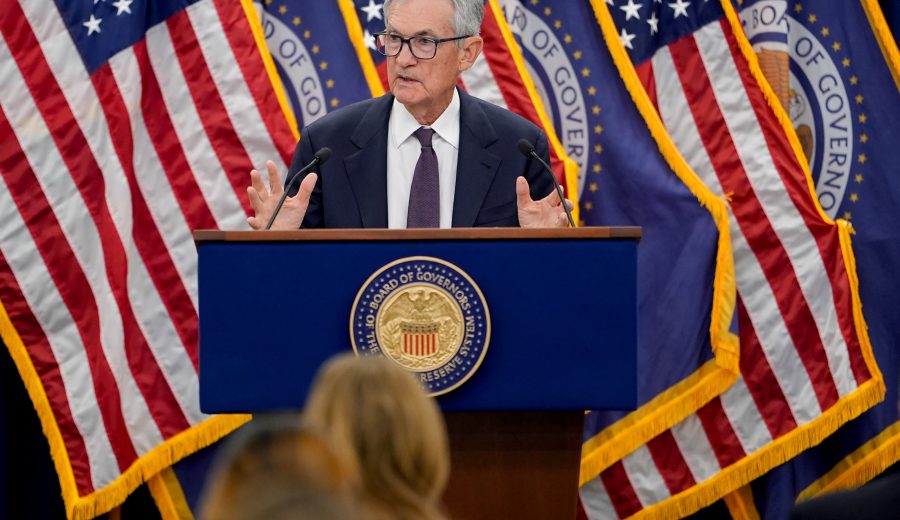
The Federal Reserve decided to hold interest rates steady at their latest meeting, citing uncertain economic conditions stemming from escalating tensions in Iran. This decision reflects the Fed’s cautious approach as geopolitical risks add complexity to inflation and employment outlook. Markets are watching closely as global instability intersects with domestic monetary policy concerns.
Central bank cites geopolitical tensions as key factor in maintaining current monetary policy stance.
The Federal Reserve held its benchmark interest rate steady at 5.25% to 5.50% Wednesday, with Chair Jerome Powell specifically citing “uncertain economic impacts” from the Iran conflict. Treasury yields immediately retreated 15 basis points on the dovish pivot. The 10-year note fell to 4.28%.
Wednesday’s decision marks a clear shift from the Fed’s previous hawkish stance. Just three weeks ago, Powell suggested another 25 basis point hike was “certainly on the table” for this meeting. But geopolitical chaos changed everything.
Data
Oil Price Surge and Fed Policy Shift
Source: Delima News analysis | percent
Iran’s military actions have sent oil prices surging 12% in just five days. Brent crude touched $89 per barrel Tuesday evening — the highest level since October. The timing is striking. That’s exactly the kind of supply shock that historically forces central banks into impossible choices between fighting inflation and protecting growth.
Powell didn’t mince words during his press conference. “We’re monitoring geopolitical developments very closely,” he said. “The economic effects remain highly uncertain at this time.” Translation: the Fed is spooked. Nobody expected this level of caution just weeks after Powell’s hawkish comments.
Bond traders are betting the Fed’s next move will be a cut, not a hike. The 2-10 spread narrowed to just 28 basis points, down from 45 basis points before the announcement. That’s a dramatic reversal from last month’s positioning. The yield curve tells the whole story about shifting expectations.
Energy markets are driving the Fed’s newfound caution. Oil price spikes typically boost headline inflation while simultaneously dampening economic growth. It’s stagflation 101. Powell wants to avoid tightening policy just as war-driven energy costs slam consumers.
Committee members clearly decided that geopolitical uncertainty outweighs domestic price pressures right now. Core PCE inflation sits at 3.2% — still well above the Fed’s 2% target. That’s a big gap. Yet three voting members wanted a 25 basis point cut, according to meeting minutes released hours after the decision.
Regional Fed presidents have grown increasingly dovish this week. Atlanta Fed President Raphael Bostic said Tuesday that “global instability requires monetary policy flexibility.” Cleveland’s Loretta Mester echoed similar themes. She noted that “external shocks can quickly change our inflation trajectory.”
Markets reacted swiftly to the Fed’s pause. The S&P 500 gained 0.8% in after-hours trading. Bank stocks underperformed, falling 1.2% as investors priced in a flatter yield curve environment. Energy names surged — major oil companies posted gains above 3%.
Yet the Fed faces a delicate balancing act ahead. If Iran tensions continue, energy prices could spike even higher. That would force uncomfortable decisions about fighting inflation versus supporting growth during wartime uncertainty. The math doesn’t add up for aggressive tightening right now.
December’s meeting suddenly looks crucial for policy direction. By Monday evening, Fed officials were already signaling they’ll need more time to assess war impacts. Powell suggested the committee will need “significantly more data” before making any directional moves. For weeks now, policymakers have been caught between conflicting economic signals.
Still, Wednesday’s decision signals the Fed’s 18-month tightening cycle may be ending. The combination of geopolitical risk and moderating domestic demand creates a powerful case for policy patience. Just hours earlier, most analysts expected at least one more hike this year.
The Fed’s decision to pause rate hikes due to Iran war uncertainty signals a major shift in monetary policy priorities. This dovish pivot could provide crucial economic support if geopolitical tensions continue and dampen growth.
Fed Chair Powell cited uncertain economic impacts from Iran conflict as key factor in holding rates steady.
Source: Original Report