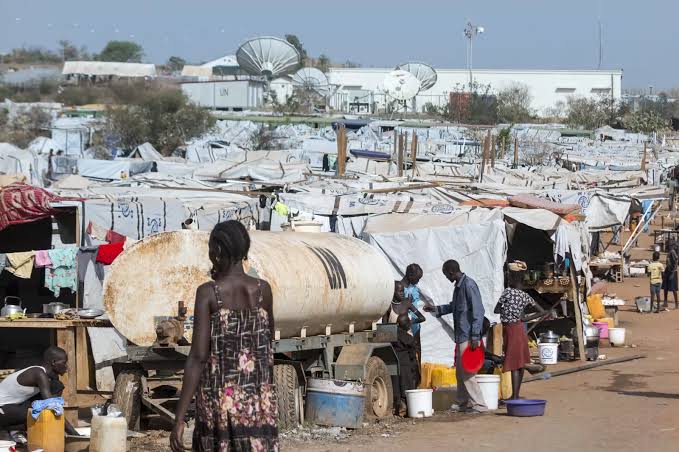
A drone attack on Amiet market, north of Abyei town in the disputed border region between Sudan and South Sudan, killed at least 153 people on October 20, 2026, according to Al Jazeera, and the toll is expected to rise. The medical charity Médecins Sans Frontières said it was treating more than 20 wounded people, some with severe burns. South Sudan blamed Sudan’s military for the strike, while an anonymous Sudanese officer told the outlet the strikes targeted fuel tankers used by the Rapid Support Forces, not civilians. Sudan’s armed forces made no immediate comment, and the RSF gave no immediate response. The UN Secretary-General’s spokesman condemned the attacks, saying that dozens of civilians, including women and children, had been killed.
The case that civilians were the victims of a deliberate or reckless strike rests on the scale of the casualties and the place. A market is a gathering of ordinary people, and Abyei’s caretaker minister Yohanna Akol Ngor described the “situation is terrible”, saying bodies were “burned to ashes”. MSF’s report of patients with severe burns shows the nature of the injuries, and the UN’s condemnation shows that its own information points to civilian deaths, among them women and children. Abyei is jointly administered but claimed by both Sudan and South Sudan, and the war between Sudan’s army and the RSF began in April 2023. At least 153 people died in a single attack on a market, and the toll is expected to rise.
The case for caution is that the question of who carried out the strike and what it aimed at has not been settled. South Sudan’s accusation against Sudan’s army is a statement from a government with its own interests in the dispute over the region, and Sudan’s army has not responded on the record. The officer who spoke anonymously said fuel tankers for the RSF were the target, and Al Jazeera noted that the area is a key RSF fuel supply route, which makes the claim plausible but not proven, and it does not remove the responsibility to protect civilians nearby. The RSF has not said whether it had vehicles or fuel at the market. The UN spokesman’s figure of dozens killed is lower than the count of 153 given by local sources, which shows that the numbers are still being gathered and could change.
The attack matters because it brings a war that began in April 2023 into a territory whose status is disputed between two states. The oil-rich Abyei region borders Sudan’s Kordofan, a centre of the heaviest fighting, and a strike that kills this many people risks pulling South Sudan more directly into the conflict. For aid workers, burns and shortages of medicine make treatment difficult, and for the people of Abyei, a market destroyed means a loss of food and income. International pressure for an independent investigation is likely to grow.
At least 153 people are dead in Abyei, and who is responsible remains disputed. Only an independent inquiry can show whether the market was a target or a casualty of the fight over fuel.