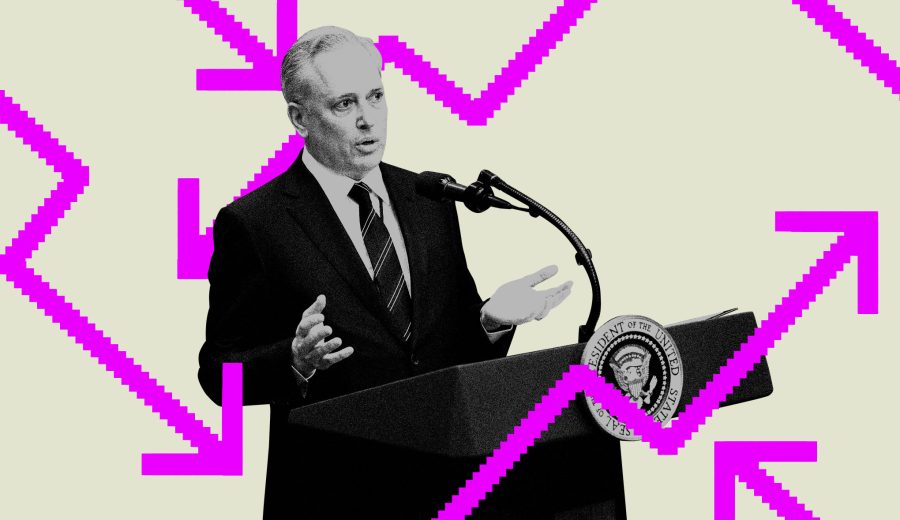
AI Czar Sacks has publicly urged President Trump to pursue de-escalation with Iran rather than military confrontation. The statement comes amid heightened tensions between the U.S. and Iran, with concerns about potential conflict escalation. Sacks’ intervention suggests divisions within the administration on how to handle Iran relations.
White House technology chief warns of catastrophic consequences from prolonged Middle East conflict.
Silicon Valley’s newest power player just stepped into Washington’s most dangerous game. David Sacks, the White House’s newly appointed AI and crypto czar, has broken from his tech lane to deliver a blunt warning about Iran. He’s telling anyone who’ll listen that escalation could blow up more than just the Middle East.
Algorithms can’t solve everything. Sacks learned that lesson fast during his first weeks on the job, watching geopolitical tensions rise while he’s supposed to focus on chatbots and cryptocurrency. Tuesday evening on the All In podcast, he ditched the typical tech-speak for something rawer: a plea for sanity.
Nobody expected the AI czar to become a foreign policy voice. That’s precisely what makes his intervention so striking. Sacks understands systems — both the digital kind he’s paid to shepherd and the geopolitical type that can crash spectacularly. He’s watching both right now.
Traditional boundaries between tech policy and warfare don’t exist anymore. Sacks gets this in ways that career diplomats might miss. When he warns about Iran’s ability to “demolish oil and gas infrastructure across the Middle East,” he’s thinking like an engineer spotting system vulnerabilities. The timing couldn’t be worse for America’s digital ambitions.
Supply chains matter more than politicians admit. Every semiconductor, every data center, every fiber optic cable becomes a potential target when conflicts spiral. Sacks has spent his career building companies that depend on global connectivity. Now he’s watching that infrastructure face threats that no algorithm can deflect.
But here’s where things get uncomfortable for the administration. Sacks wouldn’t need to advocate publicly for “the off-ramp” if internal discussions were going his way. His podcast appearance reads like someone who’s lost arguments behind closed doors and decided to take his case public. Nobody’s saying that publicly, of course.
Energy markets don’t care about your AI strategy. They react to bombs and threats and supply disruptions. Sacks knows that a regional war could derail every tech initiative he’s supposed to champion. His concern isn’t just humanitarian — it’s practical. Wars kill innovation budgets faster than Congress kills spending bills.
Military contractors love conflict, but tech companies need stability. Sacks represents the latter camp, where quarterly earnings depend on predictable supply chains and steady energy costs. His warning about Iran reflects Silicon Valley’s anxiety about anything that threatens the delicate ecosystem supporting their growth.
Yet the real story isn’t what Sacks said — it’s that he felt compelled to say it. AI czars typically worry about regulatory frameworks and research funding. They don’t usually find themselves pleading for diplomatic restraint on podcasts. The math doesn’t add up unless internal pressure is building.
Decision-making processes remain opaque even as Sacks calls for transparency. He’s demanding algorithmic accountability while operating within an administration that guards its foreign policy deliberations like state secrets. The irony isn’t lost on anyone watching this unfold.
Wednesday morning brought fresh speculation about rifts within Trump’s team. Sacks’ comments suggest tech leaders aren’t automatically aligned with hawkish foreign policy positions. His intervention could signal broader tensions between different factions competing for influence. That’s a story worth watching.
Still, there’s something almost desperate about watching America’s top AI official become an anti-war advocate. Technology was supposed to solve problems, not create new ones requiring diplomatic solutions. Instead, Sacks finds himself applying systems thinking to geopolitical failures that predate computers by centuries.
When America’s top AI official warns about military escalation, it signals the growing intersection between technology policy and national security. This unprecedented intervention reveals potential fractures within the administration about foreign policy direction.
David Sacks has emerged as an unexpected voice for diplomatic restraint in the Trump administration.
Source: Original Report