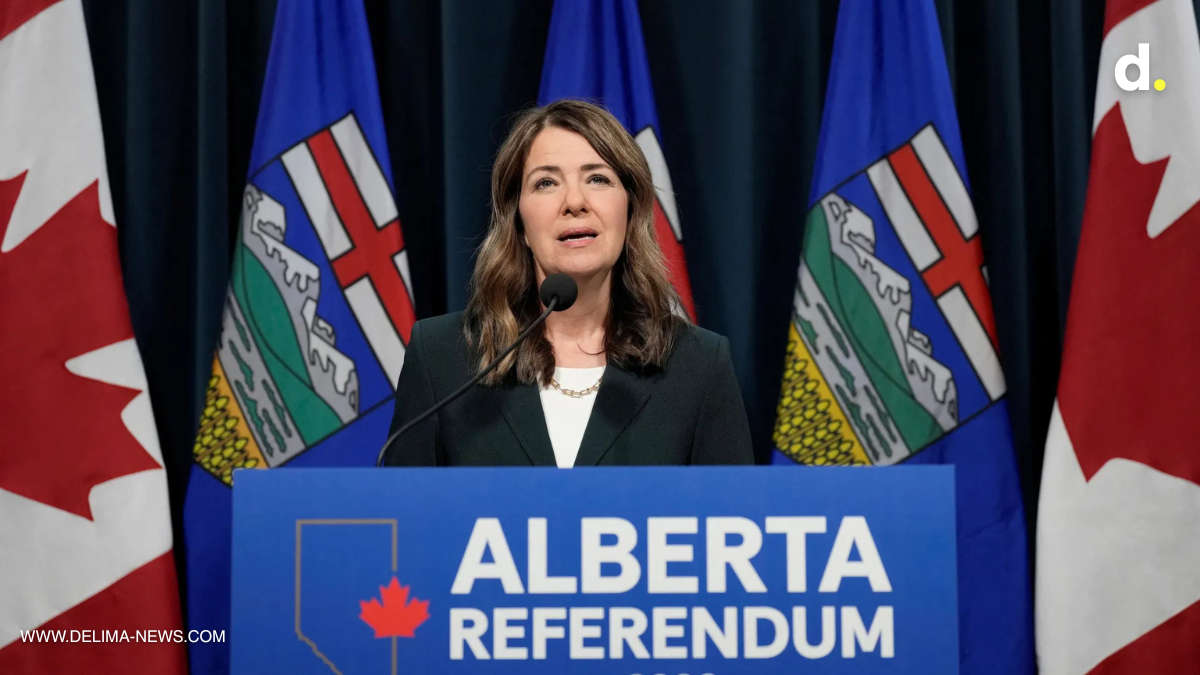
Albertans vote on Monday, October 19, 2026, on whether Alberta should remain a province of Canada or begin the legal process toward a future referendum on separation, with polls open from 9 a.m. to 8 p.m. local time, according to The Associated Press as published by ABC News. The vote is not an immediate decision on independence: a choice to begin the process would only start the steps toward a later, binding referendum. Prime Minister Mark Carney urged voters to “vote like Canada’s future depends on it because it does,” and Premier Danielle Smith said she opposes independence. By the eve of the vote, 1.35 million Albertans, 43 percent of eligible voters, had already cast advance or special ballots.
The case that Alberta is strongly committed to staying in Canada rests on the polls and on the history of the separatist cause. The Writ’s poll tracker, updated on October 18, put support for remaining at 69 percent against 25 percent for beginning the independence process, a gap of 44 points. With undecided voters removed, support for starting the process was 27 percent, and majorities in Calgary, Edmonton and across age and gender groups favoured remaining, according to the tracker. Premier Smith cited a poll showing 22 percent support for separation and called even that level “still too high.” The Associated Press noted that separatism was long a fringe cause, with independence parties typically winning only 1 or 2 percent of the vote, and the tracker found that support for separation is concentrated among voters of the governing United Conservative Party.
The case that the vote reveals real discontent is also in the numbers. The Writ’s tracker shows one in four Albertans, 25 percent, ready to begin the legal process toward leaving, which is far above the 1 or 2 percent that independence parties have usually won, and the Associated Press reported that the pandemic mobilised activists who opposed federal vaccine mandates. Turnout is another sign of how much the issue matters: the 1.35 million advance ballots compare with 810,000 in the 2023 provincial election, an increase of about two-thirds. The question on the ballot asks whether to start a legal process rather than whether to leave, so a vote for it would be a step toward a later referendum, not independence itself.
The result matters for Canadians in every region because it tests national unity at a time when the prime minister has made a direct appeal to voters, and because a vote to begin the process would start a legal path toward a later referendum. For Alberta, one of the country’s main oil-producing provinces, the margin will shape the political weight of the separatist movement for years. A heavy turnout also means that whichever side wins can claim a clear mandate, which makes the result harder to dismiss.
The polls point to a clear vote to remain in Canada, but the turnout and the 25 percent who wanted to start the process show that the issue has reached the mainstream. The count after 8 p.m. will show how far the poll numbers hold.