The chiefs of Broadcom and Intel say the biggest threat to the AI boom may be money. Speaking in Singapore, Hock Tan said “the biggest constraint is capital”, while Lip-Bu Tan pointed to the cost of capital and to investors’ demand for returns. Both remain bullish on near-term demand.
Two of the chip industry’s most senior executives warned on Monday, October 12, that financing could limit the artificial intelligence build-out, CNBC reported from the DBS Asia Future Forward Conference in Singapore.
‘The Biggest Constraint Is Capital’
Broadcom CEO Hock Tan said financing could become a bigger obstacle than shortages of chips, memory or electricity. “[What] I think might be the biggest constraint is capital,” he said.
Intel CEO Lip-Bu Tan agreed: “If there’s any challenge in the front, it’s capital and the cost of capital, and then the other part is in the longer run, people want to see the ROI.”
Why Borrowing Costs Matter
CNBC noted that rising borrowing costs threaten to complicate financing for companies investing heavily in AI. Higher bond yields could make it more expensive to fund data centres and chip purchases, putting pressure on projects that may take years to pay back.
Demand Still Outruns Supply
- “There is more demand for compute infrastructure than we can supply,” Hock Tan said, adding the gap could last through 2029 and possibly into 2030
- He said memory shortages and other bottlenecks tend to be overcome: “Memory shortage today might not be that way a year from now”
- He suggested wafer shortages could ease by 2028 or 2029, and power availability could also improve
- Lip-Bu Tan said the industry was unlikely to see a significant slowdown over the next two to three years
What Could Change That
Both executives said that sustaining growth beyond a few years depends on how quickly businesses adopt AI and whether it delivers real economic benefits. Hock Tan said demand could slow if the adoption of advanced models disappoints or improvements in their capabilities plateau.
Lip-Bu Tan said companies would increasingly need to show returns from AI through better efficiency and new business models.
Why It Matters
Much of the AI boom has been financed by heavy spending on data centres, chips and power. These two chief executives, whose companies sell into that spending, are saying the limit may come from the cost and availability of money, not from the technology.
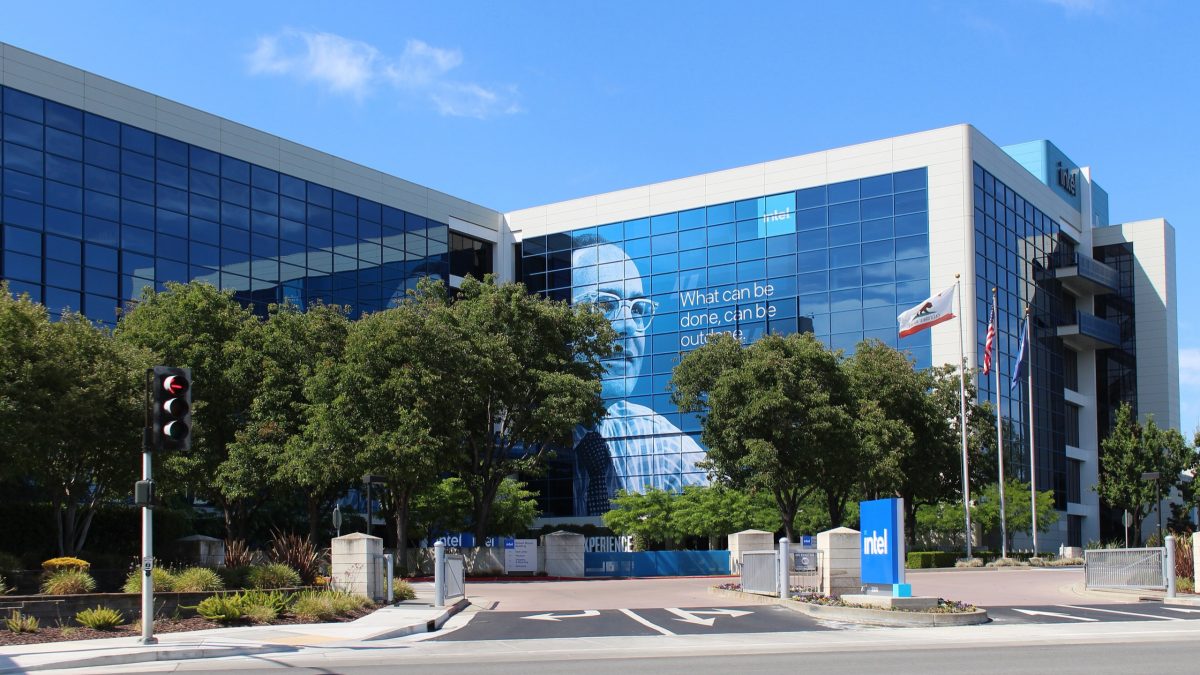
Image: Intel’s headquarters in Santa Clara, California (file photo). Photo: Coolcaesar / Wikimedia Commons (CC BY-SA 4.0)