
Ethiopian federal forces have entered Mekelle, the capital of Tigray, after almost two weeks of fighting with an alliance of rebel groups. The offensive has ended the 2022 Pretoria ceasefire, and reports of Eritrean troops crossing the border have raised fears of a wider conflict.
Ethiopian federal forces have entered Mekelle, the capital of the Tigray region, after nearly two weeks of fierce fighting, Al Jazeera reported on Friday, October 9.
Forces from an alliance of rebel groups, including the Tigray People’s Liberation Front (TPLF), withdrew from the city.
The fighting, which erupted late last month, has effectively ended the 2022 Pretoria ceasefire and the fragile peace that followed the last Tigray war.
How the Offensive Unfolded
Federal forces used air power and ground troops to advance across Tigray. After successive defeats around the towns of Alamata and Kobo, the rebel forces withdrew into the surrounding countryside.
They have promised to keep fighting. “We will confront the enemy on our terms and where we choose,” said TPLF leader Debretsion Gebremichael.
A Familiar Pattern
The fall of Mekelle may not settle the matter. In the war that began in 2020, Prime Minister Abiy Ahmed’s government declared victory after capturing the city. Tigrayan forces then regrouped in the mountains, retook much of the region and recaptured the capital, prolonging that war by nearly a year and a half.
Ethiopia is also fighting insurgencies in the Amhara and Oromia regions, raising the prospect of its forces being stretched across several fronts.
The Eritrean Question
The most dangerous new element is across the border. The Associated Press has reported Eritrean troops entering the northern Tigrayan towns of Adigrat and Idaga Hamus. Eritrea has neither confirmed nor denied the movements.
Relations between the two countries have collapsed. Ethiopia closed its embassy in Eritrea and expelled Eritrean diplomats on October 1, accusing Asmara of hostile acts and involvement in the fighting. Eritrea responded by severing diplomatic ties, while denying that it supported the rebel alliance.
Eritrean forces fought alongside Ethiopian troops in the 2020–22 war. The two governments have since fallen out.
The Red Sea at the Centre
Behind the tension lies Ethiopia’s search for a coastline. The country has been landlocked since Eritrea won independence in 1991 and depends heavily on Djibouti for its maritime trade.
Abiy was sworn in on Monday for another five-year term, following his party’s victory in the June 1 election, and returned to the theme in his address to parliament. “We will work diligently to ensure that Ethiopia has an outlet to the sea,” he said.
Neighbours Draw Together
On October 4, the leaders of Egypt, Eritrea, Sudan and Somalia met for a summit in New Alamein, Egypt, and pledged closer political, economic and trade cooperation.
The meeting did not create a military alliance, and the four have differing interests. But Egypt and Sudan have both denied Ethiopian accusations that they are backing the rebel alliance.
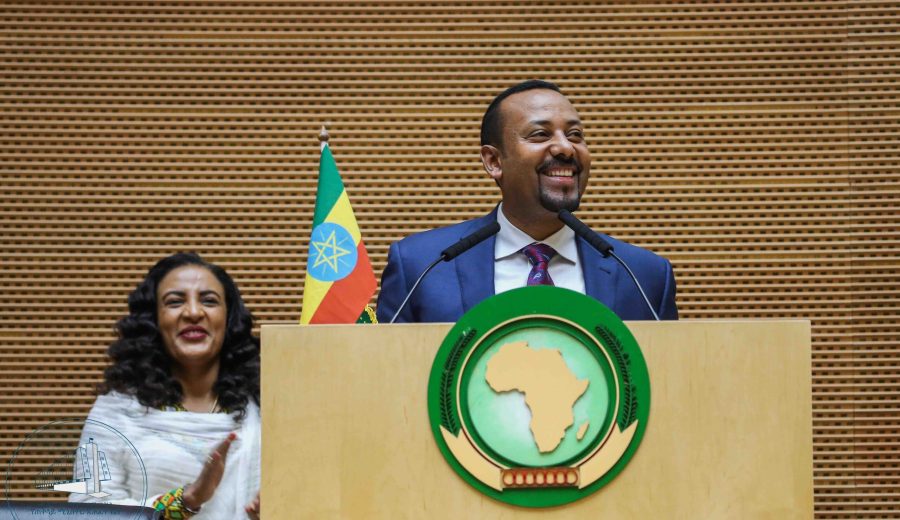
Image: Ethiopian Prime Minister Abiy Ahmed at the African Union, 2019. Photo by the Office of the Prime Minister of Ethiopia via Wikimedia Commons, public domain.