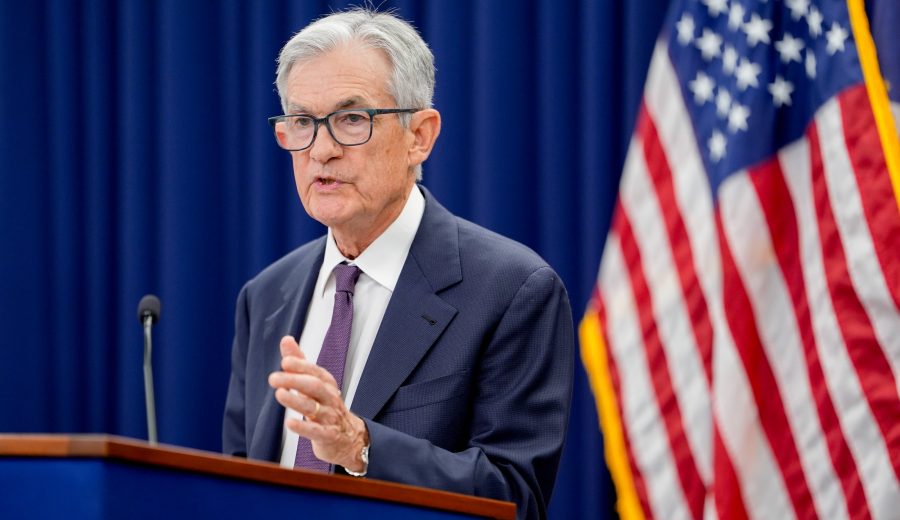
The Federal Reserve has decided to hold interest rates steady as it continues its fight against inflation. This decision reflects the central bank’s cautious approach to monetary policy amid mixed economic signals. The hold suggests the Fed believes current rate levels are appropriate for managing inflationary pressures while supporting economic growth.
Markets brace for another pause as policymakers weigh economic crosscurrents.
The 10-year Treasury yield climbed 8 basis points to 4.47% Tuesday ahead of the Federal Reserve’s two-day policy meeting. Traders are pricing in a 97% probability of no rate change Wednesday. The S&P 500 closed down 0.3% as investors position for what’s likely another dovish hold.
Policymakers face little choice but to keep the federal funds rate unchanged in its 5.25% to 5.50% target range. Recent economic data shows a complex picture that argues against aggressive moves in either direction. Nobody is saying that publicly.
Data
Key Economic Indicators Mixed Picture October 2023
Source: Delima News analysis | percent
Economic conditions remain mixed across key sectors. October’s Consumer Price Index came in at 3.2% year-over-year, well above the Fed’s 2% target. Core PCE, the Fed’s preferred inflation gauge, sits at 3.7%. That is a staggering figure.
But the labor market tells a different story. Unemployment ticked up to 3.9% in October from September’s 3.8%. Job openings dropped to 8.7 million, down from 9.6 million earlier this year. Workers aren’t quitting like they used to.
Housing markets show serious strain from higher borrowing costs. Existing home sales plunged 4.1% in October as mortgage rates topped 7.8%. New construction permits fell 1.1%. Buyers simply can’t afford today’s rates.
Jerome Powell will face tough questions about the yield curve inversion during Wednesday’s press conference. The 2-10 spread remains deeply inverted at negative 45 basis points — a warning sign that’s hard to ignore. History shows this pattern signals recession risk within 12 to 18 months.
Forecasters expect a hawkish pause rather than a dovish one. Goldman Sachs strategists see the Fed holding rates through the first quarter of 2024. JPMorgan analysts push that timeline even further to mid-2024. The timing is striking.
Yet political pressure is building as the 2024 election cycle heats up. Fed officials have repeatedly stressed their independence from political considerations. Powell’s comments will be parsed for any hint of outside influence.
Futures markets show traders aren’t convinced the Fed can maintain its restrictive stance much longer. Fed funds futures price in 75 basis points of cuts by December 2024. That’s down from 125 basis points of expected cuts just two months ago.
Regional Fed presidents have sent mixed signals recently. Chicago’s Austan Goolsbee warned against keeping rates too high for too long. Cleveland’s Loretta Mester pushed back on rate cut speculation. She called current policy appropriate.
Financial stress indicators keep climbing across multiple sectors. Real interest rates now exceed 2%, the highest level since 2007. Credit card delinquencies are rising. The math is sobering.
Still, the Fed can’t ignore sticky services inflation — the kind that doesn’t go away easily. Shelter costs, which make up one-third of the CPI basket, rose 6.7% annually in October. Services ex-housing climbed 4.6%. These numbers matter more than headline figures.
Wednesday’s decision will likely hinge on the Fed’s updated economic projections. Any changes to the dot plot of rate forecasts will move markets. By Monday evening, traders had already positioned for a hold.
The Fed’s decision affects borrowing costs for everything from mortgages to credit cards to business loans. A prolonged pause could signal the central bank believes current policy is restrictive enough to bring inflation down without triggering a severe recession. This meeting sets the stage for potential policy shifts in 2024.
The Federal Reserve building in Washington where policymakers will announce their latest rate decision Wednesday.
Source: Original Report