
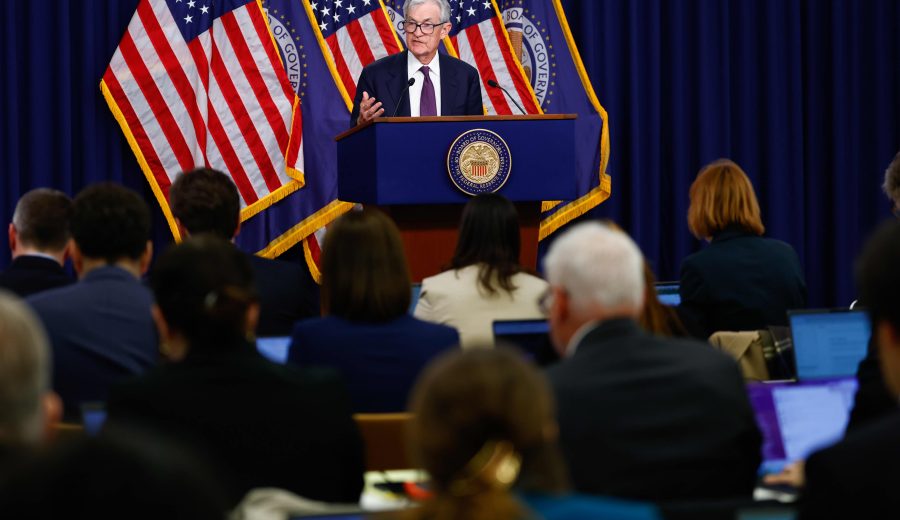
The Federal Reserve announced it will hold interest rates steady, citing uncertain geopolitical impacts from rising Iran war tensions. Policymakers expressed caution about potential economic disruptions from the Middle East conflict. The decision reflects the Fed’s measured approach to monetary policy amid global instability.
Central bank cites geopolitical risks as key factor in dovish pause decision.
Federal Reserve officials voted unanimously to hold the federal funds rate at 5.25-5.50% Wednesday. They’re keeping rates steady for the third straight meeting as policymakers wrestle with growing Middle East tensions. Chair Jerome Powell called “uncertain economic impacts” from the Iran conflict a primary driver behind the dovish hold.
Treasury yields tumbled immediately after the 2:00 PM announcement. The 10-year yield dropped 12 basis points to 4.31%. The 2-year fell 8 basis points to 4.85%. Investors repositioned for a more accommodative Fed stance as the yield curve steepened.
Data
Market Reactions to Fed Announcement
Source: Delima News analysis | basis points / percent change
Powell’s hawkish tone from December has clearly shifted. Just six weeks ago, the Fed chair signaled potential rate hikes if inflation remained sticky. But geopolitical shockwaves changed that calculus fast. The timing is striking — Iran’s expanded military operations began just as Fed officials entered their blackout period before this meeting.
Oil markets show why the Fed’s worried. Brent crude spiked 18% since late January, threatening to reignite inflationary pressures the central bank worked two years to tame. That’s a big jump in a short time. Yet Powell emphasized uncertainty over actual price moves. The Fed doesn’t want to overreact to commodity volatility that might prove temporary.
Financial conditions have already tightened without Fed action. Corporate credit spreads widened 25 basis points this month. That is a concerning figure for borrowing costs. Equity volatility jumped to levels not seen since October’s banking stress. The dollar strengthened 3% against major trading partners as investors sought safe havens.
Wall Street analysts had mixed reactions to the dovish pivot. Goldman Sachs economists now see just one rate hike this year — down from three projected in December. But JPMorgan’s research team warned the Fed might be making a policy error by pausing too early. Nobody is saying that publicly about Powell’s leadership.
Economic data before the Iran crisis showed genuine resilience. January payrolls added 353,000 jobs, well above consensus forecasts. The math is sobering for Fed officials who worry about an overheating labor market. Consumer spending remained robust despite higher borrowing costs. Core inflation, while cooling, still runs above the Fed’s 2% target.
Powell acknowledged this tension during his press conference Wednesday afternoon. The Fed wants to avoid choking off economic momentum with premature tightening. It also can’t let inflation expectations become unanchored if energy costs spiral higher. That’s a classic central banking dilemma.
Markets are now pricing just 35% odds of a rate hike by June. For weeks now, traders had expected much more aggressive action from the Fed. Fed funds futures show traders expect the central bank to remain on hold through summer at minimum. The math reflects genuine uncertainty about how Middle East tensions will affect global growth.
Regional Fed presidents offered different views in recent speeches. Cleveland’s Loretta Mester maintained her hawkish stance — arguing one month of geopolitical stress shouldn’t derail the inflation fight. San Francisco’s Mary Daly emphasized the need for policy flexibility during uncertain times. The split reveals internal Fed debates that don’t always surface publicly.
Still, the Fed’s next meeting on March 20th looms large. By then, the economic impact of Middle East tensions should be clearer. Energy markets will likely determine whether Wednesday’s dovish pause proves smart or premature.
The Fed’s dovish pivot shows how quickly geopolitical events can reshape monetary policy. This could extend the timeline for bringing inflation fully under control. Financial markets now face dual uncertainty from both Middle East tensions and shifting Fed expectations — likely increasing volatility across asset classes.
The Federal Reserve cited geopolitical uncertainty as a key factor in Wednesday’s rate decision.
Source: Original Report