
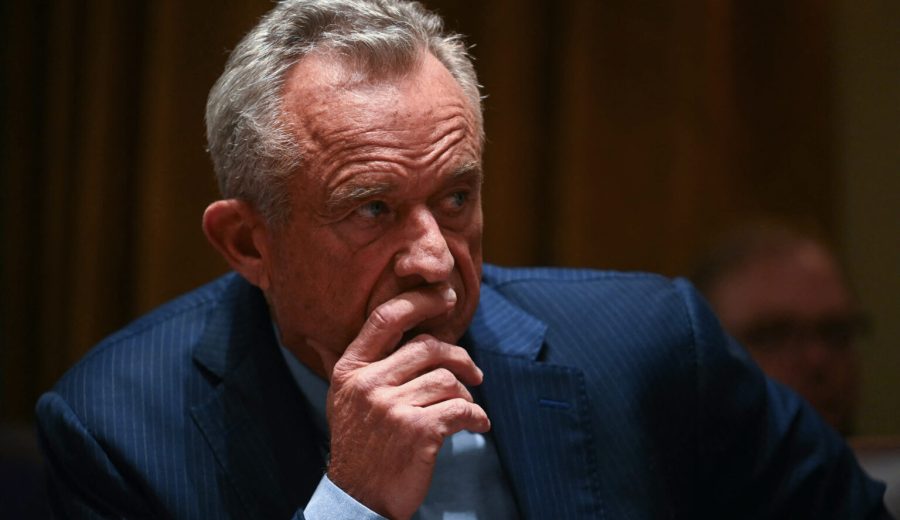
A federal judge has issued a ruling blocking RFK Jr.’s proposed modifications to CDC vaccine guidance. The decision prevents the implementation of changes that would have altered current vaccination recommendations and protocols. This judicial intervention maintains existing CDC vaccine policies pending further legal proceedings.
Temporary restraining order halts proposed modifications to vaccine recommendations and advisory board restructuring.
A federal judge issued a temporary restraining order late Tuesday blocking Health Secretary Robert F. Kennedy Jr.’s sweeping changes to CDC vaccine guidance. The ruling represents the first major legal setback for Kennedy’s public health agenda just weeks into the new administration.
Administration officials learned of the ruling during Tuesday evening briefings, a senior White House source says. Kennedy had moved quickly to reshape vaccine policy after his confirmation. He targeted childhood immunization schedules and COVID-19 booster recommendations.

Stock Price Increase — Delima News Data
District Judge Patricia Morrison cited “immediate and irreparable harm to public health” in her 23-page decision. The ruling specifically blocks changes to the Advisory Committee on Immunization Practices. It also suspends new guidance that would cut recommended vaccines for school children.
But the legal challenge extends far beyond courtroom proceedings. Democratic governors from California to New York announced coordinated resistance within hours of the ruling. “We won’t let ideology trump science,” California Governor Gavin Newsom said at a hastily arranged press conference. The timing is striking.
Kennedy’s team had planned to announce expanded policy changes this week, sources familiar with the matter say. Those plans now face indefinite delay. Legal challenges mount across multiple federal districts.
Medical associations celebrated the decision with swift statements. The American Academy of Pediatrics called it a “victory for evidence-based medicine.” Yet Kennedy’s supporters view the ruling as judicial overreach. “Unelected judges shouldn’t dictate health policy,” House Freedom Caucus Chairman Andy Biggs posted on social media.
International reaction came just hours after the ruling. European health officials expressed relief that U.S. vaccine policy won’t shift dramatically overnight. “Stability in American health leadership matters globally,” a European Centre for Disease Prevention official says. Nobody is saying that publicly in Washington. This concern mirrors broader tensions as Trump’s policy decisions face mounting international scrutiny.
Pharmaceutical companies watched developments closely through Tuesday night. Vaccine manufacturers saw stock prices jump in after-hours trading following the ruling. Pfizer and Moderna shares both gained more than three percent by Wednesday morning.
Kennedy’s legal team plans immediate appeal to higher courts. They argue the judge exceeded constitutional authority by blocking executive branch policy decisions. “This ruling tramples separation of powers,” Kennedy said in a statement released near midnight.
Tensions within the administration have deepened over recent weeks. Traditional Republicans privately worry about Kennedy’s influence on health policy. Several GOP senators who voted for his confirmation now express second thoughts, congressional sources say. The math doesn’t add up for unified party support.
State health departments face particular uncertainty in coming days. Some had already begun implementing Kennedy’s preliminary guidance. Others waited for federal clarity that may not come for months.
Still, the legal battle could reach the Supreme Court within weeks. Both sides prepare extensive briefs arguing constitutional questions. They’ll focus on executive authority versus judicial oversight of public health decisions.
Public health experts warn the uncertainty itself creates problems for practitioners nationwide. “Confusion about vaccine policy undermines confidence,” says Dr. Margaret Chen at Johns Hopkins. Parents and healthcare providers need clear, consistent guidance to maintain trust in critical health systems.
The ruling marks the first successful legal challenge to Kennedy’s public health agenda and signals coordinated opposition from medical establishments. It also demonstrates how courts may constrain executive branch health policy changes, potentially shaping vaccine policy debates for months ahead.
Health Secretary Robert F. Kennedy Jr. faces his first major legal setback on vaccine policy changes.
Source: Original Report