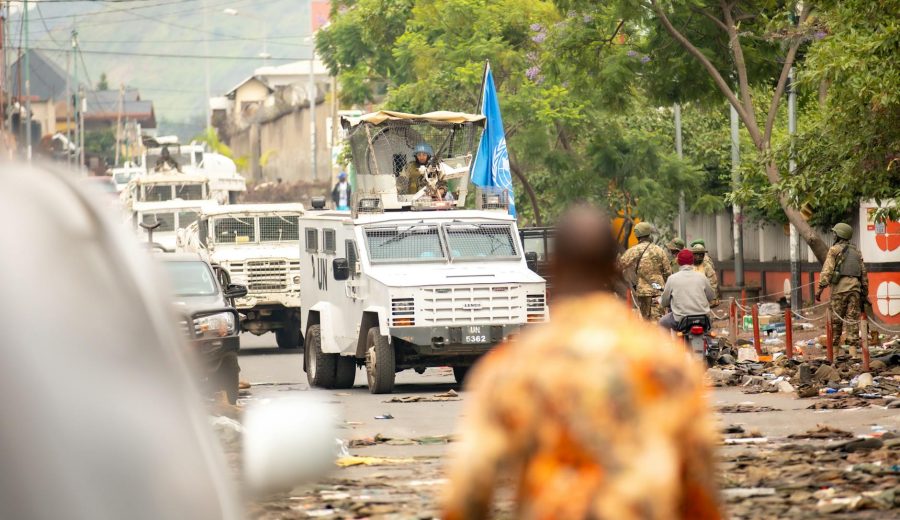
Ghana’s peacekeeping contingent suffered casualties during UNIFIL operations in the Israel-Lebanon conflict zone. The incident has sparked urgent debate about African nations’ involvement in UN peacekeeping missions and the safety risks personnel face in volatile regions.
Israeli tank fire wounds Ghanaian soldiers in Lebanon as continental peacekeeping contributions face new risks.
At the bustling Kofi Annan International Peacekeeping Training Centre in Accra, young Ghanaian officers prepare for missions that’ll take them from Mali to Lebanon. Tuesday’s tank fire incident wounded two Ghanaian peacekeepers at a UN base in southern Lebanon. The attack shows the growing dangers facing Africa’s 40,000 blue helmets deployed worldwide.
Ghana alone has deployed over 3,000 troops across seven UN missions. That’s a staggering figure. Nigeria contributes 5,200 personnel. Rwanda, despite its small size, ranks among the top five troop contributors globally. Yet these nations receive just $1,428 per soldier per month from the UN while shouldering the human costs of global security.
Tuesday’s Lebanese incident reveals a deeper challenge. African peacekeepers increasingly find themselves caught between sophisticated military forces using advanced weaponry. The Israeli Defense Forces acknowledged their tanks likely caused the injuries at the UNIFIL base near Naqoura. This wasn’t isolated — UNIFIL reported 20 incidents of fire directed at peacekeeping positions since October 2023.
But Africa’s peacekeeping story isn’t just about risk. It’s about capability and innovation. The Kofi Annan Centre has trained over 13,000 peacekeepers from 88 countries since 2002. Ghana’s military academies now export training programs across West Africa. Nigerian peacekeepers pioneered community engagement tactics that became UN doctrine.
Continental approaches are changing too. The African Union’s Peace and Security Architecture represents the world’s most ambitious regional security framework. By 2030, the AU aims to finance 25 percent of its peacekeeping through continental resources. The African Peace Fund has already mobilized $80 million. The math is sobering.
Young African military officers see peacekeeping differently than previous generations. Captain Akosua Mensah, 28, trains at Accra’s peacekeeping center. She views missions as opportunities to gain experience in conflict resolution and post-conflict reconstruction. These skills transfer directly to addressing security challenges at home — from climate conflicts to extremist threats.
Technology gaps remain real though. African peacekeepers often deploy with equipment that’s inferior to the forces they monitor. Tuesday’s Lebanese incident shows this disparity, with Israeli Merkava tanks carrying thermal imaging and advanced fire control systems. UN peacekeepers rely on basic protective gear and light vehicles. Nobody’s saying that publicly.
Regional integration offers solutions. The Economic Community of West African States created rapid response capabilities that complement UN operations. The East African Standby Force coordinates across borders. These mechanisms allow faster deployment and better coordination than traditional UN processes.
Western nations cut peacekeeping contributions while African participation grows. The timing is striking. France cut its Sahel presence by 80 percent since 2022. European troop contributions to UN missions dropped 15 percent over five years. African nations filled these gaps while managing their own security transitions.
Continental peace dividends are emerging. Rwanda’s post-genocide experience shapes its peacekeeping doctrine. Ghana’s democratic transitions guide its mediation approaches. These lived experiences create unique peacekeeping value that pure military might can’t replicate.
Still, the institutional framework needs updating. African peacekeepers deserve equipment parity with the forces they monitor. They need technological tools matching today’s conflict environments. Most importantly, they need decision-making authority matching their contribution levels.
Wounded Ghanaian soldiers in Lebanon represent thousands of African peacekeepers serving in harm’s way. Their sacrifice demands better protection and equipment. It demands recognition of Africa’s central role in global peace and security.
African nations contribute 70 percent of UN peacekeepers while receiving minimal decision-making authority and facing equipment disparities that increase risks. The Lebanese incident shows urgent needs for better protection and recognition of Africa’s central role in global security operations.
Ghanaian peacekeepers train at the Kofi Annan International Peacekeeping Centre in Accra before deployment to global UN missions.
Source: Original Report