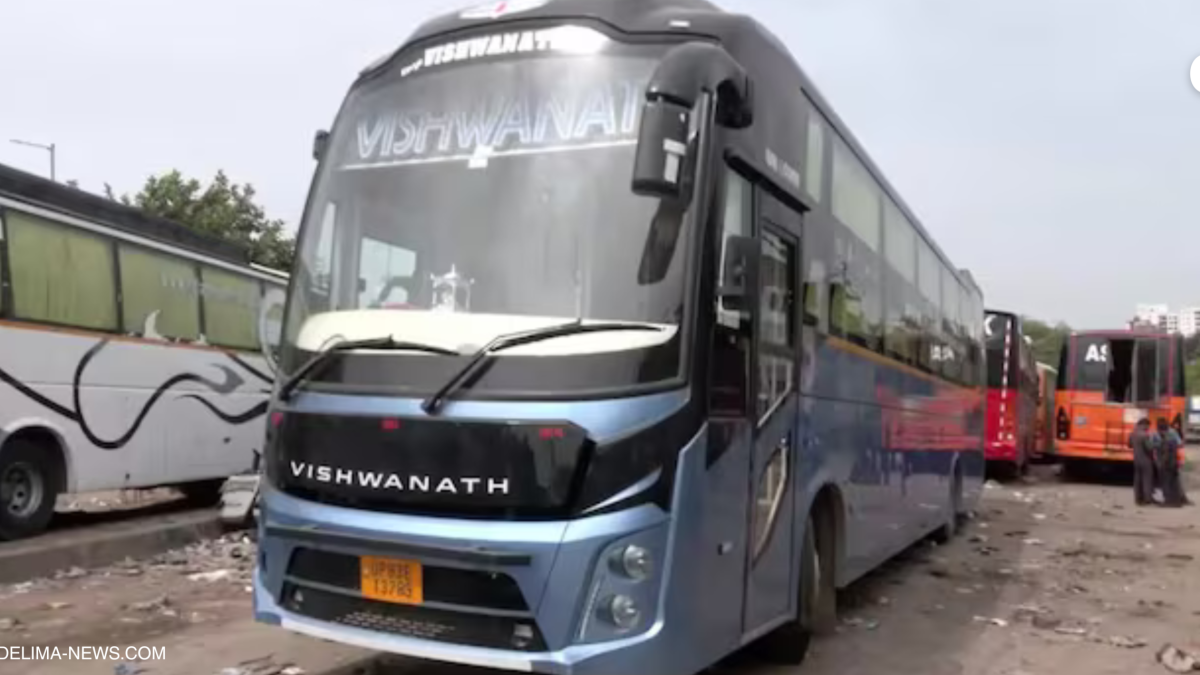
The alleged sexual assault of a 17-year-old girl inside a moving bus in the Delhi-NCR region has raised serious concerns about passenger safety and the enforcement of regulations governing private buses. According to police, the incident occurred after the teenager boarded a sleeper bus in Greater Noida. The two men accused in the case were the bus driver and conductor. Police have said the girl was allegedly assaulted inside the moving vehicle. The case came to light after she reached Delhi and approached the authorities.
The incident has drawn attention to the conditions inside the bus and questions surrounding its operation. The Indian Express reported that the vehicle had 11 traffic challans and that its CCTV system was not functioning. The report also highlighted concerns over curtains inside the bus that could obstruct visibility.
Police have also said that the driver and conductor had been hired without mandatory police verification. Authorities are examining the hiring practices of the bus operator as part of the case.
The reported circumstances have raised broader questions about how private buses are monitored and whether existing safety requirements are being properly followed. Functional surveillance systems, vehicle tracking and emergency mechanisms are among the measures designed to improve passenger safety, particularly for women and minors travelling alone.
The case has also prompted action from the Delhi government. Authorities have issued new directions concerning bus safety, including a ban on curtains that obstruct visibility and restrictions on unauthorised stops. The measures are intended to improve monitoring and reduce opportunities for crimes to occur inside buses. The National Human Rights Commission has also taken suo motu cognisance of the reported assault and sought information from authorities concerning the case and the steps being taken.
The investigation remains focused on establishing what happened inside the bus and determining the responsibility of those accused. For the wider public, however, the case has raised a more fundamental question: how can passengers be assured of their safety when travelling in private buses, particularly when basic safety and verification requirements are reportedly not followed?
The incident has therefore become more than a criminal investigation. It has highlighted the need for effective enforcement of existing transport rules and greater accountability among private bus operators, while ensuring that the rights and privacy of the minor involved are protected throughout the legal process.
It shouldn’t be a wakeup call, girls have been suffering for far too long for this to be called a wakeup call. Instead, a harsh punishment needs to be decided for such criminals.