The International Energy Agency expects global oil demand to fall by 2.6 million barrels a day in 2026 as the Iran war restricts supplies of fuels, lifts prices and weakens the economy, with diesel accounting for a quarter of the drop.
The International Energy Agency forecasts that world oil demand will fall by 2.5 million barrels a day year on year in the fourth quarter of 2026 and by 2.6 million barrels a day on average in 2026, according to its October Oil Market Report, as summarised in search results. The agency says the Iran war is showing up in restricted product availability, soaring fuel prices and a deteriorating economic outlook, and that diesel will account for 25% of the drop in demand.
The forecast for 2027 is for a partial recovery. A rebound of 2 million barrels a day would still leave global oil use in 2027 at 620,000 barrels a day, or 0.6%, below the 2025 level, according to the report.
On supply, the report says that global oil supply rose by 2.5 million barrels a day from the previous month to 102.3 million barrels a day in September, driven by Gulf producers. OPEC+ added 2.1 million barrels a day, led by Saudi Arabia, and the United Arab Emirates drove the increase among non-OPEC+ producers.
The annual picture is very different. The agency projects an average annual decline in supply of 5.8 million barrels a day, to 100.7 million barrels a day in 2026, before it rises by 7.7 million barrels a day in 2027, according to the same summary. The two numbers can be read together as a deep fall in the first half of the year followed by a recovery, though the sources reviewed do not give the monthly path.
The report warns that the recovery is fragile. Renewed attacks in the Gulf leave it exposed, and the continuing conflict in the Middle East creates supply uncertainty, according to the summary. This week two ships sank near the Strait of Hormuz, one hit by a projectile and one by a sea mine, according to the New Arab, and Saudi Arabia has widened its air campaign against Houthi fuel facilities, which Delima News has reported.
Diesel is the product under the most strain. The report says that diesel markets remained under significant strain because prolonged supply disruptions forced stocks to be drawn down at a time of year when they are usually built, ahead of autumn refinery maintenance and peak winter demand. A shortage of diesel affects trucking, farming and industry, so it can feed through to prices across the economy.
The consequences are visible in the price data. Brent crude was near $105 to $107 a barrel in mid-October, according to market reports, and the IMF’s own forecast assumes an average of about $96 in 2026, which is a rise of about 41% on the year. US gasoline prices rose 9.1% in September, according to the inflation report that Delima News covered.
A fall in demand of this size is unusual outside a recession, and it reflects both lower consumption because of high prices and a shortage of some fuels. The agency’s report was published ahead of the winter, when the stock position will matter more.
The full report is on the IEA’s website, which could not be accessed for this article, so the numbers are those in a summary and should be checked against the original.
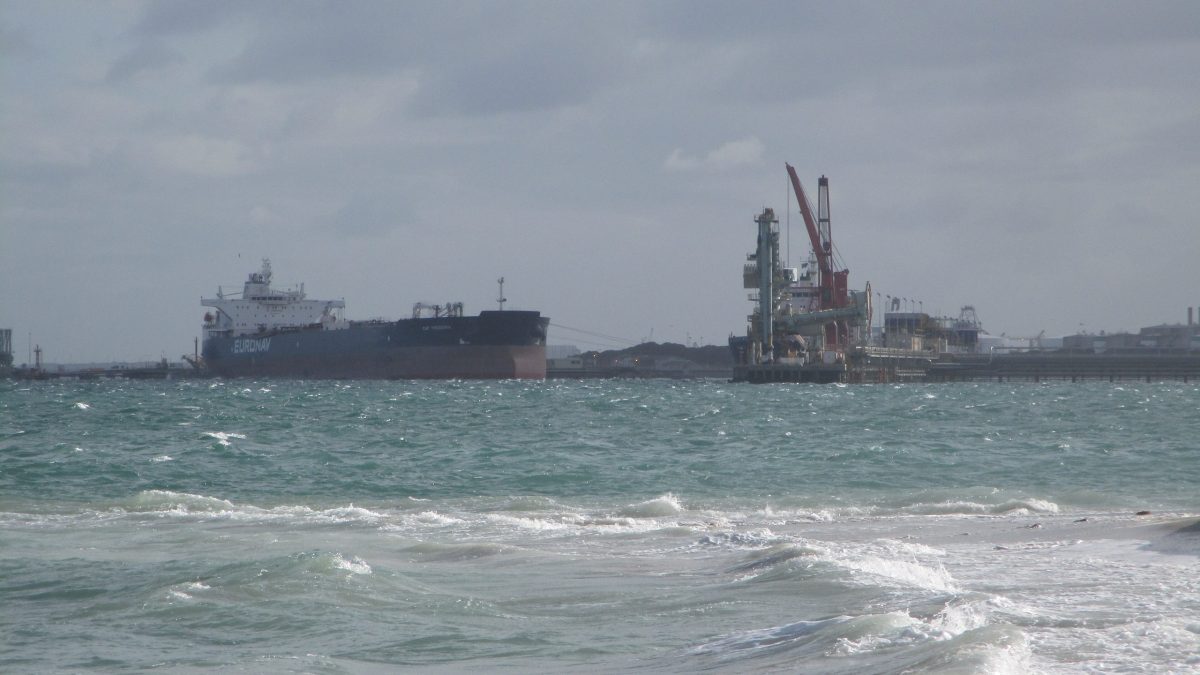
Image: An oil refinery jetty at Kwinana, Western Australia (file photo; a stand-in image). Photo: Calistemon / Wikimedia Commons (CC BY-SA 4.0)