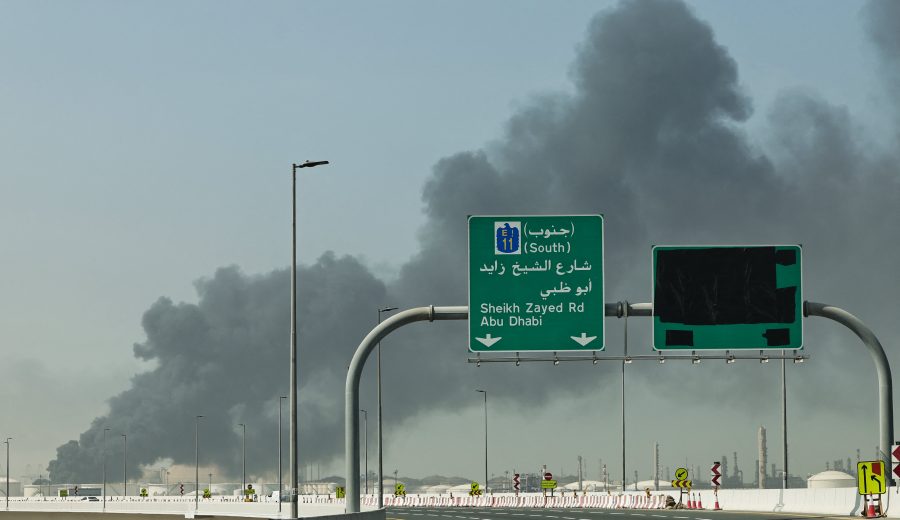
Iran has escalated military aggression toward the UAE, testing the Emirates’ delicate diplomatic balance between Eastern and Western powers. The incident marks a critical challenge to regional stability and UAE’s role as a mediator in Middle East tensions. This development could reshape alliances across the region.
The Emirates’ strategic positioning as the Gulf’s diplomatic crossroads has made it a prime target for Tehran’s regional ambitions.
The marble tables at Emirates Palace’s café in Abu Dhabi hum with conversations in a dozen languages, while diplomats from Washington to Beijing sip Arabic coffee alongside Iranian businessmen conducting quiet trade deals. This scene captures precisely why the United Arab Emirates has become Iran’s most calculated target in the Gulf.
Conversations at the Emirates Palace reveal the social fabric of a nation that’s mastered the art of being all things to all people. Walk through Dubai’s Gold Souk on any Thursday evening and you’ll hear Farsi mixing with English, watch Iranian merchants haggling alongside American tourists, see the delicate dance of a country that refuses to choose sides. This is the UAE’s greatest strength. Tehran believes it’s also the most exploitable weakness.
UAE-Iran Trade and Population — Delima News Data
Economics drive much of Iran’s focus on the Emirates as an irresistible prize for aggression. By Tuesday evening, another cargo ship had docked at Jebel Ali port carrying goods bound for Iran despite international sanctions — part of the $14 billion trade relationship that makes the UAE Tehran’s largest trading partner after China. The math is sobering: nearly 400,000 Iranians call the Emirates home, remitting billions back to Iran annually while creating the very networks Tehran can exploit for influence operations.
Yet Iran’s calculus goes deeper than economics. The timing is striking how Tehran’s provocations intensify whenever the UAE strengthens ties with Israel or hosts American naval assets. Iran sees the Emirates’ balanced diplomacy not as neutrality but as betrayal — a wealthy Arab neighbor providing legitimacy to Tehran’s enemies while profiting from Iranian trade. This is the Persian Gulf’s oldest game. Geography is destiny and neutrality often looks like treachery.
But the UAE’s vulnerability lies in the very openness that drives its success. The same free zones that attract global investment create spaces where Iranian intelligence can operate. The banking system that processes international transactions? Tehran can weaponize it for sanctions evasion. The cultural tolerance that welcomes Iranian expats also shelters potential sleeper networks. Nobody is saying that publicly, of course.
Tehran’s strategy resembles water finding cracks in stone — patient and persistent. Just hours after the UAE announced new defense partnerships with Western allies, Iranian media outlets amplify sectarian tensions in Bahrain or highlight Palestinian grievances, reminding the region that the Emirates has strayed from Arab solidarity. Psychological warfare masquerading as journalism.
Regional power dynamics make the Emirates an ideal testing ground for Iranian resolve. Unlike Saudi Arabia, which can retaliate with oil policy, or Israel, which promises devastating military response, the UAE’s strength lies in its restraint. Iran calculates that attacking Emirati interests allows maximum provocation with minimum risk of escalation. The math doesn’t add up for the UAE’s rivals.
Still, Tehran may be overplaying its hand here. Each Iranian provocation pushes the UAE closer to its Western and Israeli partners, transforming a pragmatic relationship into a strategic alliance. The Emirates that once served as Tehran’s economic lifeline increasingly resembles a fortress designed to contain Iranian expansion.
Transformation is exactly what Iran fears most — losing its most valuable Arab partner to the very Western embrace that Dubai’s skyline already symbolizes. For weeks now, Iranian officials have watched the UAE’s diplomatic pivot with growing alarm. They’re running out of time to reverse it.
Iran’s targeting of the UAE represents a broader struggle for the soul of the Middle East between isolation and integration. The outcome will determine whether small Gulf states can maintain strategic autonomy or must choose between competing regional powers.
Dubai’s modern skyline reflects the UAE’s role as a bridge between traditional Middle Eastern values and global commerce.
Source: Original Report