
Iraq has devalued its currency again, with the dollar now costing 1,520 dinars. The government says it needs the money after losing about $60 billion in oil revenue. Opponents in parliament say ordinary Iraqis will pay for it through higher prices.
Iraq has devalued its national currency, reversing the previous government’s decision to strengthen the dinar, Al Jazeera reported on October 8.
The cabinet approved new exchange rates on Tuesday, following an emergency recommendation from Finance Minister Falih al-Sari and the governor of the Central Bank of Iraq.
The New Rate
Since Wednesday, banks and exchange companies have been selling dollars to the public at 1,520 dinars each. That is 200 dinars more than the previous price of 1,320.
Why Now
The decision came immediately after the government adopted its budget for 2027.
- Planned spending: 217 trillion dinars, about $166 billion
- Expected deficit: more than 40 trillion dinars, about $30 billion
A weaker dinar helps close that gap on paper. Iraq earns its oil income in dollars, so each dollar now converts into more dinars for the government to spend.
The Oil Shock Behind It
Oil revenues pay for more than 90 percent of Iraq’s federal budget, and most of the country’s exports must pass through the Strait of Hormuz. Shipping there has been severely disrupted since the war on Iran began in late February.
- Iraq’s oil exports fell at one point by 90 percent
- In August they stood at 2.34 million barrels a day, against a pre-war average of 3.6 million
- Prime Minister Ali al-Zaidi said last month that Iraq had lost about $60 billion in oil revenue
- The central bank’s foreign currency reserves fell from about $106 billion before the war to roughly $80 billion by late August
The Opposition
The central bank called the decision a “strategic step” to steady the country’s finances. Many members of parliament disagree.
In a joint statement, dozens of MPs said they had not been told how or why the decision was made. They had Wednesday’s parliamentary agenda cancelled in order to debate it.
“Waging war on the poor like this is wrong,” said MP Aziz Nasser al-Shammari, speaking on their behalf.
Hassan al-Asadi, leader of the al-Nahj National Alliance bloc, suggested other ways to balance the budget, such as cutting unnecessary spending.
The finance minister and the central bank governor were due to appear before parliament on Thursday.
What It Means for Iraqis
Iraq imports much of what it consumes, from food and medicines to industrial raw materials. A weaker dinar makes all of that more expensive.
The measure “gives the government more dinars for each dollar of oil revenue, but raises import costs and reduces households’ purchasing power”, Iraqi analyst Mohammed al-Saffar told Reuters.
There is a further problem. Most Iraqis cannot obtain dollars at the official rate and pay the parallel market price instead. After the new official rate took effect, the parallel rate rose as well, and the gap between the two widened.
It Has Happened Before
In December 2020, Iraq devalued the dinar to 1,450 per dollar from about 1,182, after a crash in oil prices left the government short of cash.
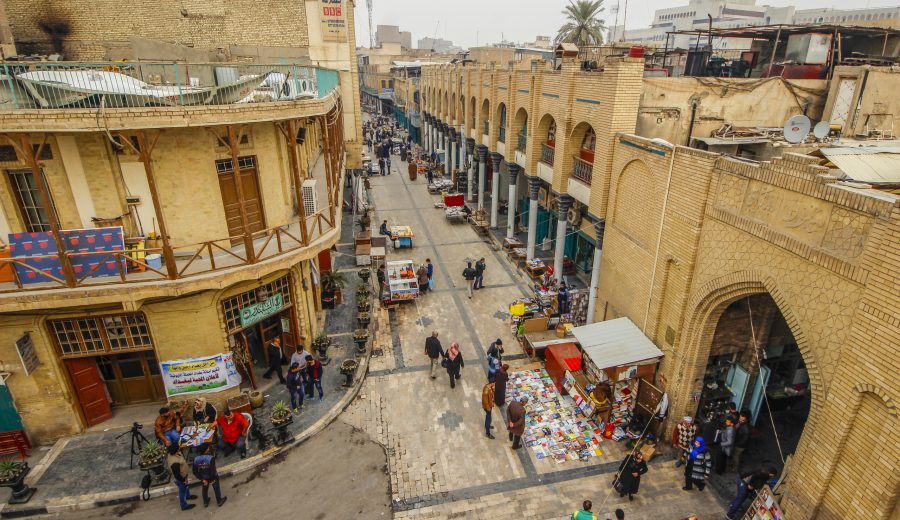
Image: Mutanabbi Street in Baghdad (file photo, 2015). Photo by Mondalawy via Wikimedia Commons, CC BY-SA 4.0.