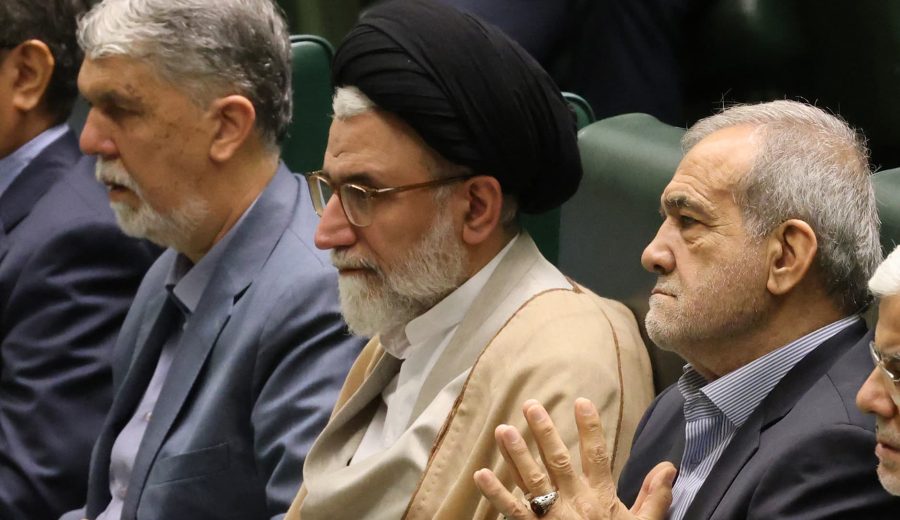
Israel has killed Iran’s intelligence minister in what marks the third targeted assassination in the escalating Israel-Iran conflict. This operation represents a significant escalation in regional tensions and raises concerns about potential Iranian retaliation.
The targeted assassination of Esmail Khatib marks a dangerous rise in the shadow war between the two regional powers.
Israel’s Defense Forces confirmed Wednesday they killed Iran’s intelligence minister Esmail Khatib in a targeted strike on Tehran. The operation represents the third high-profile assassination in 48 hours, pushing the covert conflict into unprecedented territory.
Wednesday’s strike comes just as semiconductor supply chains from the region face mounting pressure. This rise threatens to disrupt the delicate balance that keeps critical tech infrastructure flowing. Iran supplies key rare earth materials used in 3-nanometer chip production, while Israel houses advanced fabrication facilities that produce specialized military-grade processors. The timing is striking.
Khatib’s assassination crosses several red lines simultaneously. First, it targets a sitting cabinet minister rather than military commanders or nuclear scientists. Second, it occurs on Iranian soil in broad daylight. Third, it follows two other killings within 72 hours, suggesting a coordinated campaign rather than isolated operations.
Regional stability now faces severe threats. Iran faces enormous pressure to respond with equal force. Their options include striking Israeli technology centers, targeting shipping lanes that carry semiconductor materials, or activating proxy forces across the region. Each path leads toward broader conflict.
Yet the technical execution reveals sophisticated intelligence capabilities. Hitting a target in central Tehran requires extensive human networks, real-time surveillance, and precision weaponry. Israel has deeply penetrated Iranian security services. The message to Tehran’s leadership is unmistakable: nowhere is safe.
Economic calculations make the picture equally sobering. Regional tensions already drive up insurance costs for tech shipments through Middle Eastern routes. A full-scale conflict could force semiconductor companies to reroute supply chains entirely. That means longer delivery times and higher costs for everything from smartphones to data center processors.
Retaliation options carry different risk levels for Iran. Limited strikes might preserve face while avoiding escalation. But domestic pressure for revenge is building rapidly. Iranian hardliners view this as an existential challenge to the regime’s credibility. They’re demanding blood for blood.
International diplomats face a closing window to prevent escalation. By Wednesday evening, European officials were already making urgent calls to both capitals. But their leverage remains limited. Neither side appears interested in de-escalation right now. Nobody is saying that publicly.
Timing likely drove Israel’s calculation that Iran’s current weakness creates an opportunity. Economic sanctions have hollowed out Iran’s military capabilities. Their nuclear program faces constant sabotage. Regional allies like Syria remain distracted by internal conflicts. This might be the optimal time to strike.
But intelligence ministers possess dangerous knowledge. Khatib knew Iranian assets across the globe, ongoing operations against Israeli targets, and relationships with proxy groups. His death either eliminates those threats or triggers predetermined revenge protocols. The next 48 hours will reveal which scenario unfolds. The math doesn’t add up for a clean exit.
Governments across the broader Middle East now watch nervously. Every leadership must decide whether to distance themselves from the conflict or pick sides. That calculation becomes harder as violence rises. Regional powers like Saudi Arabia and the UAE want stability above all else. This assassination makes that increasingly difficult to maintain.
This assassination represents a dangerous rise that could trigger broader Middle East conflict, disrupting global semiconductor supply chains and regional stability. The targeted killing of a cabinet minister crosses traditional red lines and forces Iran to choose between major retaliation or appearing weak to domestic audiences.
Israeli forces maintain high alert status as tensions with Iran reach dangerous new levels.
Source: Original Report