
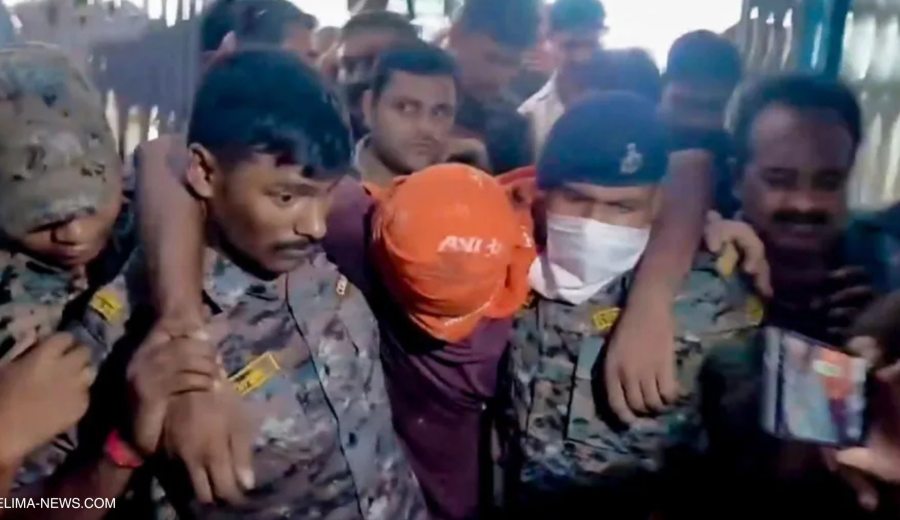
The alleged assault of two school students in Bihar’s Jamui district has triggered public outrage, a police investigation and action against social media accounts that circulated videos of the incident. Five people have been arrested, including the main accused, who was injured in a police encounter.
The alleged assault of two Class 10 students in Jamui, Bihar, has sparked widespread condemnation and renewed debate over women’s safety, the protection of minors and law enforcement in the state. The incident took place on the evening of September 19, when a teenage girl and her male friend were returning from a coaching class. A group of young men allegedly intercepted the two near Mawara Hill, on the outskirts of Jamui, and subjected them to harassment and assault.
Videos recorded by members of the group subsequently circulated on social media, bringing the incident to the attention of the police and prompting an investigation. According to reports by The Indian Express and The New Indian Express, the police have identified seven people allegedly connected to the incident. By September 22, five had been arrested, while raids continued to locate the remaining suspects.
What happened in Jamui?
The incident occurred on Saturday evening, September 19, when the two students went to the hilly outskirts of Jamui after their coaching classes. According to police accounts reported by The Indian Express, the teenagers had travelled to the area to take photographs and spend time around the hills. The location is approximately three kilometres from the main road connecting Jamui and Lakhisarai.
The two were allegedly intercepted by a group of young men. Videos that later surfaced on social media showed members of the group harassing and assaulting the students. One of the recordings reportedly showed a man with his face covered assaulting the girl and attempting to carry her away, while the boy pleaded with the group to release them. The footage prompted widespread condemnation after it began circulating online.
The victims initially did not report the incident to their families or the police, reportedly because of fear. The girl’s family said they learned about what had happened after the videos appeared on social media. Bihar’s Additional Director General of Police, K. S. Anupam, said the police took action after the footage came to their attention. Jamui Superintendent of Police Bishwajeet Dayal subsequently contacted the victims and initiated the investigation.
Police investigation and arrests
Following the emergence of the videos, senior police officials directed the Jamui police to take immediate action. A Special Investigation Team (SIT), headed by a woman police officer, was constituted to investigate the case and arrest the suspects. The Crime Investigation Department’s Weak and Vulnerable Sections division also sent a team to Jamui to assist with the investigation.
Initially, three minor boys were detained in connection with the case. Police subsequently identified additional suspects and conducted raids to apprehend those who remained at large. The investigation is examining the video footage, statements from the victims and other available evidence. Police have said they are also checking the criminal backgrounds, if any, of those arrested.
An FIR has been registered under relevant provisions of the Bharatiya Nyaya Sanhita (BNS) and the Protection of Children from Sexual Offences (POCSO) Act. The application of the POCSO Act is particularly significant because the victims are minors. The law provides specific protections for children against sexual offences and establishes procedures for investigating and prosecuting such cases.
Main accused injured in police encounter
A major development occurred on September 22, when the main accused, identified by police as Nandan Yadav, was arrested following a police encounter. According to The New Indian Express, Yadav and another accused, Hareram Yadav, were spotted by a police team during an operation near the Kundar barrage.
Jamui Superintendent of Police Bishwajeet Dayal said Yadav allegedly opened fire when the police team approached. Police returned fire, injuring him in the leg. Hareram Yadav reportedly fractured his knee while attempting to flee. Both men were arrested and taken for medical treatment. Their arrests brought the total number of people held in the case to five, with seven suspects identified by investigators.
The police have continued conducting raids to arrest the remaining suspects. The SIT is also collecting evidence to support the investigation and facilitate a speedy trial. The police encounter and subsequent arrests mark a significant escalation in the investigation, although the allegations against the accused will ultimately have to be established through the legal process.
Action against social media accounts
The circulation of videos showing the alleged assault has become a separate focus of the police investigation. Authorities have registered cases against operators of numerous social media profiles accused of sharing footage that could reveal the identity of the minor girl.
Reports published on September 22 by India Today and The New Indian Express put the number of profiles facing action at approximately 120 to 132, with the precise figure varying between reports. Police said circulating material that identifies a minor victim of a sexual offence can itself constitute a serious legal violation. The separate cases reportedly invoke provisions of the POCSO Act, the Information Technology Act and the Juvenile Justice Act.
The Jamui police have appealed to the public not to forward, repost or otherwise circulate the videos. Authorities have also initiated efforts to have the footage removed from social media platforms. The action highlights an important distinction in the case: individuals accused of committing the assault are being investigated for the alleged offences, while those sharing material that exposes a minor’s identity may face separate legal consequences.
Protecting the identity and privacy of the victims is essential to prevent further harm and ensure that they are not subjected to additional harassment.
Political reaction and government response
The incident has prompted condemnation from political leaders and public officials in Bihar. Bihar Sports Minister and Jamui MLA Shreyasi Singh condemned the incident and said the administration was taking action. The Bihar State Women’s Commission also criticised the alleged assault and announced plans to meet the victim and obtain further information.
Opposition leaders, including Congress leader Rahul Gandhi and Bihar Leader of Opposition Tejashwi Prasad Yadav, called for strict action against those responsible and raised concerns about women’s safety in the state. The ruling alliance, meanwhile, defended the police response, arguing that the authorities had acted after receiving information about the incident. The political debate has centred on both the alleged crime and broader questions concerning public safety, policing and the protection of women and children.
What happens next?
With five arrests reported and two suspects still being sought as of September 23, the investigation remains ongoing. The immediate priorities for the police are to apprehend the remaining accused, complete the collection of evidence, establish the individual roles of those involved and submit the necessary material for prosecution.
The legal proceedings will determine the charges and responsibility of each accused. The main accused’s injury during the police encounter does not itself establish guilt; the allegations must be tested through the judicial process. The case also raises broader concerns about the safety of minors in public spaces and the consequences of sharing footage of sexual violence online.
The Jamui incident has demonstrated how social media can bring an alleged crime to public attention, while also creating further risks for victims when identifying footage is circulated. The police investigation and subsequent court proceedings will be central to determining accountability and ensuring that the victims’ rights and privacy are protected.