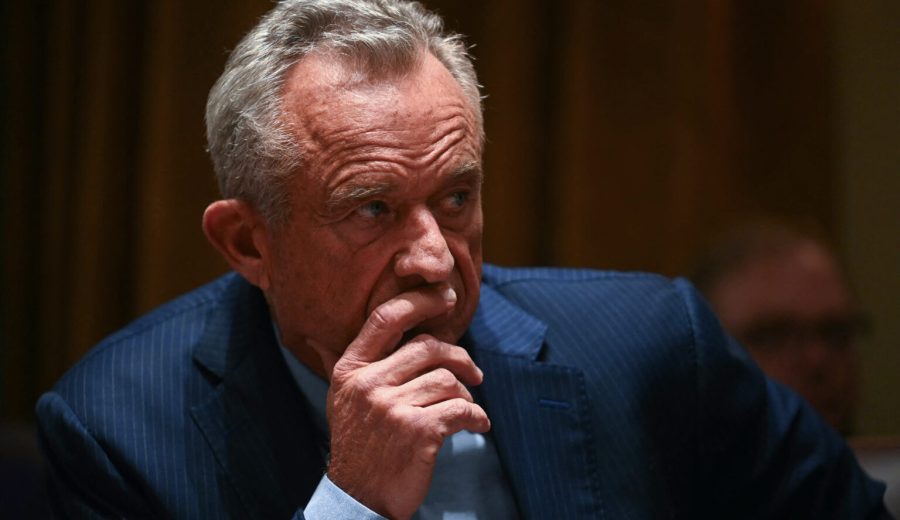
A federal judge has blocked RFK Jr.’s proposed changes to CDC vaccine protocols. The ruling prevents alterations to the agency’s current vaccine approval and recommendation processes. This decision impacts ongoing debates over vaccine policy administration.
Federal court intervention highlights the brewing institutional war over America’s public health apparatus.
The gavel fell at 3:47 PM on a Tuesday that will reshape the vaccine wars. A federal judge has temporarily blocked Robert F. Kennedy Jr.’s sweeping changes to CDC vaccine guidance, delivering the first major legal blow to the anti-vaccine crusader’s public health agenda.
The mahogany-paneled courtroom felt heavy with consequence as Judge Patricia Williams read her temporary restraining order. The timing is striking. Just weeks into his unofficial role as health policy architect, Kennedy faces his first institutional pushback.
Global Measles Cases — Delima News Data
This marks a familiar pattern in American governance. When outsiders challenge entrenched bureaucracies, the system fights back through its preferred weapon: the courts. The CDC represents nearly eight decades of accumulated institutional power. Kennedy threatens that foundation with the zeal of a true believer.
“This is about more than vaccines,” confides a senior State Department official who requested anonymity. “It’s about whether institutions can withstand populist assault.” The official’s words carry weight. Similar battles played out during the New Deal era when Roosevelt’s brain trust collided with established agencies.
Yet the stakes extend far beyond domestic policy fights. America’s global health leadership hangs in the balance. For seventy years, the CDC has served as the world’s epidemiological north star. Foreign health ministers from Bangkok to Berlin look to Atlanta for guidance during health crises.
Kennedy’s proposed changes would gut that credibility overnight. His plan to restructure the Advisory Committee on Immunization Practices threatens decades of scientific consensus. The panel’s recommendations guide vaccination policies across five continents. Diplomatic sources in Geneva describe “deep concern” among World Health Organization officials about American reliability.
Institutional questions run deeper than policy disagreements here. Can unelected officials with fringe views reshape agencies that protect public health? The answer determines whether America maintains its role as global health hegemon or retreats into vaccine skepticism.
Historical parallels abound in American governance. The 1950s saw similar institutional battles when McCarthyism infected government agencies. Competent civil servants fled. Scientific credibility eroded. It took decades to rebuild trust with international partners.
Kennedy’s supporters dismiss such concerns as establishment fearmongering. They view the court ruling as proof that deep state actors protect their turf at public expense. This narrative resonates with millions who distrust government health advice after pandemic lockdowns and shifting mask guidance. Nobody is saying that publicly.
But geopolitics doesn’t pause for domestic culture wars. China already exploits Western vaccine hesitancy to promote its own biological diplomacy. Russian disinformation campaigns amplify anti-vaccine content across social media platforms. Kennedy’s crusade hands these rivals propaganda victories they couldn’t manufacture themselves.
Measles cases jumped 79 percent globally last year as vaccination rates declined. That is a staggering figure. Polio resurfaces in countries once declared disease-free. These aren’t abstract statistics but harbingers of preventable suffering ahead.
Still the legal battle continues beyond Thursday evening’s developments. Kennedy’s legal team filed their appeal as expected. The institutional war shows no signs of ending. Yet this judge’s ruling suggests America’s regulatory guardrails may prove more resilient than populist revolutionaries anticipated.
America’s century of global health leadership may hang on this legal battle’s outcome. The stakes couldn’t be higher.
This ruling represents the first major institutional resistance to Kennedy’s anti-vaccine agenda, with implications extending far beyond domestic policy. The battle threatens America’s global health leadership position and could reshape international disease prevention efforts for decades.
The federal courthouse where Judge Patricia Williams delivered her ruling blocking CDC vaccine guidance changes.
Source: Original Report