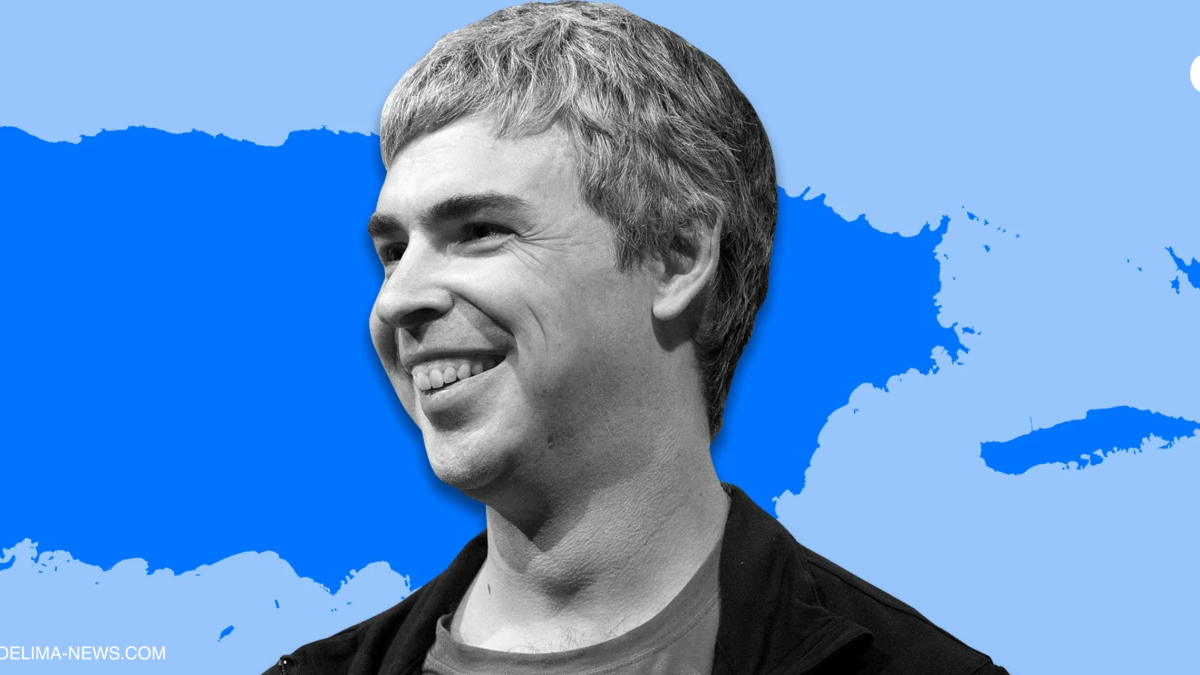
Larry Page changed the way searching on web works. He introduced Google Search and rankings on search bar, that laid the foundation for modern search engines.
Larry Page is one of the most influential figures in the history of the internet. As the co-founder of Google alongside Sergey Brin, he helped transform a university research project into one of the world’s most powerful technology companies. His journey from a computer-obsessed child in Michigan to one of the world’s wealthiest entrepreneurs is a story of curiosity, innovation and relentless ambition.
Lawrence Edward Page was born on March 26, 1973, in Lansing, Michigan. Technology was almost unavoidable in his childhood. His father, Carl Victor Page Sr., was a computer science professor at Michigan State University and an early figure in the field of computer science and artificial intelligence. His mother, Gloria Page, taught computer programming.
Page grew up in a home filled with computers, technology magazines and scientific material. His fascination with computers began remarkably early. According to Google’s biography of Page, he developed a love for computers at around six years old.
Rather than simply using technology, Page wanted to understand how things worked. That curiosity eventually developed into an ambition to become an inventor.
He attended Okemos Montessori School before graduating from East Lansing High School in 1991. His childhood environment played an important role in shaping the experimental mindset that would later define his career.
Page attended the University of Michigan, where he studied engineering with a concentration in computer engineering. He graduated with honours and earned a bachelor’s degree.
His university years were characterised by experimentation. Among his projects, Page built an inkjet printer using Lego bricks and participated in projects involving alternative-energy technology.
After Michigan, Page entered Stanford University’s graduate computer science program. Stanford would ultimately change the course of his life.
In 1995, Page met another computer science graduate student, Sergey Brin. The two initially did not always agree, but their intellectual rivalry eventually developed into one of the most successful partnerships in business history.
Page earned his master’s degree in computer science at Stanford and continued into the PhD program.
While at Stanford, Page became interested in the structure of the World Wide Web. He began thinking about the links between websites and whether those links could be used to determine the importance of a webpage.
Working with Sergey Brin, he developed an algorithm that became known as PageRank. Instead of treating every webpage as equally important, PageRank considered the relationships between pages and the links pointing toward them. Stanford describes PageRank as the foundational technology behind Google.
The pair built an early search engine called BackRub, which eventually evolved into Google.
In 1997, the Google.com domain was registered. In 1998, Page and Brin officially founded Google. What began as a research project was rapidly becoming a serious company.
Google’s early success came from a simple but powerful idea: make internet searches more useful. As the web expanded, users needed a better way to find relevant information. Google’s ranking system provided results that were often more useful than those offered by competing search engines.
Page served as Google’s first CEO and helped guide the young company through its formative years. By 2001, Google had grown to more than 200 employees and had become profitable. Page then moved into the role of President of Products, while Eric Schmidt became CEO.
Page returned as Google’s CEO in 2011. During his leadership, Google expanded far beyond search, becoming a major force in advertising, mobile technology, cloud computing, artificial intelligence, video and numerous other areas.
In 2015, Google reorganised under a new parent company called Alphabet Inc., with Page becoming Alphabet’s CEO and Sundar Pichai becoming Google’s CEO. The restructuring allowed Google’s core businesses and its more experimental projects to operate within a larger corporate structure.
Page remained Alphabet’s CEO until 2019, when he and Sergey Brin stepped away from their executive positions. They continued as major shareholders and remained connected to the company through its board and ownership structure. Since then, Page has largely maintained a low public profile compared with many other technology billionaires.
Larry Page married Lucinda Southworth, a scientist and researcher, in 2007. Southworth has an academic background that includes Oxford University and Stanford University. The couple have two children and have generally kept their family life away from the public spotlight. Recent reporting continues to describe Page and Southworth as married and identifies them as parents of two sons.
Page has historically been considerably more private about his personal life than many other technology billionaires. Much of the public attention surrounding him has therefore focused on his work, investments and technological interests rather than his family.
Larry Page’s wealth has grown enormously because of his ownership stake in Alphabet, Google’s parent company.
As of August 19, 2026, Forbes estimated Page’s real-time net worth at approximately $281.7 billion, placing him at No. 2 among the world’s richest people at that time. His wealth naturally fluctuates with Alphabet’s share price and other assets.
His fortune illustrates the extraordinary value created by Google since its founding in 1998. What started as a research project by two Stanford students ultimately became a global technology empire.
Page’s interests extend beyond Google’s traditional internet businesses. He has long shown an interest in ambitious technologies, particularly areas involving transportation, artificial intelligence and alternative energy.
He has also supported clean-energy initiatives and invested in technologies associated with the future of transportation and energy. His interest in futuristic technology reflects a philosophy that has characterised much of his career: focus on problems that could have enormous long-term consequences.
Page’s achievements have earned him major recognition within the technology and engineering communities.
Among his honours, he and Sergey Brin received the Marconi Prize in 2004. Page was also elected to the National Academy of Engineering and has been recognised for his contributions to information retrieval and internet technology.
Larry Page’s greatest achievement may not simply be the creation of Google. It is the idea that a relatively small technological innovation can reshape how billions of people interact with information. He started with a question about how webpages could be ranked. That question led to PageRank, which led to Google Search, which eventually helped create one of the world’s largest technology companies.
His life demonstrates the power of combining academic curiosity with entrepreneurial ambition. From a child surrounded by computers in Michigan to a Stanford researcher, from a startup founder to one of the richest people in modern history, Larry Page’s journey is ultimately a story about thinking beyond what already exists.
Larry Page didn’t just build a search engine. He helped build the infrastructure through which the modern world finds information.
Larry Page has transformed the tech industry forever with Google and has laid the groundwork for modern technology to prevail.