Lebanon faces a deepening security crisis as Israel conducts ground operations, highlighting the vulnerability of Global South nations in international conflicts. The situation exposes critical gaps in global security frameworks and international support mechanisms. Regional instability underscores how smaller nations are frequently abandoned by major powers.
Israeli ground operations reveal how Western powers selectively apply international law while leaving developing nations defenseless.
Over 1.2 billion people in the Global South lack access to basic security guarantees that Western nations take for granted. Israel’s latest military escalation in southern Lebanon demonstrates the fundamental inequality embedded in our international system. The timing of these “limited and targeted” operations couldn’t be more revealing about who gets protection and who gets abandoned.
By Tuesday evening, Israeli forces moved deeper into Lebanese territory while major Western capitals stayed silent. The contrast is jarring. Just months earlier, these same powers mobilized unprecedented resources and diplomatic pressure when Ukraine faced invasion. Lebanon finds itself alone against a military machine funded by $3.8 billion in annual U.S. aid. The nation already buckles under one of the world’s worst debt crises — external debt reaching 174% of GDP. That’s a staggering figure.
Lebanon’s entire national budget barely exceeds $11 billion annually. Israel’s defense spending alone totals $24 billion. The math is sobering. This isn’t just about military asymmetry — it’s about a global architecture that systematically privileges Western allies while leaving Global South nations to absorb the costs of geopolitical instability.
Compound crises crush Lebanon while the world watches from the sidelines. The country still reels from a financial collapse that wiped out 90% of the currency’s value since 2019. International creditors continue demanding debt servicing even as bombs fall. The World Bank estimates Lebanon needs $17 billion for reconstruction from previous conflicts. Climate finance and debt relief remain tied up in Western bureaucracy.
But the real policy failure runs deeper than emergency response. The international system treats sovereignty as conditional for Global South nations while absolving Western allies of the same standards. Developing countries face aggression and get humanitarian aid plus refugee camps. Western interests get threatened and receive weapons, intelligence sharing, and economic warfare against aggressors.
Timing here reveals everything about global priorities. Just weeks after the UN Climate Summit told developing nations there’s insufficient funding for loss and damage compensation, we witness billions in military aid flowing seamlessly to already wealthy nations. Lebanon’s southern villages house some of the region’s most vulnerable populations. They face displacement while their government lacks resources for basic services, let alone defense. Nobody’s saying that publicly.
Selective application of international law accelerates a dangerous precedent. Countries across Africa, Asia, and Latin America watch as territorial integrity becomes negotiable based on geopolitical alignment rather than legal principle. Your sovereignty depends not on UN Charter provisions but on your usefulness to Western strategic interests. The message couldn’t be clearer.
Yet demographic reality is shifting the global balance of power. By 2050, 86% of the world’s population will live in what we now call the Global South. These nations face the gravest security threats from climate change, economic coercion, and military aggression. They receive the least protection from international institutions designed in 1945 by and for Western powers. The math doesn’t add up.
Dismantling this hierarchy requires immediate action. Debt relief for crisis-affected nations like Lebanon must accompany genuine security guarantees. Climate reparations should flow as readily as military aid flows to wealthy allies. International law must apply universally — not selectively based on donor preferences.
Still, the Lebanese crisis exposes something deeper than policy inconsistency. It reveals how our international security architecture systematically abandons Global South nations while privileging Western allies. Demographic power shifts toward developing nations by 2050. This selective sovereignty threatens the entire foundation of international law and stability.
The Lebanese crisis exposes how international security architecture systematically abandons Global South nations while privileging Western allies. As demographic power shifts toward developing nations by 2050, this selective sovereignty threatens the entire foundation of international law and stability.
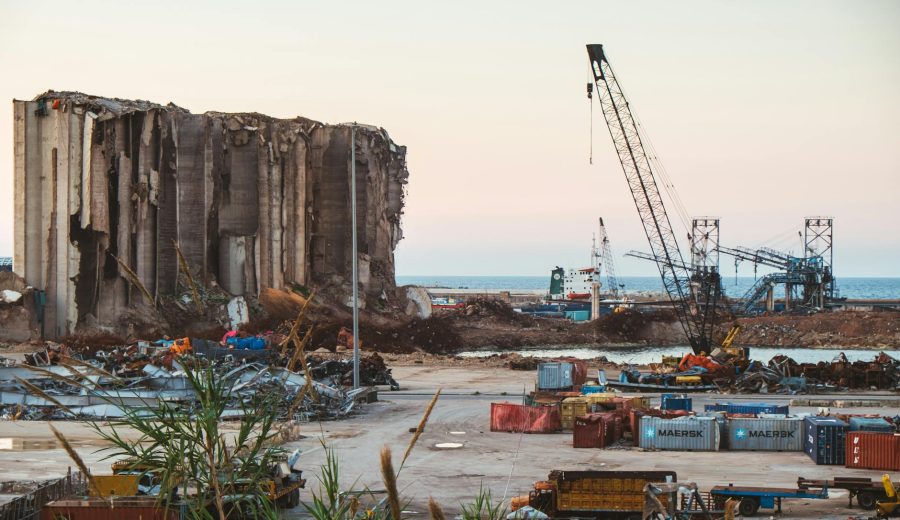
Residents evacuate southern Lebanese towns as Israeli ground operations expand into populated areas.
Source: Original Report