Levi Strauss has raised its profit forecast for the year, helped largely by tariff refunds rather than stronger sales. The jeans maker lowered its revenue outlook, said its own stores underperformed, and saw its shares fall nearly 4 percent.
Levi Strauss raised its profit forecast for the year on Wednesday, October 7, but the improvement came largely from tariff refunds rather than from selling more jeans, CNBC reported.
The company lowered its revenue guidance at the same time. Its shares fell nearly 4 percent the following day.
The Updated Guidance
- Adjusted earnings per share: $1.54 to $1.56 for the full fiscal year, up from a previous range of $1.46 to $1.52
- Net revenue growth: 7 percent, the bottom of its earlier range of 7 to 7.5 percent
- Organic revenue growth: 6 percent, the top of its earlier range
What the Tariff Refunds Did
The refunds had a visible effect on the quarter’s figures.
Levi reported an operating margin of 13.8 percent, compared with 10.8 percent in the same quarter last year. The company said tariff refunds contributed 4.9 percentage points to that margin.
They also added 16 cents to earnings per share. Of that, 5 cents was “redeployed to support the business”. Chief executive Michelle Gass told analysts the money is going towards marketing and promotions for the holiday season.
Third-Quarter Results
- Adjusted earnings per share: 37 cents, against 36 cents expected
- Revenue: $1.61 billion, against $1.62 billion expected, and up roughly 4 percent from $1.54 billion a year earlier
- Net income: $168.6 million, or 43 cents a share, down from $218.1 million, or 55 cents a share
The quarter covered the three months to August 30. The estimates are from a survey of analysts by LSEG, as cited by CNBC.
Where Sales Were Weak
Net revenues in the Americas rose 4 percent, but revenue in the United States fell 1 percent.
Sales through Levi’s own shops and website, known as direct-to-consumer, rose 2 percent, while comparable sales were roughly flat. That channel made up 45 percent of total net revenue. Wholesale revenues did better, rising 6 percent.
“While we delivered strong results across much of the business, our DTC performance fell short of our expectations during the quarter,” Gass said. “We have a clear understanding of what worked and what did not, and we have already taken targeted actions to improve performance.”
A New Finance Chief
John Vandemore is due to take over as chief financial officer on November 1. He succeeds Harmit Singh, who announced his retirement in April.
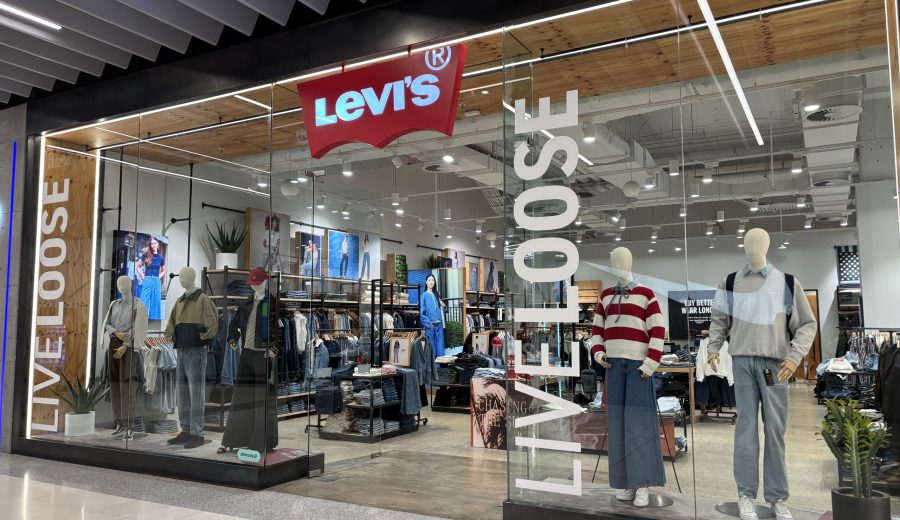
Image: A Levi’s store in Canberra, Australia, March 2025. Photo by Nick-D via Wikimedia Commons, CC BY-SA 4.0.