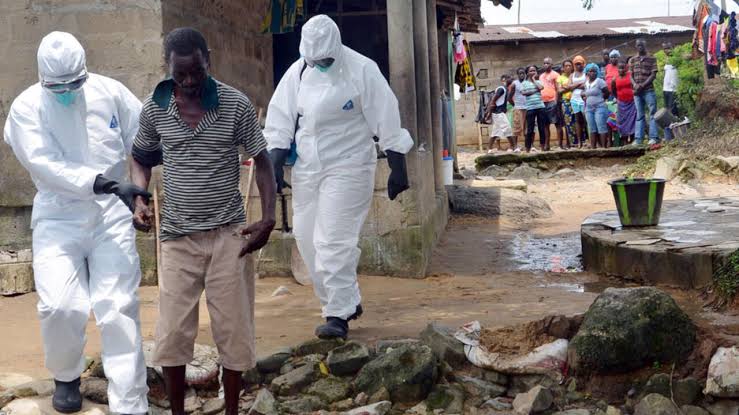
Nigeria has recorded its first case of Ebola since 2014, France 24 reported on October 20, 2026: a woman in the capital, Abuja, who had travelled from Uganda and is now isolated and receiving medical care. Authorities have identified 44 close contacts. The case is part of an outbreak of the Bundibugyo strain, declared in May 2026 in the Democratic Republic of Congo, where more than 9,000 cases have been confirmed and 4,381 people have died, a death rate approaching 50 percent. Kenya has confirmed nine cases, the latest a 24-year-old man described as a close family member of the first case. Africa CDC Director Jean Kaseya warned: “With mortality approaching 50% in DRC, we face an extremely serious threat.”
The case that the outbreak is entering a more dangerous phase is based on its geography and its size. The disease has spread from central Africa to east and west Africa, affecting several countries across three regions, and a patient in Abuja who had travelled from Uganda shows how quickly cases can cross borders, and with more than 9,000 confirmed cases and 4,381 deaths in Congo alone, the outbreak is already very large. Kaseya’s appeal to the international community to “ACT NOW” reflects the view of Africa’s own health agency that the response is not yet strong enough, and the United States has issued a travel warning for Kenya.
The case for reassurance is that Nigeria has so far a single known case, and the steps that stop an outbreak are under way. The patient has been isolated and is receiving treatment, and 44 close contacts have been identified for monitoring, which is the standard method for breaking chains of transmission. Kenya’s total of nine confirmed cases is small next to Congo’s, and its latest case was a close family member of the first, which indicates that transmission there has so far remained within known contacts. The report did not suggest any spread in Nigeria beyond the one woman. A nation that has dealt with Ebola before, as the 2014 case shows, has experience in contact tracing, and early detection after arrival is a sign that surveillance is working.
The case matters because early action decides how far an outbreak spreads. in the first weeks decides the outcome. For Nigeria, the priority is to ensure that all 44 contacts are watched for the full incubation period and that hospitals can isolate suspected patients. For neighbours and for airlines, the case will bring screening and travel restrictions, with costs for trade and tourism. For Congo, where nearly half of those infected have died, international help with staff, supplies and funding is urgent, and Kaseya’s warning is a call for it. Kenya’s nine confirmed cases and Nigeria’s one show that the strain has now been detected in countries far from its origin in Congo, which is why Africa CDC is calling for a coordinated response.
Nigeria’s single case is a warning, not yet an outbreak. The next three weeks of contact monitoring will show whether Ebola has been stopped in Abuja or has found a second foothold.