
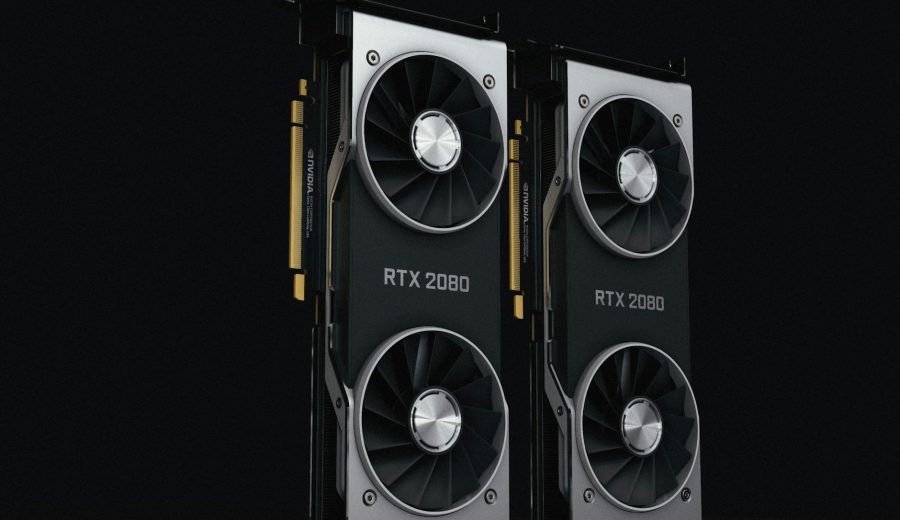
Nvidia has established unprecedented control over the AI chip market, creating what analysts call “Silicon Valley’s new iron curtain.” This dominance mirrors Cold War-era technology divisions, raising concerns about innovation bottlenecks and competitive barriers in artificial intelligence development.
The Vera Rubin platform creates a technological chokepoint that mirrors Moscow’s energy stranglehold on Europe.
Jensen Huang just unveiled America’s newest geopolitical weapon in the sterile boardrooms of Santa Clara. The Vera Rubin platform isn’t just seven chips working together. It’s a stranglehold on artificial intelligence that would make any Kremlin strategist jealous.
Every major AI company now bows before Nvidia’s altar. Follow the silicon pipeline. OpenAI, Anthropic, Meta, Mistral AI — they’re all signing up for Vera Rubin like European nations once lined up for Russian gas contracts.
Moscow controlled energy flows through pipelines. Nvidia now controls the computational lifelines of artificial intelligence. Seven chips working in concert. Full production already underway. The timing reeks of calculated dominance.
But here’s where it gets interesting. Amazon, Microsoft, Google have become the new oligarchs — a handful of cloud providers buying these platforms by the thousands. Each Vera Rubin system costs more than most people’s houses. The orders keep flowing.
Nvidia’s market cap has exploded past two trillion dollars. That’s larger than the GDP of most nations. The math is sobering. Jensen Huang wields more influence over global technology than some world leaders control over their own countries.
Nvidia’s executives have constructed an empire around computational scarcity, just like the siloviki built fortunes controlling strategic resources. They decide who gets the advanced chips. They set the prices. They determine which companies live or die in the AI revolution.
Smaller AI startups can’t afford entry into this exclusive club. The human cost shows up everywhere. Established tech giants grow stronger. The wealth gap in Silicon Valley mirrors the inequality that Russian oligarchs created in the 1990s. Nobody’s talking about that publicly.
Yet the dependence runs deeper than money. Medical research, climate modeling, financial systems — they all need these chips to function. Every breakthrough in artificial intelligence now depends on Nvidia’s hardware. It’s a technological addiction that makes Europe’s gas dependency look quaint.
China desperately tries to build competing chips. The Kremlin’s shadow looms over this story too. Russia sits locked out entirely. America has weaponized semiconductors just as effectively as Moscow once weaponized energy exports.
By Tuesday evening, tech executives were already calculating their next orders. Each new AI model needs more computational power. Each breakthrough requires newer, faster chips. The addiction cycle continues. Nvidia holds the keys to this kingdom.
Silicon Valley once promised to democratize technology. The irony cuts deep. Instead, it’s created monopolies that would make Soviet planners proud. Power flows through fiber optic cables instead of gas pipelines. The control mechanisms remain eerily familiar.
Still, there’s no turning back now. Moscow’s winter demands heating fuel. The AI revolution demands these chips with the same urgency. Nvidia keeps the taps flowing. For a price.
Nvidia’s Vera Rubin platform consolidates control over AI development into fewer hands, creating technological dependencies similar to energy monopolies. This concentration of power could reshape global competitiveness and determine which nations lead the artificial intelligence revolution.
Jensen Huang unveils Nvidia’s latest technological stranglehold on the artificial intelligence industry.
Source: Original Report