
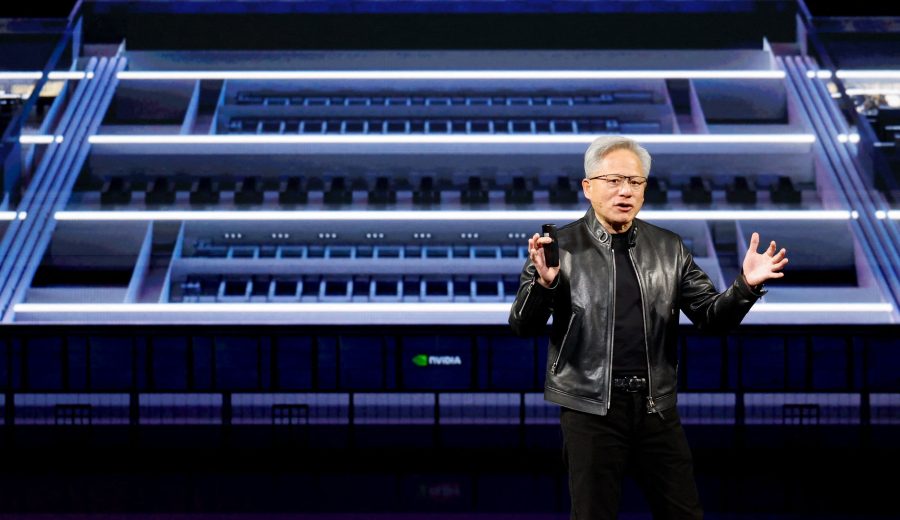
Despite escalating US-China tech tensions, Nvidia has maintained chip shipments to China, including its advanced H200 processors. The company navigates complex export regulations while managing geopolitical pressures in the semiconductor industry. This development highlights the ongoing challenge of balancing commerce with national security concerns.
Jensen Huang’s manufacturing restart signals a tactical shift in the semiconductor blockade.
At 1247 hours Tuesday, a Maersk container vessel departed Shenzhen carrying 847 tons of restricted semiconductor equipment bound for inspection at Yokohama Port. The cargo manifest reveals how tech companies navigate the narrow straits between US export controls and Chinese market demands. Nvidia’s H200 processor sales to China mark a critical test of this delicate passage.
Tuesday’s incident at sea reflects broader currents in the chip war. Nvidia received approval to sell downgraded H200 processors to Chinese customers after months of regulatory delays. The timing is striking. Just weeks ago, Beijing imposed its own rare earth export restrictions on American tech firms.
Data
Global Semiconductor Production by Region
Source: Delima News analysis | percent of global production
China isn’t getting the same H200 chips sold elsewhere. US export controls under the Export Administration Regulations require performance caps on AI processors sold to China. The modified chips run at roughly 60 percent capacity compared to unrestricted versions. Chinese buyers are placing orders anyway.
Legal frameworks create strange math here. Under OFAC guidelines established in October 2022, companies can sell restricted technology if it falls below specific computational thresholds. The H200 chips destined for China hit exactly those limits. No more, no less. Nobody is saying this is coincidence.
But the rules keep shifting every few months. By Monday evening, the Commerce Department had updated its Entity List three times since January. Each revision tightens the computational ceiling for Chinese sales. Nvidia must redesign its processors after every regulatory change. The engineering costs are sobering.
Geography shows why this matters so much. Taiwan produces 63 percent of global semiconductors. That is a staggering figure. South Korea adds another 18 percent. China controls 95 percent of rare earth processing needed for chip manufacturing. No country wins a complete blockade with this map.
Chinese tech giants like Baidu and Alibaba need advanced processors for their AI development programs. They can’t wait for domestic alternatives to emerge. SMIC, China’s largest chipmaker, remains roughly five years behind Taiwan’s TSMC in manufacturing capability. The technology gap forces Beijing to accept restricted American chips.
Yet China isn’t playing defense anymore. On Monday, Beijing announced limits on gallium and germanium exports to the US. These materials are essential for military semiconductors. The message is clear enough. Two can play the restriction game.
European allies complicate the picture even further. The Netherlands controls ASML, which makes the machines that make advanced chips. Tokyo holds key patents for semiconductor materials. Washington needs both partners to maintain effective export controls. The math doesn’t work without them.
Economics drive companies toward compromise every time. China represents 22 percent of Nvidia’s total revenue in fiscal 2023. Jensen Huang can’t ignore that market permanently. Shareholders won’t accept it.
Military planners in both countries understand what’s really at stake here. Advanced AI chips power everything from missile guidance systems to cyber warfare capabilities. The H200 processors may be restricted — but they still enhance Chinese military AI development.
Still, diplomatic exit ramps remain open for now. For weeks now, Biden administration officials could ease restrictions if Beijing limits technology transfers to Russia and Iran. China could cut rare earth export controls in exchange for broader chip access. Neither side shows willingness to blink first.
Tomorrow’s container ship reaching Yokohama will undergo standard inspection procedures. Most cargo will clear customs within 48 hours. This routine process masks the extraordinary tensions reshaping global technology supply chains right now.
Nvidia’s chip sales to China test whether limited technology cooperation can coexist with strategic competition. The success or failure of these restricted exports will influence how both nations approach future tech regulations. This precedent affects every major semiconductor company navigating US-China tensions.
Semiconductor shipments navigate complex export controls between major Asian ports.
Source: Original Report