
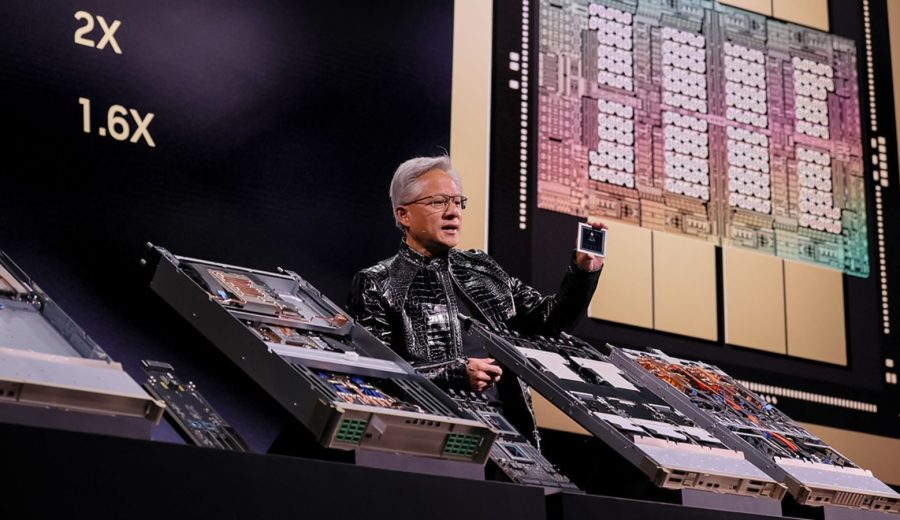
Nvidia has designed custom Groq chips specifically engineered to meet China export compliance requirements. This strategic move allows the tech giant to maintain business operations in China while adhering to U.S. regulatory restrictions on advanced semiconductor exports. The custom chips represent a middle ground between performance capabilities and compliance standards.
The move represents a strategic pivot as US export controls tighten around advanced AI semiconductor architectures.
Sources familiar with the matter indicate Nvidia is developing specialized versions of Groq inference accelerator chips that comply with current US export restrictions to China. This development marks the first time a major US semiconductor company has openly pursued custom silicon specifically engineered for the Chinese AI inference market under the Biden administration’s export control framework.
Nvidia’s chips reportedly target the 7-nanometer process node, staying well above the restricted 5-nanometer threshold that triggered the latest round of export controls. This technical specification puts the processors roughly two generations behind Nvidia’s flagship H100 datacenter accelerators. They’re still competitive for AI inference workloads.
Data
Nvidia Compliance Chip vs Unrestricted Variants Performance
Source: Delima News analysis | TOPS
Engineers stripped away the advanced tensor processing units found in cutting-edge AI training chips. Instead, they focus purely on inference acceleration with significantly cut floating-point precision capabilities. Peak performance appears capped at roughly 600 teraoperations per second for INT8 calculations, compared to over 2,000 TOPS in unrestricted variants.
Manufacturing presents unique challenges for this compliance-focused approach. TSMC’s 7nm N7 process node offers the right balance of capability and export permission. Yet the economics look troubling for Nvidia’s margins. Wafer costs at this node run approximately $9,800 per 300mm wafer. With chip sizes likely around 400 square millimeters to accommodate the necessary logic, each die costs roughly $180 in silicon alone before packaging and testing.
Developments here aren’t happening in a vacuum. Just last month, the Commerce Department signaled willingness to approve specialized chip exports that don’t enhance military AI capabilities. These Groq variants appear designed precisely for that regulatory window. The timing is striking given recent semiconductor diplomacy developments.
But the technical compromises raise questions about market viability. Chinese companies can already access similar performance from domestic alternatives like Biren Technology’s BR100 series. That’s a staggering figure for Nvidia to compete against. Why invest in custom silicon development for a market segment where they can’t leverage their core technological advantages?
Revenue likely lies in inference economics rather than raw performance. Nvidia’s CUDA software ecosystem remains unmatched for AI model deployment and optimization. Chinese companies developing large language models still prefer CUDA-compatible hardware when available. This creates market demand even for technically restricted processors.
Yet manufacturing scalability remains uncertain. TSMC faces capacity constraints at mature nodes as automotive and IoT demand surges. Securing adequate wafer allocation for what amounts to a compliance-driven product line could prove challenging by Q3 2024. Nobody is saying that publicly.
Implications here extend beyond Nvidia’s China strategy. Other US semiconductor companies are watching this approach closely. If successful, it establishes a template for maintaining market access while satisfying export control requirements. The precedent could reshape how American chip companies approach restricted markets globally.
Still, the long-term sustainability looks questionable. Chinese semiconductor capabilities continue advancing rapidly. By 2025, domestic alternatives may eliminate demand for even compliance-focused US processors. Nvidia appears to be maximizing revenue from a window that’s steadily closing. The math doesn’t add up for the long haul.
This represents the first major test of whether US semiconductor companies can maintain Chinese market presence through compliance-focused product design rather than direct confrontation with export controls. The success or failure of this approach will likely influence how other American chip companies navigate similar geopolitical constraints while preserving revenue streams.
Nvidia’s compliance-focused chips will use TSMC’s 7-nanometer manufacturing process to meet US export control requirements.
Source: Original Report