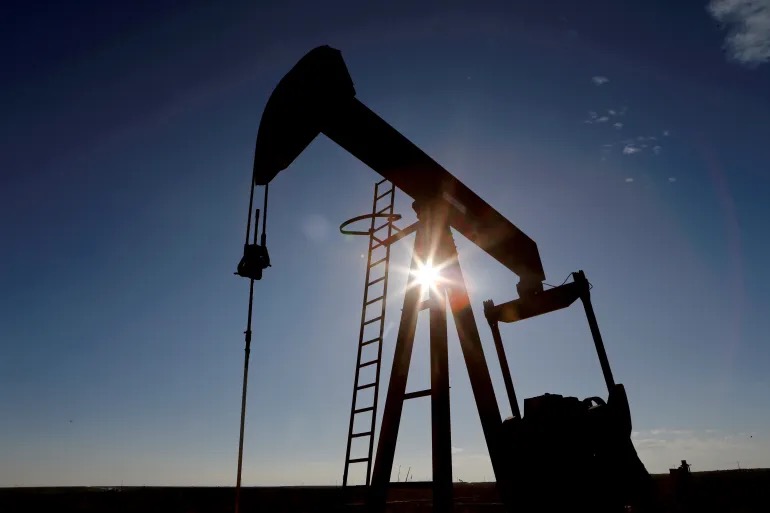
Oil prices fell at Monday's open, 9 November 2026, after U.S. President Donald Trump said he was highly unlikely to order new attacks on Iran while talks to end the conflict make progress. Brent crude was down 84 cents, or 0.85 percent, at $97.48 a barrel by 0138 GMT, while West Texas Intermediate fell 32 cents, or 0.35 percent, to $90.51. The move came despite both Washington and Tehran reporting attacks on ships in or near the Strait of Hormuz. Speaking to CNN by phone, Mr. Trump said that whether strikes would be needed depended on whether Iran signs "a very strong agreement," adding that the answer was "highly unlikely it's going to be necessary."
The argument that oil should keep drifting lower rests on diplomacy and on supply. Brent fell 17 percent last week, which LSEG data going back to 1988 show was the steepest weekly drop since the start of the COVID pandemic and the biggest in absolute terms. Mr. Trump's softer language reduces the immediate risk that the war widens, and traders price that in quickly. JPMorgan said in a report on Friday that the market is headed for a glut again, estimating a surplus of 1.1 million barrels per day in September that widened to 1.4 million barrels per day in October, as recovering West Asian oil flows, rising output elsewhere and weak demand pushed global supply above consumption. Iraq also said on Sunday that it had reached an understanding with the United States to let its oil exports pass through the Strait of Hormuz via a shipping lane near Oman, which would bring more barrels back to market.
The counter-argument is that a price near $97 is still far from calm and that the relief could be fragile. Tim Waterer, chief analyst at KCM Trade, called Mr. Trump's comments "more measured" but said the market is still waiting to see whether the midterms have produced a lasting shift in his approach to the conflict, or whether this is just another temporary change in tone. Mr. Trump had hinted at renewing attacks on Iran after last week's midterm elections, and Iran has said it would respond by striking U.S. and Israeli targets. Attacks on ships near the Strait of Hormuz were reported by both sides, which shows that the physical risk to shipping has not disappeared. Iraq's own losses from the Iran war and disruptions to its oil exports have reached $60 billion, according to its foreign minister, Fuad Hussein, a reminder of how costly the disruption has been for producers.
The reason this matters for the world economy is that the Strait of Hormuz is a key route for oil, and the price of crude feeds directly into fuel, transport and food costs everywhere. A sustained fall would ease inflation pressure for importing countries and give central banks and households some relief, while a sudden jump would do the opposite. Producers whose budgets depend on high prices face the opposite pressure if the glut that JPMorgan describes becomes reality.
Oil is therefore falling on hopes of peace and a growing surplus, but the market has not forgotten how quickly the mood can change. Whether the decline continues will depend on whether a deal is signed and whether ships can move safely through Hormuz.