
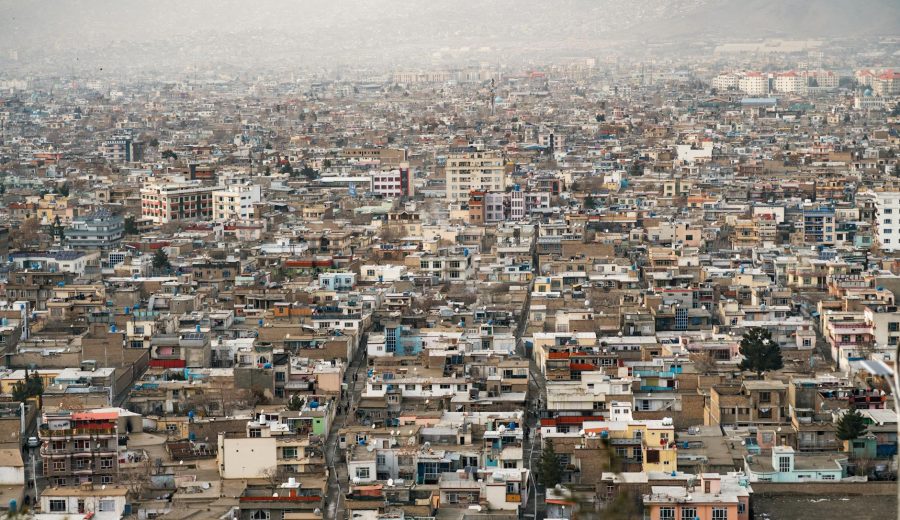
The deadly airstrike signals a dangerous escalation in cross-border tensions that could redraw South Asian power dynamics.
The acrid smoke still rising from the demolished pediatric wing of Kabul’s largest medical facility tells a story older than the Taliban’s return to power. By Tuesday evening, as rescue workers continued pulling bodies from the rubble, the mathematical brutality had become clear: 400 civilians dead in what Afghan authorities describe as a calculated Pakistani airstrike that crossed every conceivable red line.
The sterile corridors where children once received treatment now serve as an unintended monument to the curious mathematics of regional power projection, where hospital beds become strategic assets and medical personnel transform into casualties of wars they never chose to fight. Yet the timing of Monday’s strike reveals calculations far more complex than mere cross-border retaliation, suggesting a fundamental recalibration of Pakistani strategic thinking that western diplomatic sources describe as both desperate and dangerous.

Tehrik-i-Taliban Pakistan Fighters Crossing into Pakistan — Delima News Data
History offers uncomfortable parallels to this moment of calculated brutality. The 1999 bombing of the Chinese embassy in Belgrade demonstrated how medical and civilian infrastructure becomes weaponized when great powers miscalculate their adversaries’ resolve. Similarly, the 2015 Doctors Without Borders hospital strike in Kunduz revealed how quickly humanitarian spaces collapse when regional actors believe their core interests face existential threats. But this latest escalation carries implications that extend far beyond the immediate carnage, representing what one senior State Department official characterizes as Pakistan’s acknowledgment that its traditional proxy warfare model has fundamentally failed.
The secret stakes driving Islamabad’s apparent decision to authorize direct military action against Afghan soil reflect a strategic panic that western intelligence agencies have been monitoring for months. Pakistan’s military establishment, according to diplomatic sources familiar with recent Inter-Services Intelligence assessments, believes the Taliban’s consolidation of power has created an unacceptable security dilemma along the Durand Line. The mathematics are sobering: more than 600 Tehrik-i-Taliban Pakistan fighters have reportedly crossed into Pakistani territory since August 2021, carrying with them operational knowledge and weaponry that threatens the Pakistani state’s monopoly on violence within its own borders.
Just hours before the hospital strike, intercepted communications suggested Pakistani commanders had received authorization for what military planners euphemistically termed “graduated escalation protocols.” The clinical language obscures a brutal reality that regional experts have long anticipated: Pakistan’s willingness to treat Afghan civilian infrastructure as legitimate military targets represents a qualitative shift from proxy warfare to direct state-on-state violence.
The international community’s predictably harsh condemnation masks a more troubling calculation. European diplomatic sources acknowledge privately that western capitals view Pakistani-Afghan tensions as a useful distraction from more pressing concerns in Ukraine and the South China Sea. This cynical arithmetic suggests that the 400 dead in Kabul’s hospital may represent only the opening movement in a broader symphony of violence that regional powers will orchestrate with minimal external interference.
The timing is striking precisely because it reveals how quickly humanitarian norms collapse when states believe their survival depends on demonstrating resolve through calculated brutality. Afghanistan’s Taliban government, despite its own considerable capacity for violence, now finds itself in the uncomfortable position of appealing to international law and humanitarian principles that it has spent years systematically undermining.
This hospital strike represents Pakistan’s transition from proxy warfare to direct military confrontation with Afghanistan, fundamentally altering regional security calculations. The international community’s muted response signals that South Asian conflicts may escalate without meaningful external intervention, potentially destabilizing nuclear-armed neighbors while global attention remains focused elsewhere.
Rescue operations continue at the Kabul hospital facility following Monday’s airstrike that killed 400 civilians.
Source: Original Report