Peru has created a permanent five-minister commission, Perú en Orden, to coordinate its fight against organised crime and extortion, chaired by the prime minister and set up by a decree published on 14 October.
Peru established a permanent security body called Perú en Orden (Peru in Order) through Supreme Decree 141-2026-PCM, published in the official gazette on 14 October 2026, according to the Rio Times. The commission is made up of five ministers and is chaired by the prime minister, Luis Galarreta. The other four members are the ministers of the interior, defence, justice and foreign affairs.
Membership is mandatory and unpaid, and members cannot send deputies, according to the decree as described by the Rio Times. Sessions are private and can be held in person or remotely. The commission must be installed within 10 working days of the decree’s publication.
The body is designed to coordinate policy, not to run operations. It supervises the Unified Command against Organised Crime but does not direct its operations, which remain with the National Police and the armed forces. It can issue recommendations, propose regulations and request that the budget gives priority to security programmes, according to the report. The Rio Times says that, for visitors and investors, this means the same crime risks remain for now, because the body does not run police operations.
The decree was signed by President Keiko Fujimori, the founder of the conservative Fuerza Popular party, according to the same report. It says that Fujimori made the reduction of crime the first policy axis of her 2026-2031 term. The sources reviewed do not describe how she came to office or give her approval ratings.
The commission follows other measures. The Rio Times lists headlines about a joint military-police command to fight organised crime, a panel on extortion with the banks that was planned for 12 October, and a plan for Peru to lead an anti-crime forum for the Americas until 2028. Those articles were not opened, so the details are not described here.
The report also gives a sense of the scale of the problem. It says that an estimated 80 tonnes of cocaine a year move through the province of Mariscal Ramón Castilla alone, on the Amazon border. The figure is an estimate by the source and has not been verified by Delima News, and the report does not say which border it refers to or where the estimate comes from.
Another headline, from Latin Times, says that President Fujimori will visit Bukele’s CECOT megaprison in El Salvador amid a debate over security policy. The article was not opened, so the date and purpose of the visit are not known.
A coordinating body of this kind can set priorities and monitor results, but it does not itself change what the police do. The sources reviewed do not give any targets or deadlines for the commission, or the statistics of extortion and homicide in Peru, so Delima News does not say whether crime is rising or falling.
Delima News will report when the commission is installed and what it decides.
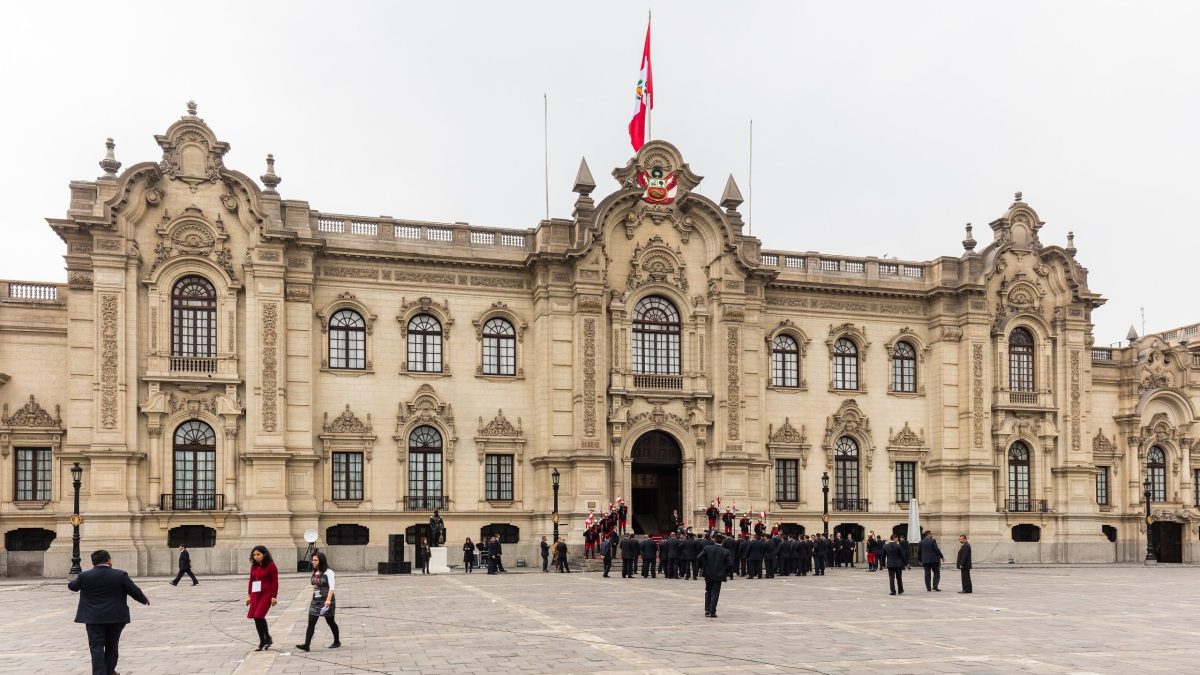
Image: The Government Palace in Lima (file photo). Photo: Diego Delso / Wikimedia Commons (CC BY-SA 4.0)