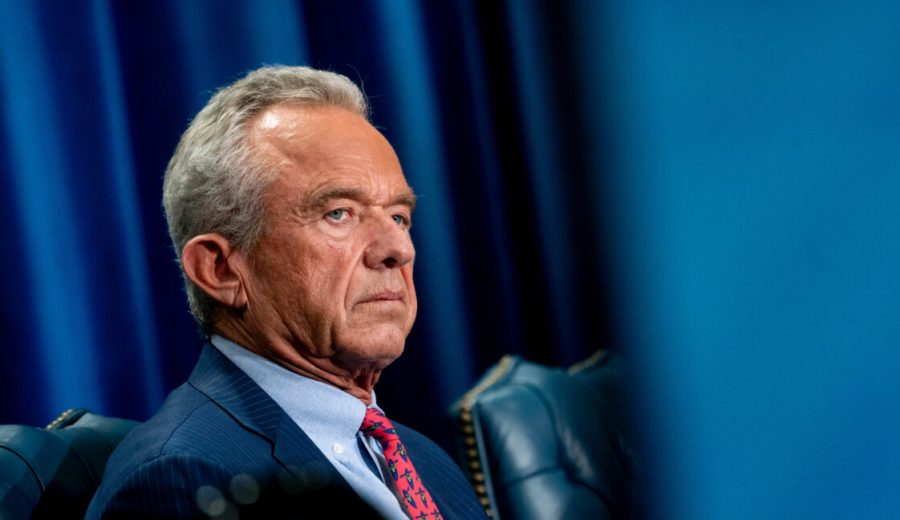
RFK Jr. has dismantled approximately three-quarters of existing health advisory boards in a significant restructuring effort. This move represents a major shift in health policy governance and oversight mechanisms. The elimination of these boards signals a dramatic change in how health advisory decisions will be made going forward.
New health leadership eliminates expert panels while debate rages over scientific independence versus institutional reform.
Morning tea at Cairo’s Café Riche carries whispers of familiar patterns. Regulars debate Egypt’s latest administrative reshuffles over steaming glasses. News from Washington echoes a story the region knows well: technocratic institutions swept aside in the name of change.
Numbers tell a stark story here. Seventy-five advisory boards at America’s health department have vanished under Robert F. Kennedy Jr.’s leadership. That’s a staggering figure. These panels once guided vaccine policy, food safety standards, and public health responses. Now they’re gone.
Institutional dismantling reflects a global trend. From Budapest to Brasília, populist leaders have targeted expert advisory bodies. They frame these moves as democratic reform. Critics see something darker: the systematic weakening of scientific independence. The timing is striking.
Kennedy’s sweep comes as health crises demand nuanced expertise. Bird flu threatens agricultural systems. Antibiotic resistance grows. Climate change reshapes disease patterns. Yet the voices meant to guide policy responses have been silenced.
But this isn’t just about health policy. It’s about power and who wields it. Advisory boards represent a particular vision of governance — one where complex problems require specialized knowledge. They suggest that expertise should constrain political decisions.
Kennedy’s supporters see these panels differently. They view them as captured institutions, too close to pharmaceutical companies and academic elites. The boards become symbols of a rigged system that ignores public concerns. Dismantling them signals a return to common sense governance.
Economic reality cuts deeper than political rhetoric. Health advisory boards don’t just offer abstract guidance. They shape billion-dollar markets. Their recommendations influence which vaccines children receive, which foods carry warning labels, which medicines doctors prescribe. The math is sobering.
Corporate America watches nervously. Pharmaceutical companies built business models around predictable regulatory guidance. Food manufacturers planned investments based on stable safety standards. Now uncertainty reigns. Some firms may benefit from reduced oversight while others face chaos.
Regional observers recognize this playbook. Authoritarian leaders worldwide have perfected these moves. First, they question expert legitimacy. Then they dismantle advisory structures. Finally, they concentrate decision-making power in loyal hands. Nobody’s saying that publicly.
Yet the state’s grip tightens through this apparent liberation. Without independent advisory voices, bureaucratic power flows upward. Health officials become more dependent on political leadership. Scientific dissent becomes harder to organize and legitimize.
International implications extend beyond American borders. US health agencies set global standards. Their guidance shapes World Health Organization policies. When American expertise retreats, other powers advance — China’s health diplomacy gains ground while Russia’s disinformation campaigns find fertile soil.
Middle Eastern governments watch with particular interest. They’ve long struggled to balance technocratic governance with political control. America’s experience offers lessons, both positive and cautionary. The question becomes whether dismantling expertise serves public health or undermines it.
Still the coffee grows cold at Café Riche as patrons contemplate familiar dilemmas. Change promises liberation but often delivers new forms of control. The American experiment unfolds while the world watches and learns. The math doesn’t add up for anyone yet.
The elimination of health advisory boards represents a broader global shift away from expert-guided governance toward populist decision-making. This change affects not just American health policy but international standards and the balance between scientific expertise and democratic accountability worldwide.
Vacant meeting spaces mark the absence of expert voices in health policy discussions.
Source: Original Report