
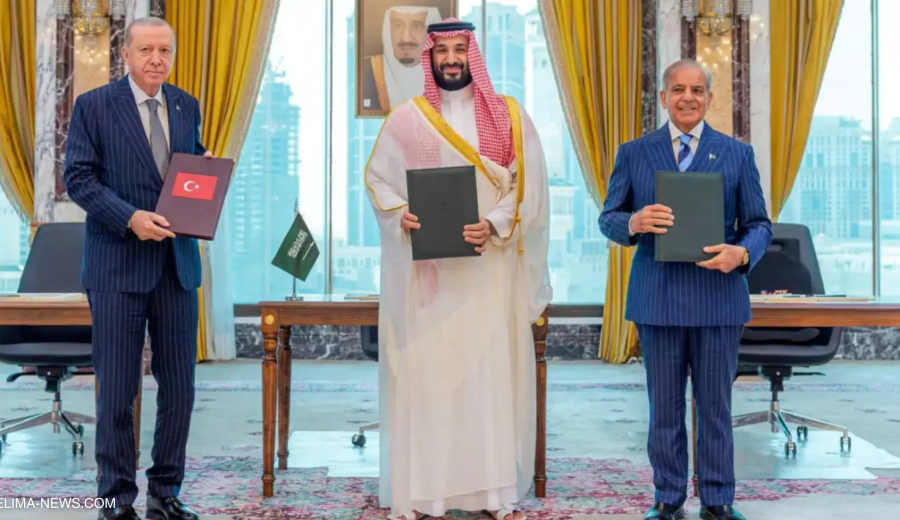
The three countries have agreed to deepen military and intelligence cooperation under the Makkah Joint Defence Agreement, as escalating Houthi attacks on Saudi territory, energy infrastructure and shipping raise the risk of a wider regional conflict.
Saudi Arabia, Pakistan and Türkiye have moved to strengthen their collective defence arrangements following a series of Houthi attacks on the kingdom, with senior military officials meeting in Riyadh to discuss military assistance, intelligence sharing and closer coordination. The meeting on Friday, September 25, brought together the chiefs of staff of the three countries. It followed discussions between their foreign ministers on the sidelines of the United Nations General Assembly in New York.
According to Saudi Arabia’s Ministry of Defence, the military officials agreed to deepen defence and intelligence cooperation and integrate their military capabilities under the Makkah Joint Defence Agreement. They also reaffirmed their commitment to collective defence and the protection of Saudi Arabia’s sovereignty and territorial integrity. The discussions mark a significant test of the three countries’ defence pact, signed in August, as the conflict involving Yemen’s Houthi movement increasingly threatens regional security and global energy supplies.
Houthi attacks put Saudi Arabia on alert
The latest escalation follows repeated attacks by Yemen’s Iran-backed Houthi movement against Saudi territory, including missile and drone strikes targeting cities, energy facilities and shipping routes. On September 19, the Houthis claimed responsibility for missile and drone attacks against what they described as sensitive sites in Riyadh. The announcement came after flames and a large plume of smoke were seen near the Saudi capital’s main airport.
The Saudi-led military coalition said its air defences intercepted a missile aimed at Riyadh and thwarted further attacks targeting Bish, Farasan, Taif and Yanbu. The Houthis also claimed to have struck an Aramco facility in Yanbu, a major oil-exporting hub on the Red Sea. The group did not provide independently verified details of the damage.
The attacks followed the Houthis’ declaration of a naval blockade against Saudi Arabia in July, which has added another front to the wider regional conflict that began with US and Israeli strikes on Iran in February. The renewed hostilities have raised concerns over the security of Saudi energy infrastructure and the Red Sea shipping corridor, particularly as disruptions in the Strait of Hormuz have already affected regional oil flows.
Makkah defence pact faces its first major test
The Makkah Joint Defence Agreement, signed on August 7, establishes a framework for collective defence among Saudi Arabia, Pakistan and Türkiye. Under the agreement, an armed attack against one member is to be regarded as an attack against all three. The arrangement is intended to strengthen deterrence, improve military coordination and expand cooperation in defence planning.
The three countries held their first meeting of the Strategic Political and Defence Committee in Istanbul on August 31, where officials agreed to establish a secretariat in Saudi Arabia and deepen military cooperation. The September 25 meeting in Riyadh represents a further step towards implementing the agreement, although officials have not announced a specific deployment of Pakistani or Turkish forces in response to the Houthi attacks.
Saudi Arabia’s Defence Ministry said the military chiefs reviewed the security situation and threats facing the kingdom. They also condemned recent attacks targeting Mecca and Saudi civilian and economic infrastructure. The agreement’s mutual-defence provision could have substantial implications if the attacks escalate further. However, the public statements released after the meeting did not specify whether the three countries had agreed to conduct joint combat operations.
Türkiye offers military and technical assistance
Türkiye has already indicated that it is prepared to assist Saudi Arabia with military requirements arising from the attacks. Turkish Foreign Minister Hakan Fidan said on September 19 that Ankara was ready to meet Saudi Arabia’s military needs under the trilateral agreement, particularly in technical areas.
Fidan said the attacks represented a serious challenge to Saudi sovereignty and territorial integrity, adding that Türkiye stood in solidarity with Riyadh. The precise nature of any assistance remains unclear. It could involve technical support, intelligence cooperation, air-defence coordination or other military capabilities, but no specific package of assistance has been publicly confirmed.
Türkiye has also called for diplomatic efforts to end the conflict and warned that the economic consequences of continued fighting were becoming increasingly difficult to sustain. For Ankara, the agreement offers a mechanism to strengthen ties with two important regional partners while expanding its role in Middle Eastern security.
Pakistan faces a difficult strategic choice
Pakistan’s position is particularly significant because of its longstanding military and economic relationship with Saudi Arabia. Islamabad has repeatedly reaffirmed its commitment to defending the kingdom under the agreement. Pakistan’s military has provided training and defence support to Saudi forces, while Saudi financial assistance remains important to Pakistan’s economy. However, direct involvement in the conflict could carry substantial risks for Islamabad.
Pakistan shares a border with Iran and has maintained diplomatic and economic relations with Tehran. A military confrontation involving the Houthis, who are backed by Iran, could complicate Pakistan’s regional diplomacy and increase domestic security pressures. The Guardian reported on September 19 that Pakistani officials were concerned about the possibility of being drawn into a wider Middle Eastern conflict, particularly given Pakistan’s existing economic and security challenges.
Pakistan’s participation in the Riyadh meeting therefore carries significance beyond military cooperation. It signals continued support for Saudi security while leaving open questions about the extent of any direct operational involvement. No announcement following the meeting confirmed that Pakistani troops would be deployed to fight the Houthis.
Missile defence and energy security remain central concerns
Saudi Arabia’s military requirements have become more urgent as the conflict continues. The Associated Press reported on September 16 that the kingdom was running low on missile interceptors and had approached regional and Western partners, including Pakistan, France, Britain and Egypt, for air-defence assistance.
The shortage was attributed in part to the depletion of US interceptor stockpiles during the wider war involving Iran. Saudi Arabia’s request for support highlights the challenge of defending a large territory and critical energy infrastructure against repeated missile and drone attacks.
The consequences extend beyond Saudi Arabia. The kingdom is a major oil exporter, and attacks on its energy facilities or shipping routes could disrupt international markets. The Red Sea is also a vital route for trade between Europe and Asia. Continued attacks could raise shipping costs, threaten commercial vessels and complicate efforts to maintain the flow of energy supplies.
The three countries’ commitment to improving intelligence sharing and integrating defence capabilities is therefore aimed at addressing both immediate security threats and the wider economic implications of the conflict.
A regional alliance with wider implications
The Saudi-Pakistani-Turkish defence arrangement reflects growing efforts among regional powers to strengthen security cooperation amid uncertainty over the extent of direct US military involvement. Washington has so far stopped short of direct military intervention against the Houthis, despite Saudi requests for assistance, according to Reuters. Meanwhile, diplomatic efforts involving Qatar and Pakistan have continued in an attempt to reduce tensions.
The Riyadh meeting does not establish that a joint military campaign is imminent. Its immediate outcome is a commitment to closer military and intelligence coordination, with the specific forms of assistance still to be determined. Nevertheless, the attacks have placed the Makkah Joint Defence Agreement under its first major operational pressure.
Whether the arrangement remains primarily a framework for deterrence and technical cooperation or develops into more direct military involvement will depend on the scale of future attacks, decisions by the three governments and the prospects for diplomatic de-escalation.
For Saudi Arabia, the immediate priority is protecting its territory, energy infrastructure and shipping routes. For Pakistan and Türkiye, the challenge is translating their collective-defence commitments into practical support while managing the risks of a wider regional war.
The September 25 meeting has brought those competing considerations into sharper focus, making the alliance an increasingly important factor in the security dynamics of the Middle East.